| DEAL ISLAND WEATHER |
| Web Counters | ||||||
|
|
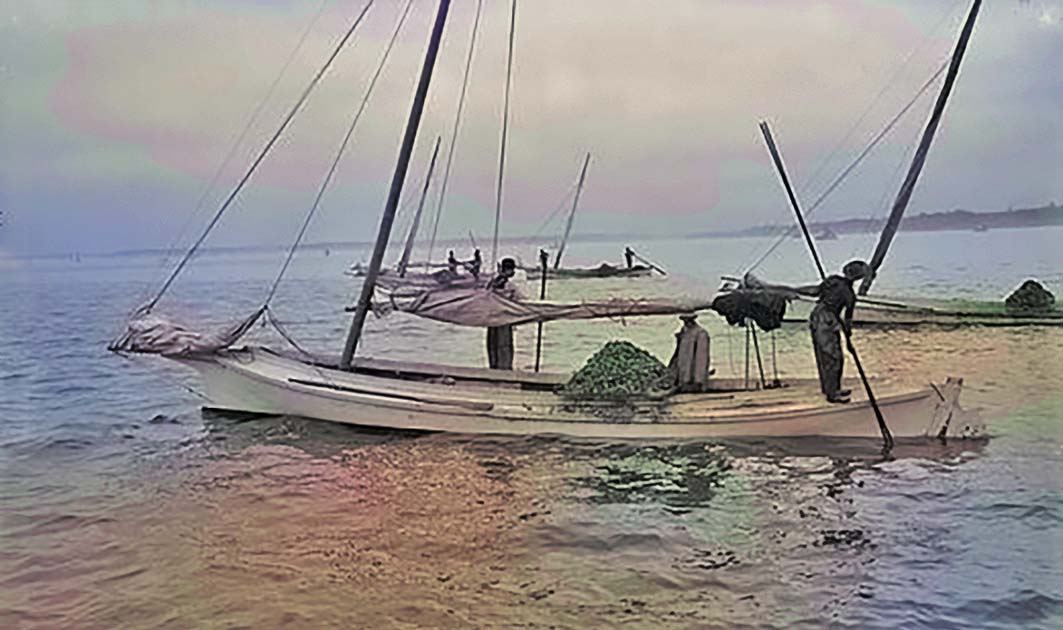
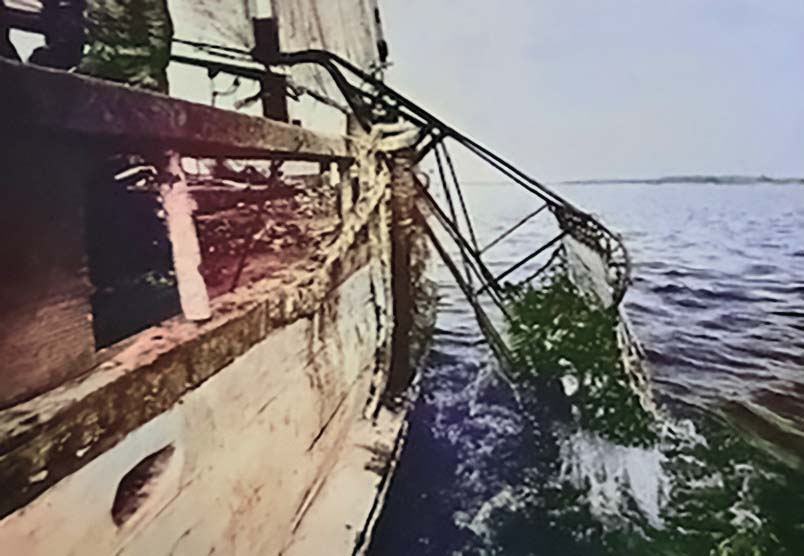
The skipjack as we know it first appeared in the late 1800s as a shallow-draft, wooden sailing vessel used for oyster dredging. Oysters were plentiful in the mid-19th century and the Chesapeake Bay hosted fleets of schooners, such as pungys and bugeyes, that harvested them with hand-powered or mechanical dredges. As these deeper-draft vessels exhausted the more accessible oyster beds, skipjacks evolved to exploit the shallower beds that had only been available before to watermen using long-handled tongs from small fishing boats. Uncertain OriginsSkipjacks probably evolved from sailing canoes, pungies, crabbing skiffs, bugeyes, sloops similar but smaller single-mast boats with two sails that were used then for dredging oysters, blue crabs in the shallow Chesapeake Bay tributaries. However, the design may also have originated in New England, where a similar vessel was being used for oyster dredging, possibly brought to the Chesapeake by Baltimore oyster packing houses. Even the origin of the name is obscure. Was there once a boat named "Skipjack" and the name adopted for the type of boat? Or was it named after the bonito tuna skipjack, as some suggest? No one knows for sure. Wherever their origin, the Chesapeake Bay adopted the skipjack as its own, with Maryland even making it the official state boat in 1985. Powerful, Easier to Sail, Cheaper to BuildThey were built for power. The single raked mast is positioned to hold a massive main sail to catch as much wind as possible to drag the heavy dredges across the Bay bottom. The original commercial skipjacks usually were between 30 and 60 feet on deck. The largest could carry as much as 500 bushels of oysters. They were built for ease of sailing and dredging. With only two sails and the jib self-tending, deck hands could spend more time on hauling and culling oysters and less on tending to the sails. The low freeboard—with the deck closer to the waterline—reduced the effort in hauling full dredges out of the water. The shallow, v-shaped hull means the boat doesn't heel over much in the wind as round-hulled sailboats do, making for a more stable platform for dredging. A retractable centerboard acts similar to a keel, countering the lateral force of the sails and helping to keep the boat on course. By being retractable, it allows skipjacks to venture into shallower areas. With the centerboard raised all the way, some skipjacks will draw as little as three feet of water, or even less in the smaller boats.
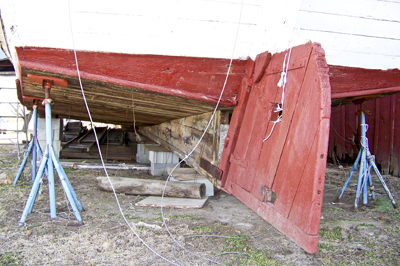
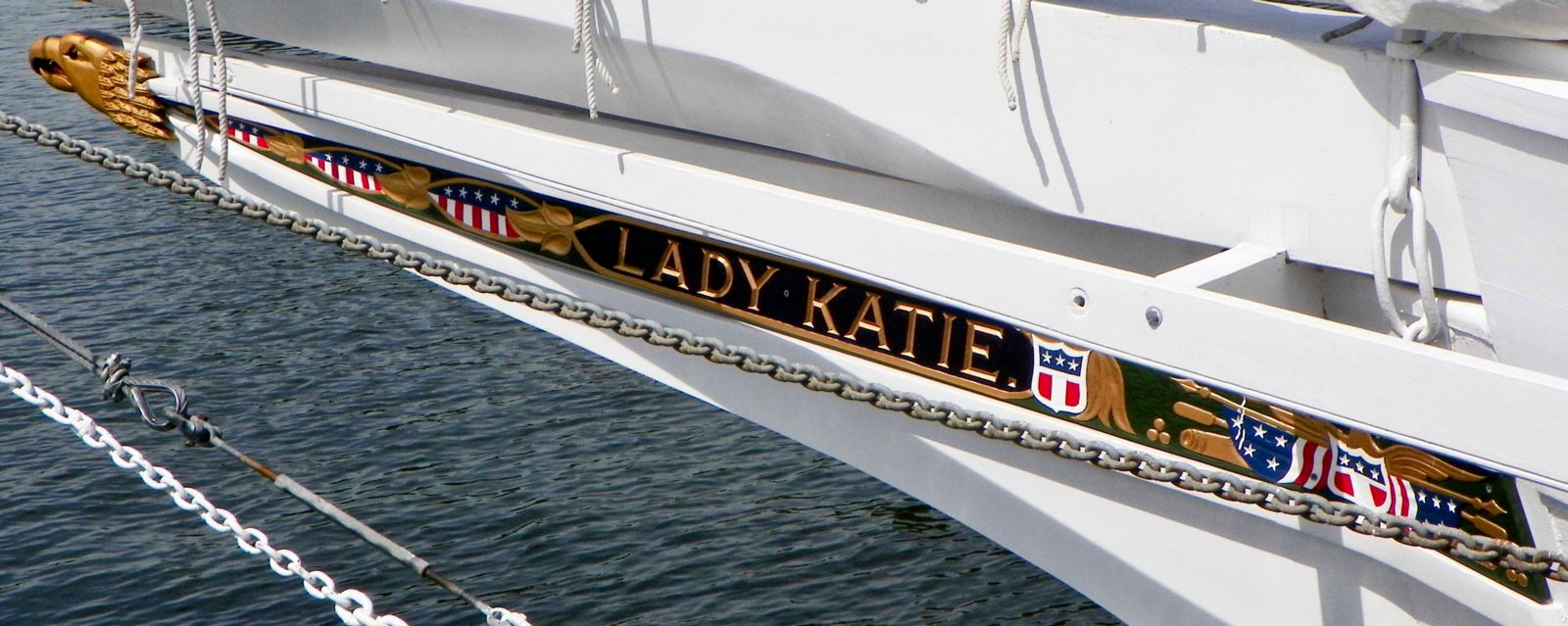
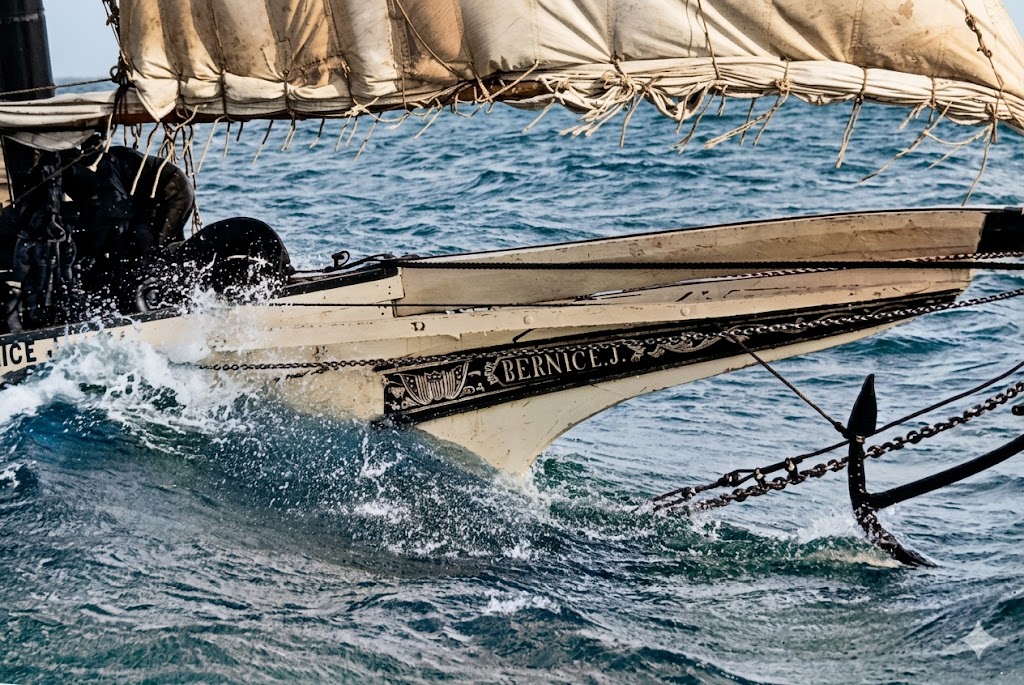
They were designed to be less expensive to build. Most were built without plans, using simple ratios, with size often determined by the size of the trees available. The length of the boom should equal the length on deck. The length of the bowsprit should equal the width on deck or "beam." The height of the mast should equal the length on deck plus the beam. The cross-planked, hard-chined hull was cheaper and easier to build than the rounded hulls of schooners and sloops. They were workboats, but skipjack owners still took pride in them. Their carved, painted and sometimes gilded trailboards bearing the boat's name often were works of art, and many had small carved figureheads tucked under the bowsprit. While folklore has it that they were built in watermen's backyards, most were built in commercial shipyards that were
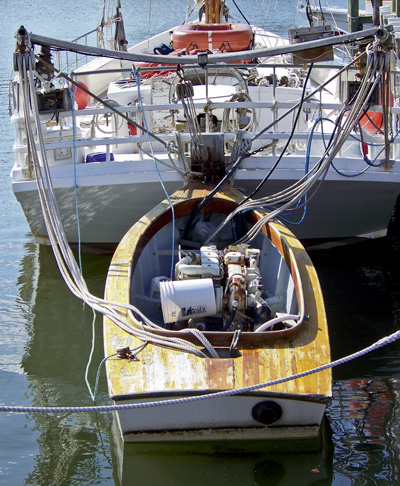
already building other types of boats on either side of the Bay. But most came from Maryland's Eastern Shore, which still is home to the majority of existing skipjacks. Help from a Big Engine in a Little BoatThese are sailing vessels, but the wind is notoriously fickle. So skipjacks, which evolved about the same time as the internal combustion engine, used pushboats or yawl boats to help them out. Basically, these are big outboard engines—an automobile engine in a little boat just big enough to keep the engine afloat. They are tucked up into chocks at the stern of the skipjack, pushing it wherever it needs to go. The pushboats were so efficient in helping the skipjacks harvest oysters, however, that the State of Maryland found it necessary to put limits on their use to keep the oyster beds from being depleted.
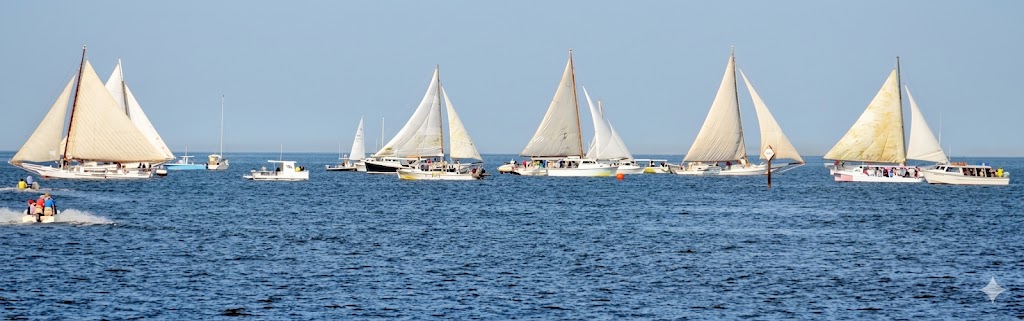
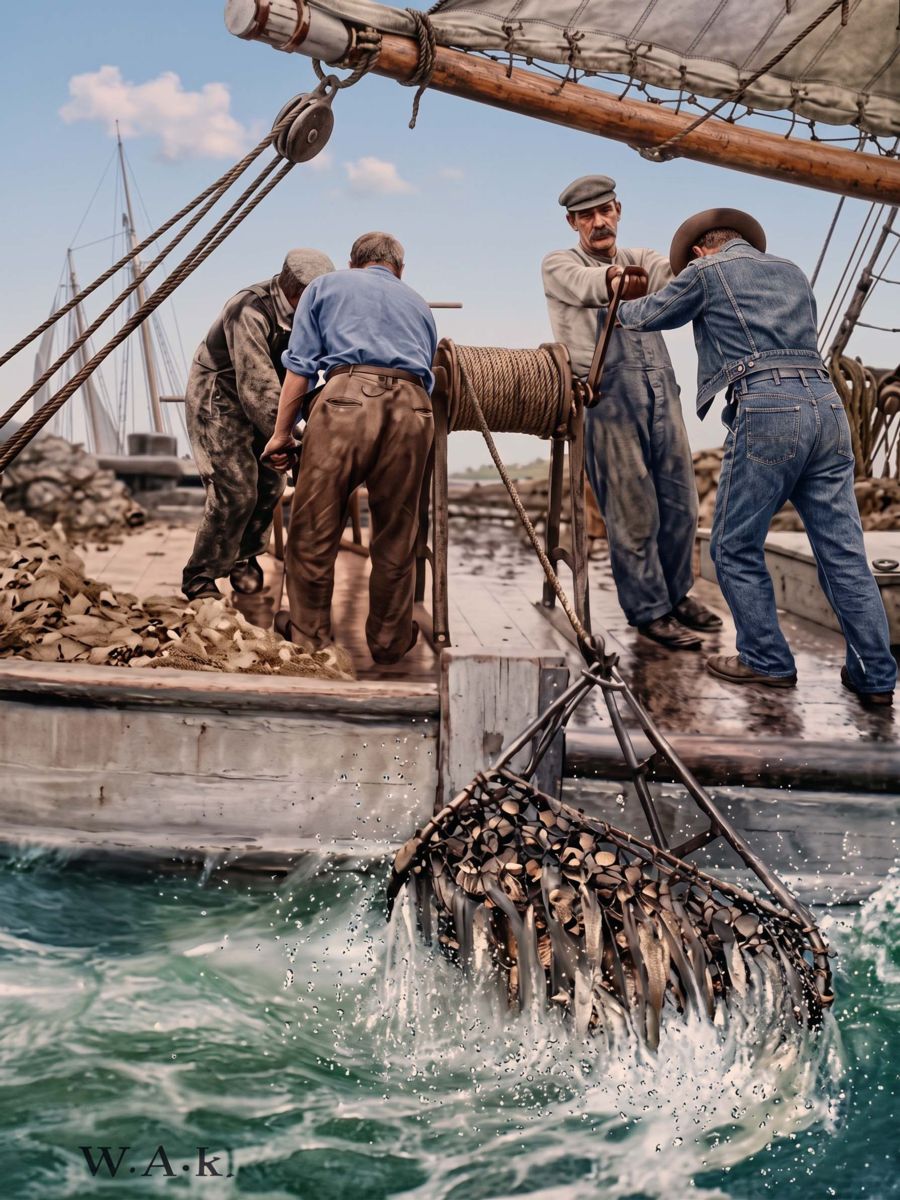
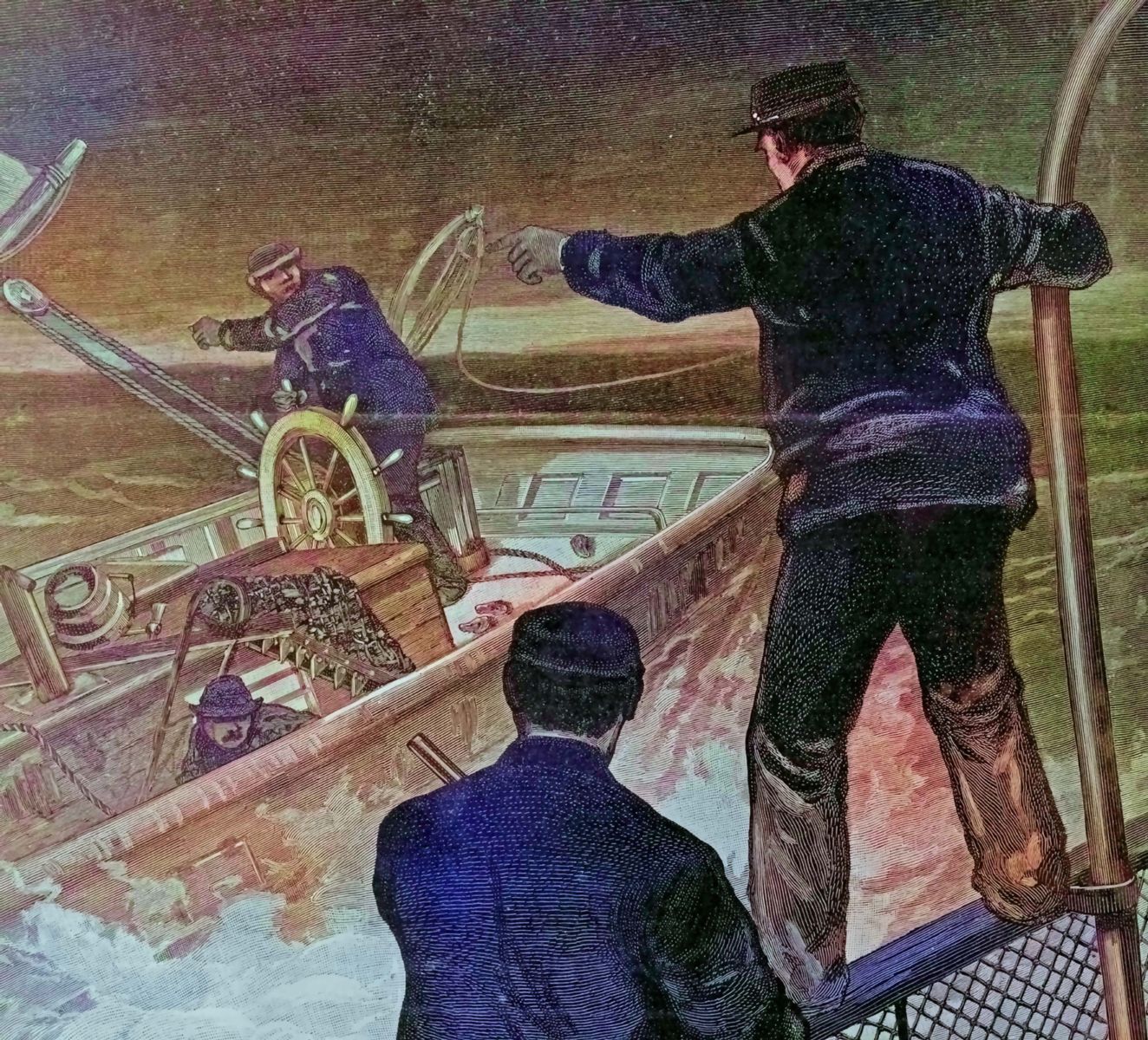
At first, no dredging under power was allowed. You could only dredge under sail. The pushboats were allowed to be used to get the skipjacks out to the oyster beds and back to port again, but whenever dredging, they had to be raised up out of the water and hung from the stern in davits. This was so the oyster police could tell that the dredging was being done under sail. The fate of the skipjack fleet has followed the fate of the oysters. In 1865, Maryland began allowing oyster dredging in the Chesapeake Bay. The increased ability to harvest, along with the rise of the railroads and refrigerated rail cars, vastly expanded the market and demand for oysters. The peak recorded oyster harvest was 15 million bushels in 1884-85—not coincidentally, about the time that skipjacks evolved. The heyday of skipjack construction was the early 1900s. A number of vessels built during this period still sail today, having been rebuilt at least once or more during the past century. But the efficiency of the new skipjack fleet led to overharvesting and depletion of the oyster beds. Harvests began to decline. Around the turn of the century, pollution of the oyster beds led to several severe typhoid outbreaks, causing the demand for oysters to plummet 40 percent by 1910. Prohibition added to the decline in demand. Who wanted to eat oysters on the half shell unaccompanied by beer or champagne, depending on your economic status? A further blow came with another typhoid outbreak in 1924, when 1500 cases were linked to a shipment of oysters, although probably not from the Chesapeake Bay. Demand dropped by another 85 percent, and skipjack construction stopped almost entirely in the 1920s. Owners of many vessels simply pushed them up into the mud and abandoned them. By 1930, while oysters seemed to be rebounding with better harvests, there was little market for them. Prices fell during the Depression years and demand didn't rebound until after World War II. Although harvests still were only in the 2- to 3-million bushel range, better prices led to renewed interest in building skipjacks. Many of today's surviving boats date from this mid-century revival. By the 1960s, there were about 47 skipjacks dredging commercially. In the 1960s, though, as the oyster harvests diminished, the state eased the regulations, allowing dredging under power two days a week—Mondays and Tuesdays. Which worked out fine if there was good wind the rest of the week. In the 1990s, the regs were further eased to allow watermen a choice of which two days they would dredge under power. Today, it is a rare sight to see a skipjack dredging under sail. Dredging season for skipjacks runs from November through March.
Written by Skipjack Heritage
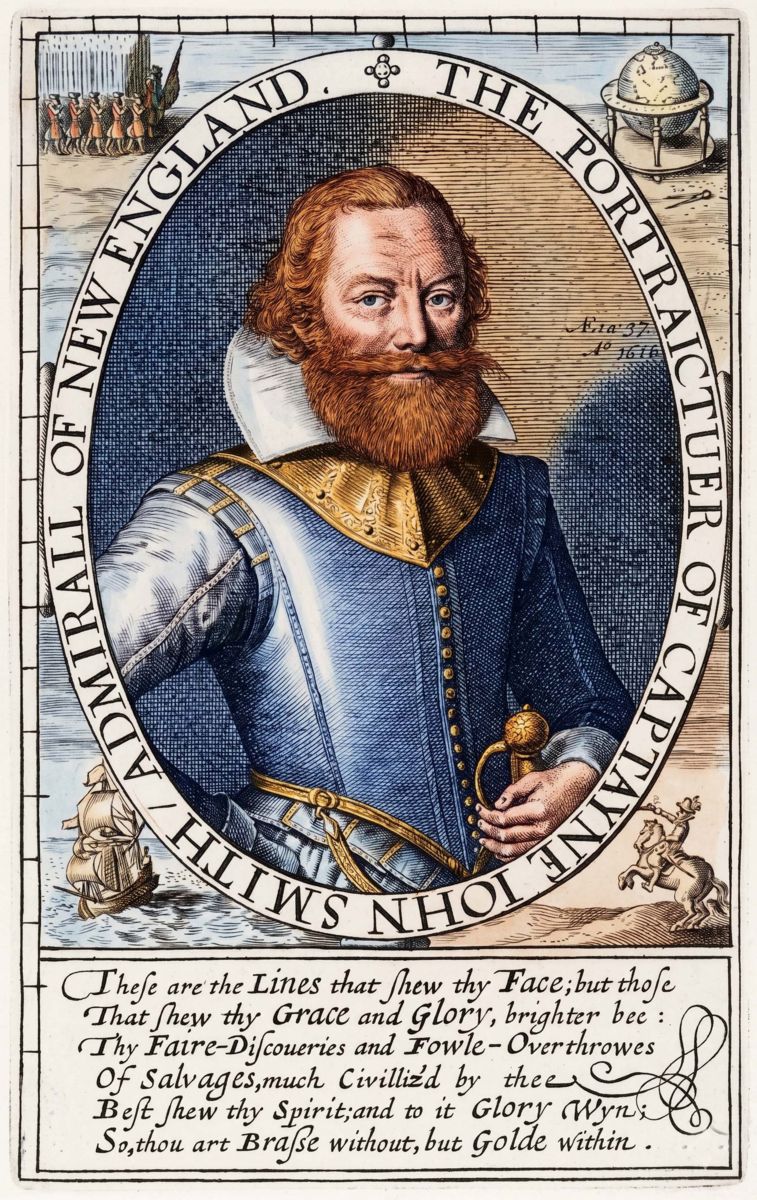
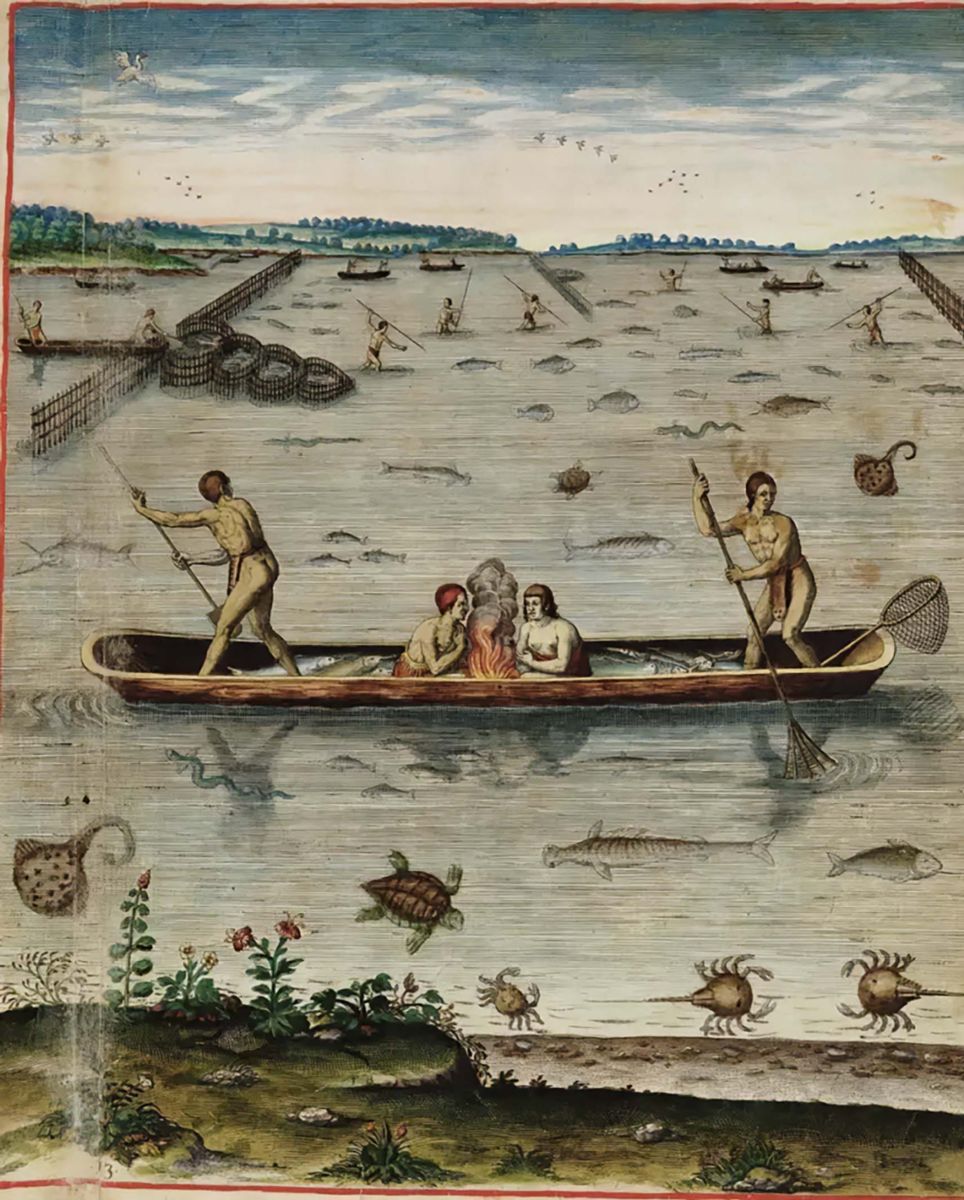
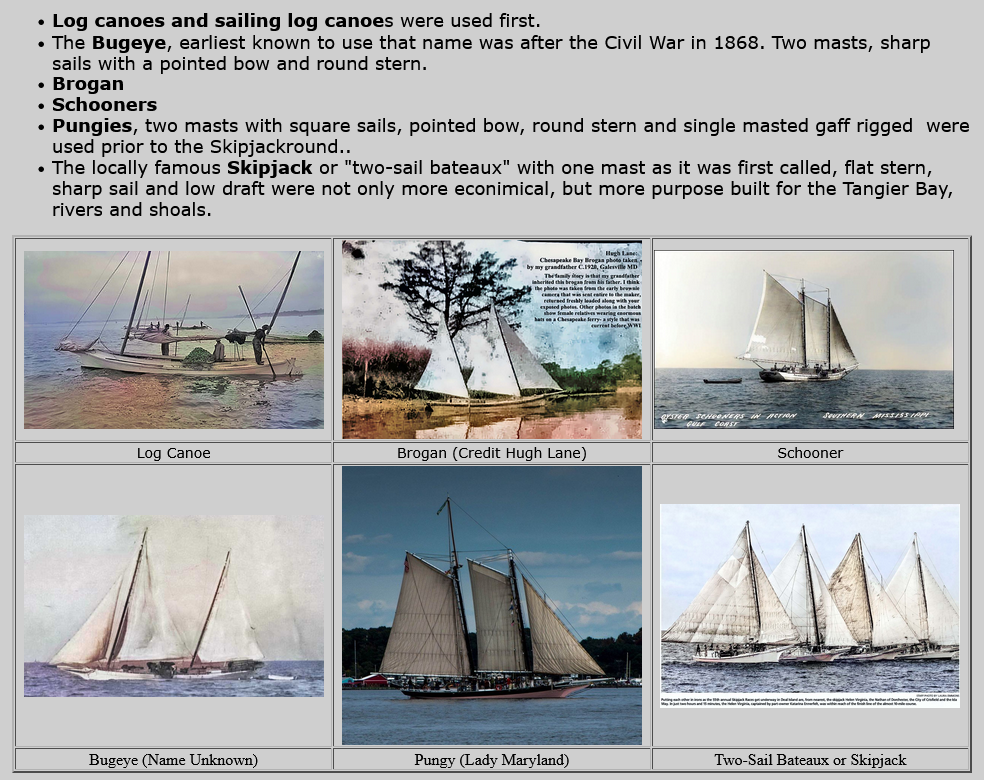
 Leading up to the actual history of the Skipjack itself and before turning to the history of the Skipjack itself, it is important to note a few earlier influences. Around the time of Jamestown, after 1608, Captain John Smith and the English settlers undoubtedly observed how Native peoples harvested oysters. They rowed out in log canoes to shallow waters where European settlers later improved upon this method by adding a simple hinge between two rakes, creating a scissor-like tool. These evolved into what are known today as “tongs,” or hand tongs. There is no single agreed-upon origin of the name “Chesapeake.” It may derive from one of several Algonquian words: Tschiswapki, meaning “highly salted water”; K’chesepiack, meaning “country on a great river”; or Chesapiuoc, meaning “great shellfish bay.”The term Chesepiook was recorded by explorers traveling north from the Roanoke Colony in 1585–1586. Later, Captain John Smith’s maps and writings show several variations of the name, most commonly “Chesapeaks.” Watermen from Smith Island were among the first to take notice. Their small log canoes, however, lacked the sail power needed to pull heavy iron dredges, creating the need for a new type of vessel. The Bugeye, which predated the Skipjack, emerged as a hybrid of Chesapeake boat types. Builders drew from the log canoe’s dugout hull and sail plan while developing a larger, more powerful working boat.
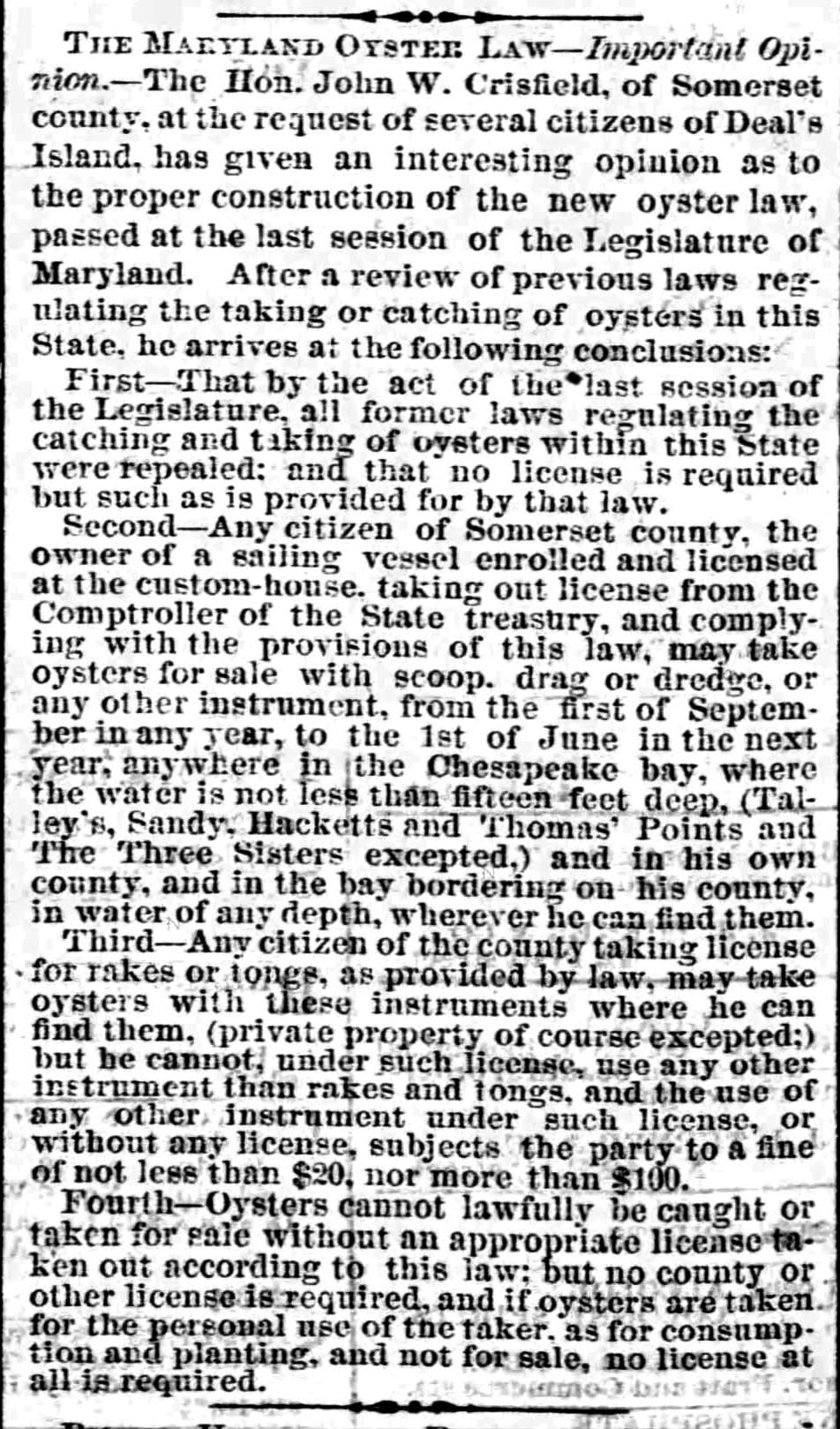
From the Pungy came the sweeping sheer, low freeboard and log rail—the latter allowing oyster dredges to be quickly and easily hauled aboard. The Bugeye came on (before the Skipjack) and contributed features such as the knightheads and hawse pieces at the bow. From the Chesapeake Bay Schooner came the shoal draft, open working deck and the long, graceful head with its decorated trailboards. In time, the traditional sailing log canoe evolved into a fully decked vessel. Oyster dredging, however, soon became a growing problem. In 1820, Maryland passed its first law regulating oyster harvesting. The law prohibited dredging (drudging) and restricted the transport of oysters to vessels owned by Maryland residents for at least one year. This was in response to an influx of out-of-state dredgers entering the Chesapeake Bay after Virginia banned dredging in 1811, leading to overharvesting. The legislation aimed to protect both the oyster population and the livelihoods of local watermen.
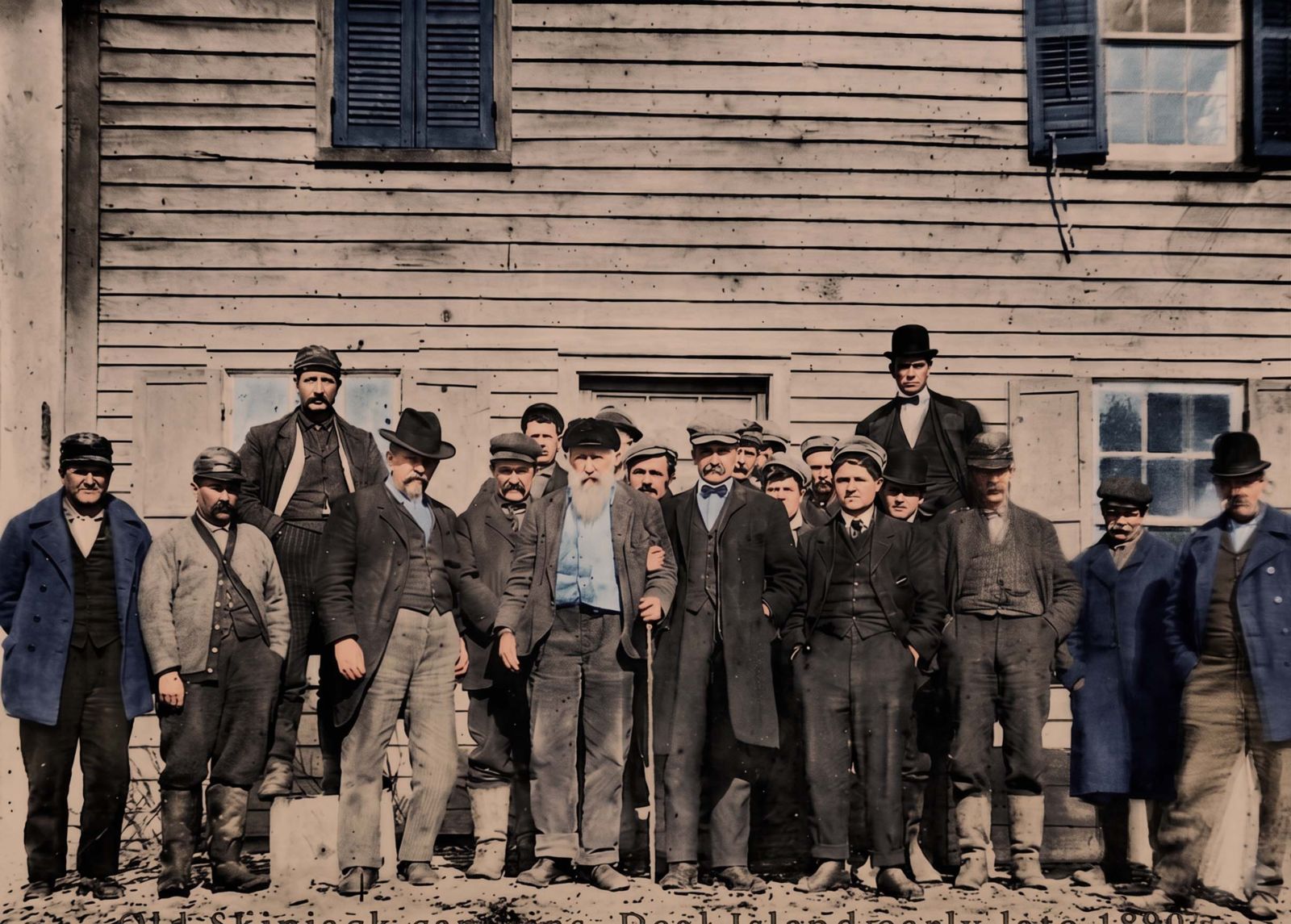
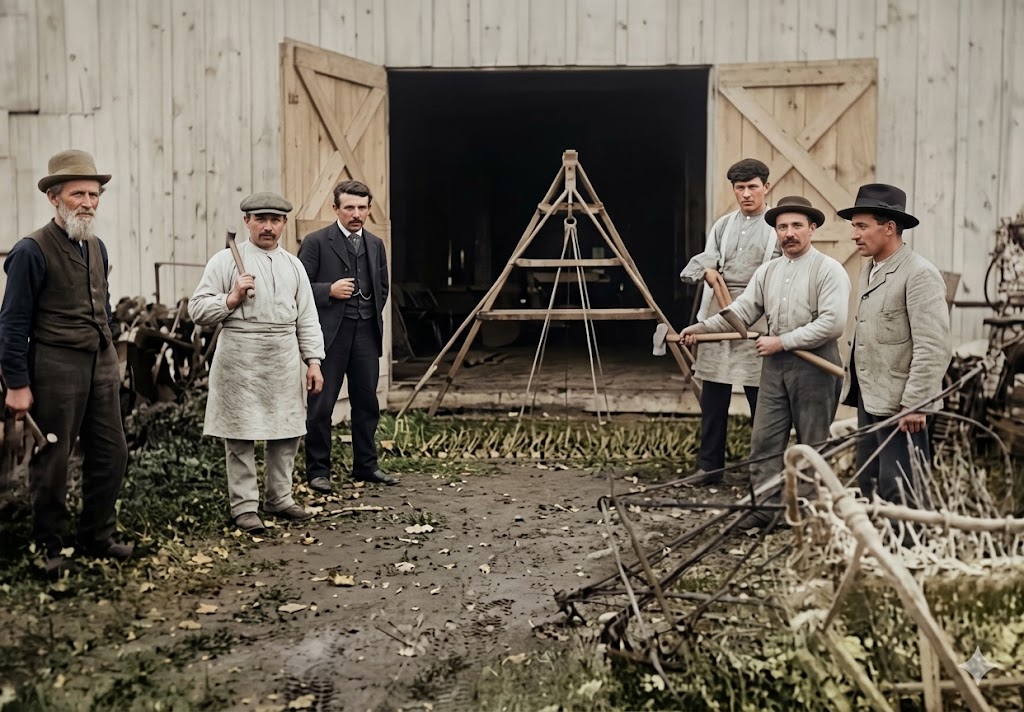
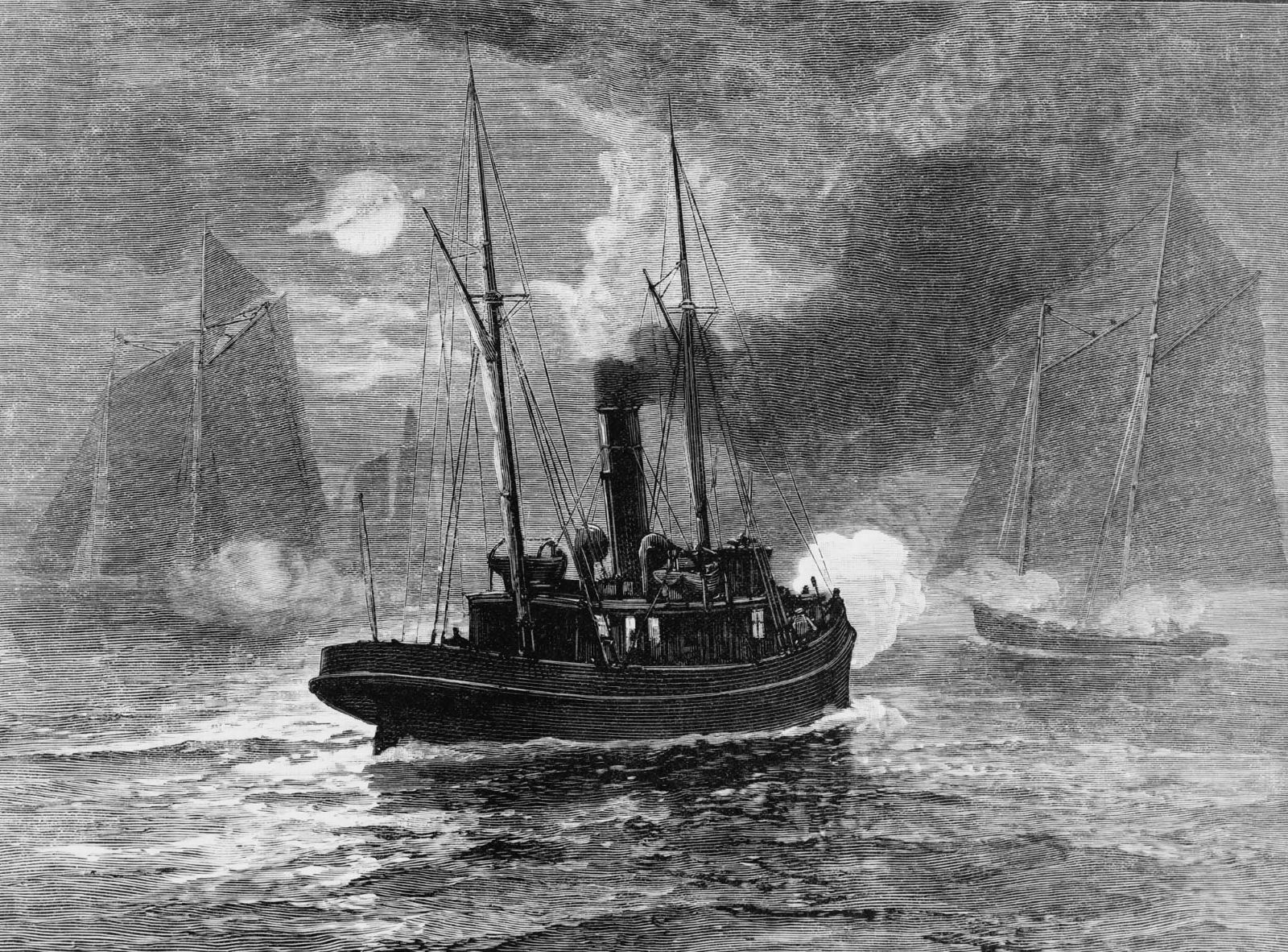
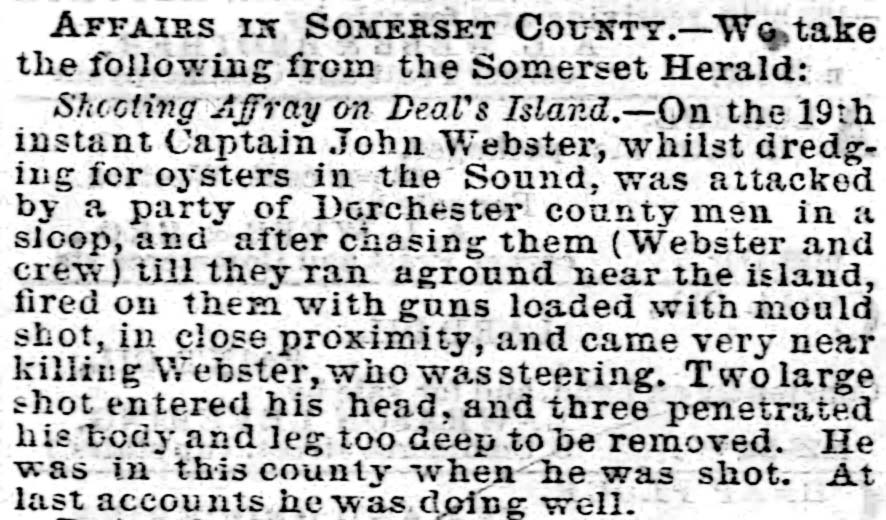
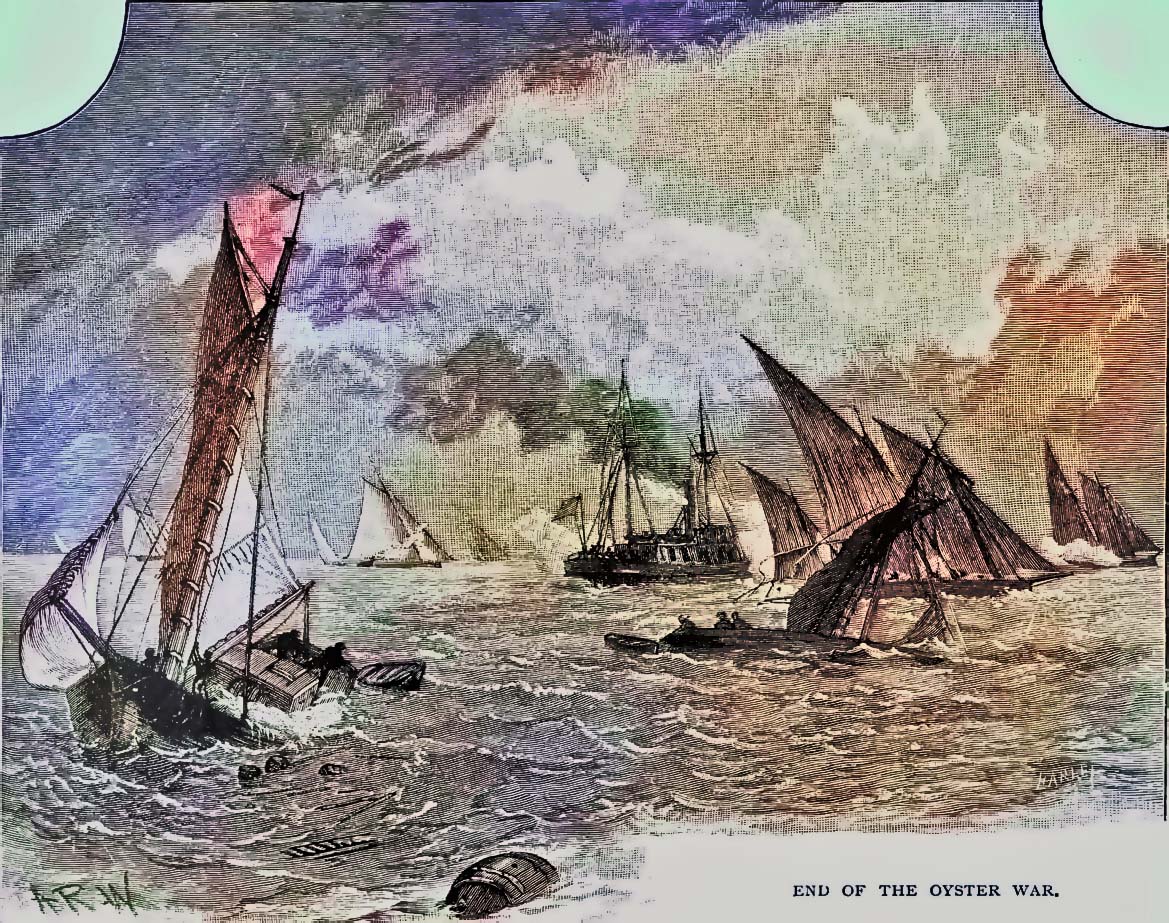
Despite these laws, conflicts persisted for decades. Tensions between outside dredgers and local watermen—often referred to as the Oyster Wars—continued from the 1820s onward. A major shift came after the Civil War. By 1865, growing demand for oysters created what many described as a “post-war gold rush.” In response, Maryland lifted its earlier ban on dredging, but only under strict conditions. Dredging was permitted for licensed Maryland residents and restricted to sail-powered vessels as a conservation measure. Any auxiliary engines had to be raised out of the water while working. In 1867, the state established an “oyster navy” to enforce these laws and protect local oyster beds from poachers, including those from neighboring Virginia. One ongoing challenge was the lack of a clearly defined boundary between Maryland and Virginia waters in the Chesapeake Bay, which further fueled disputes. Oyster beds in New England—particularly in Connecticut and New York—had been heavily overharvested, prompting Yankee boats to head south and attempt the same in the Chesapeake. Contemporary accounts, including an 1865 article in The Baltimore Sun, detail the growing concern and legal response. In 1866, the same year the railroad reached Crisfield, Maryland lifted the ban on dredging in Somerset County. Almost immediately, blacksmiths were in high demand—not only to forge oyster dredges, but also to produce the ironwork needed for sailing vessels such as the bugeye and, later, the skipjack.
Before Bugeyes, big Pungies, Schooners and Sloops worked the Bay in 1874. In Somerset County a form of dredge called For the record the author still found a fair share of Bugeye’s being built between 1890 and 1905, which had been on the Chesapeake since 1860’s.
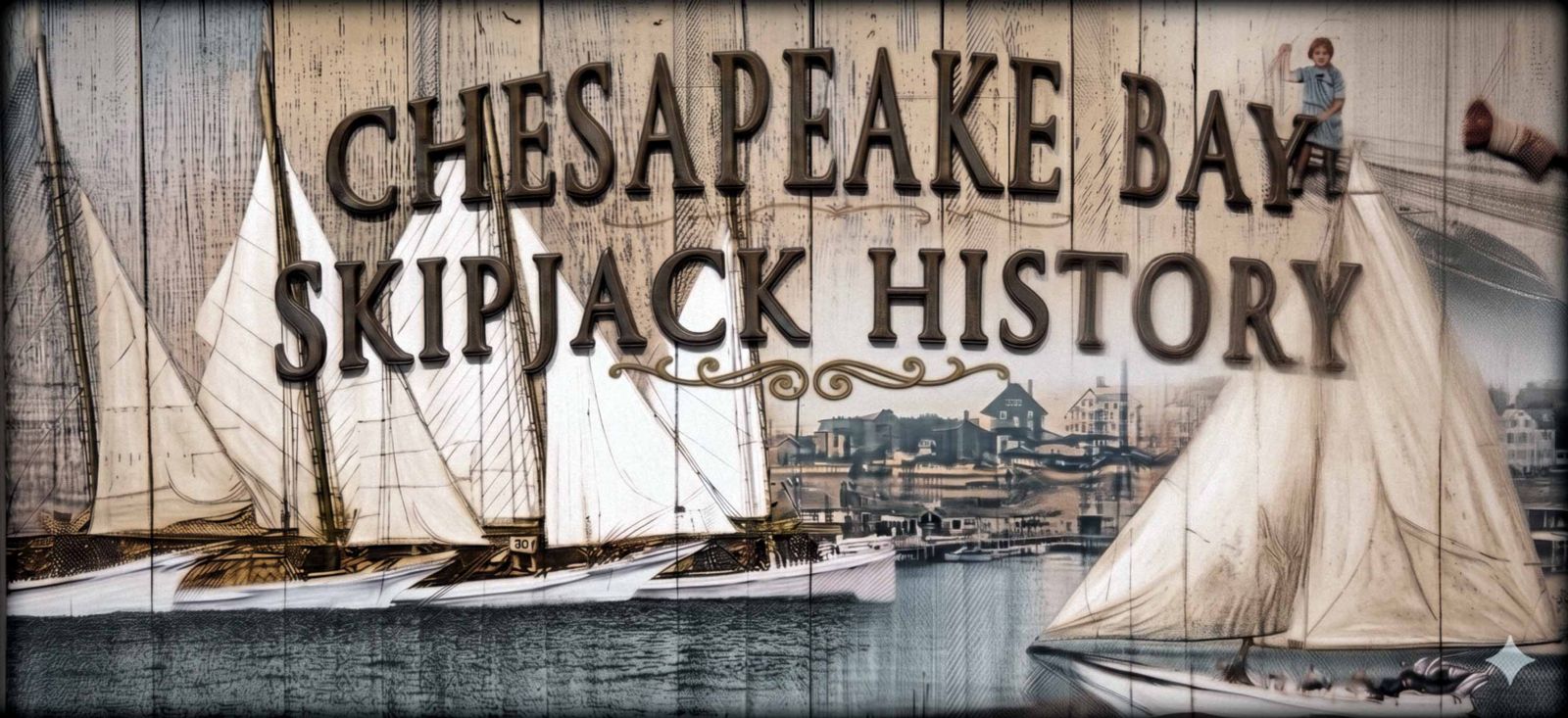
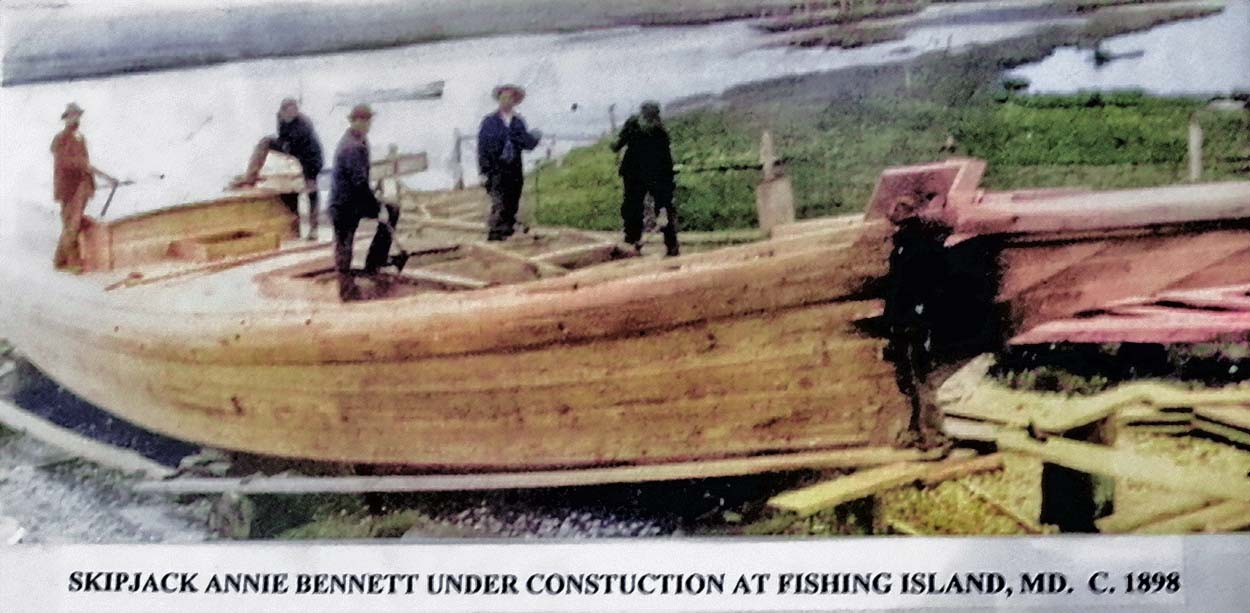
In 1900 you could have seen Skipjacks, Bugeyes, Pungies, Schooners, Sloops, Brogans and one or two others drudging oysters. The Pungy’s and Schooners especially drew a lot of water and could not drudge the shoals, not to mention being high sided made dredging cumbersome. The Skipjack is the traditional sailing workboat that emerged in the 1890s on Maryland’s Eastern Shore, purpose-built for oyster dredging in the shallow waters of the Chesapeake Bay. Originally referred to as a “two-sail bateau,” the name “Skipjack” likely comes from an old English term meaning a lively or useful servant—fitting for a vessel known for its hard-working role in the oyster industry. Designed with a shallow draft, wide beam, and a centerboard rather than a deep keel, the Skipjack was well suited for navigating and dredging over oyster beds in waters inaccessible to deeper vessels. Its rig consisted of a single mast carrying a large mainsail and jib, along with a bowsprit often adorned beneath with decorative trailboards. This simple yet effective design allowed the vessel to drag heavy oyster dredges under sail power alone.
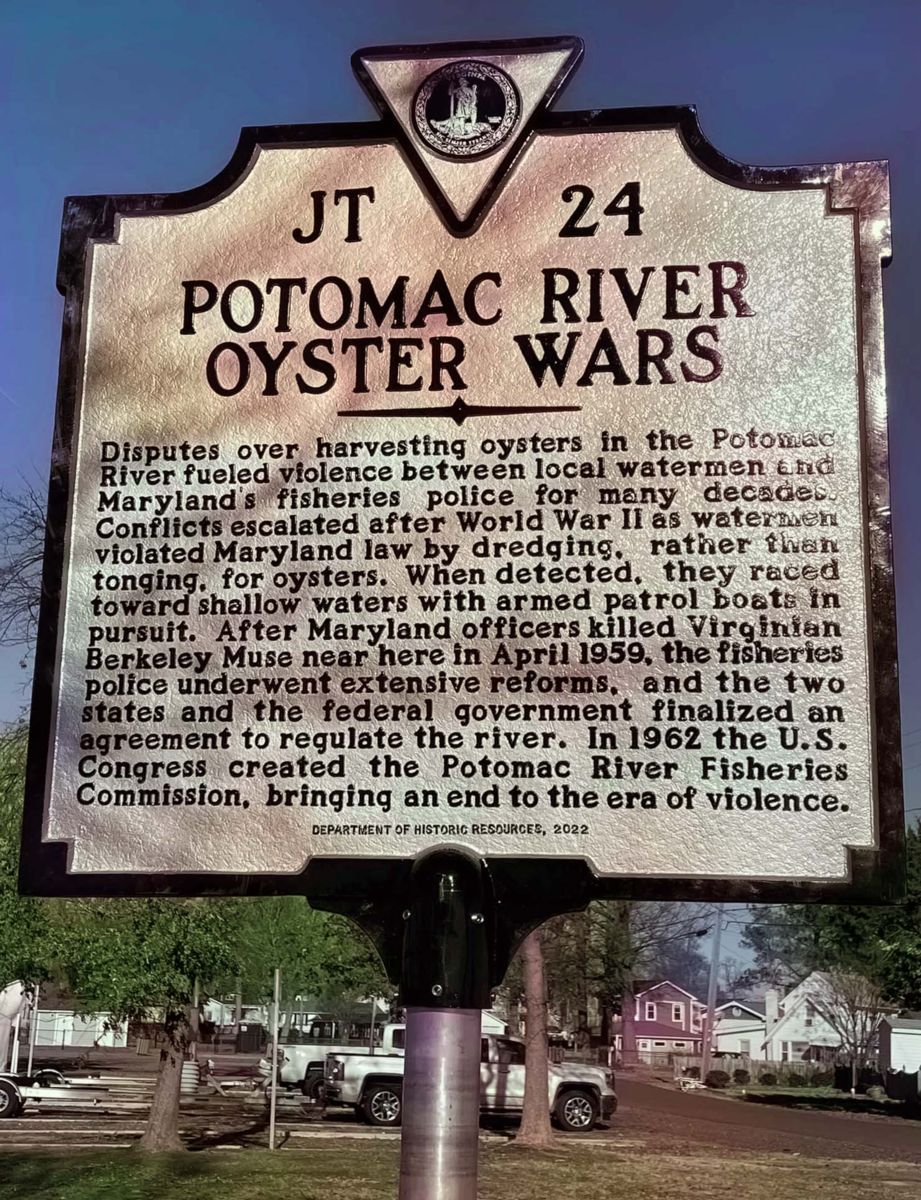
The Pungy’s and Schooners especially drew a lot of water and could not dredge the shoals, not to mention being high sided made dredging cumbersome. The Bateau’s as they were called first from then on became the main sailing workboat that oysters were dredged eventually being called a Skipjack dominated the oyster bars and replacing the other boats or its predessors. The bugeye was originally constructed with a log hull, and as the supply of appropriate timber was exhausted and construction costs rose, builders looked to other designs. They adapted the sharpies of Long Island Sound by increasing the beam and simplifying the sail plan. The result was cheaper and simpler to construct than the bugeye, and it quickly became the predominant oystering boat in the bay. A Skipjack could be built and rigged at half the cost of a Bugeye or Sloop that had more labor intensive rounded bottoms compared to the V-bottom or flat bottom Bateaux’s. However, many a Skipjack built had varying influences such as some built in Pocomoke were round bottoms and the many flat bottoms built in the lower Bay so they could oyster the shoals. During the early part of the 20th century when waters around the lower bay were over harvested, a majority of the boats, those from Smith Island, Somerset County including the authors own family went north, over to the Potomac and oystered. There has been many a tale told of the "Oyster Wars" with Eastern Shore oystermen, those local to the Potomac, St. Georges Island and of course between Maryland and Virginia boats. By the 1933 season drudging on the Potomac River was illegal. Notorious Oyster Pirates on the Chesapeake Bay
Constructed from locally available materials, Skipjacks were relatively inexpensive to build and maintain, which made them widely popular among watermen. At the height of the Chesapeake oyster harvest in the late 19th and early 20th centuries, the Bay was producing up to 15 million bushels of oysters annually, and Skipjacks numbered in the hundreds to over a thousand. These boats became a fixture of winter dredging seasons, with crews often living aboard for days at a As the century progressed, however, the oyster population began to collapse due to over harvesting, pollution, habitat destruction, and disease. By the mid-20th century, the once-vast, mighty Skipjack fleet had dwindled to a few dozen working vessels. Despite this decline, the Skipjack remains a cherished symbol of Maryland’s maritime heritage. In 1985, it was officially designated as the "State Boat of Maryland," recognizing its cultural and historical significance. The conservation law of 1865 forbade dredging under power for 102 years when the law was amended to allow dredge boats to be pushed on Mondays and Tuesday, which helped their captains and crew, albeit how much due to winds, bad weather, etc. is hard to know overall. |



 the bottom was visible, then used simple forked sticks—much like small rakes—to gather oysters and bring them to the surface.

 As early as 1820, Maryland officials were hearing claims that New England watermen—out-of-state dredgers and tongers—were taking oysters from Somerset County beds, resources local watermen believed belonged to Maryland residents. In response, the state moved to restrict oyster harvesting, limiting it to its own citizens and prohibiting dredging in an effort to protect the fishery.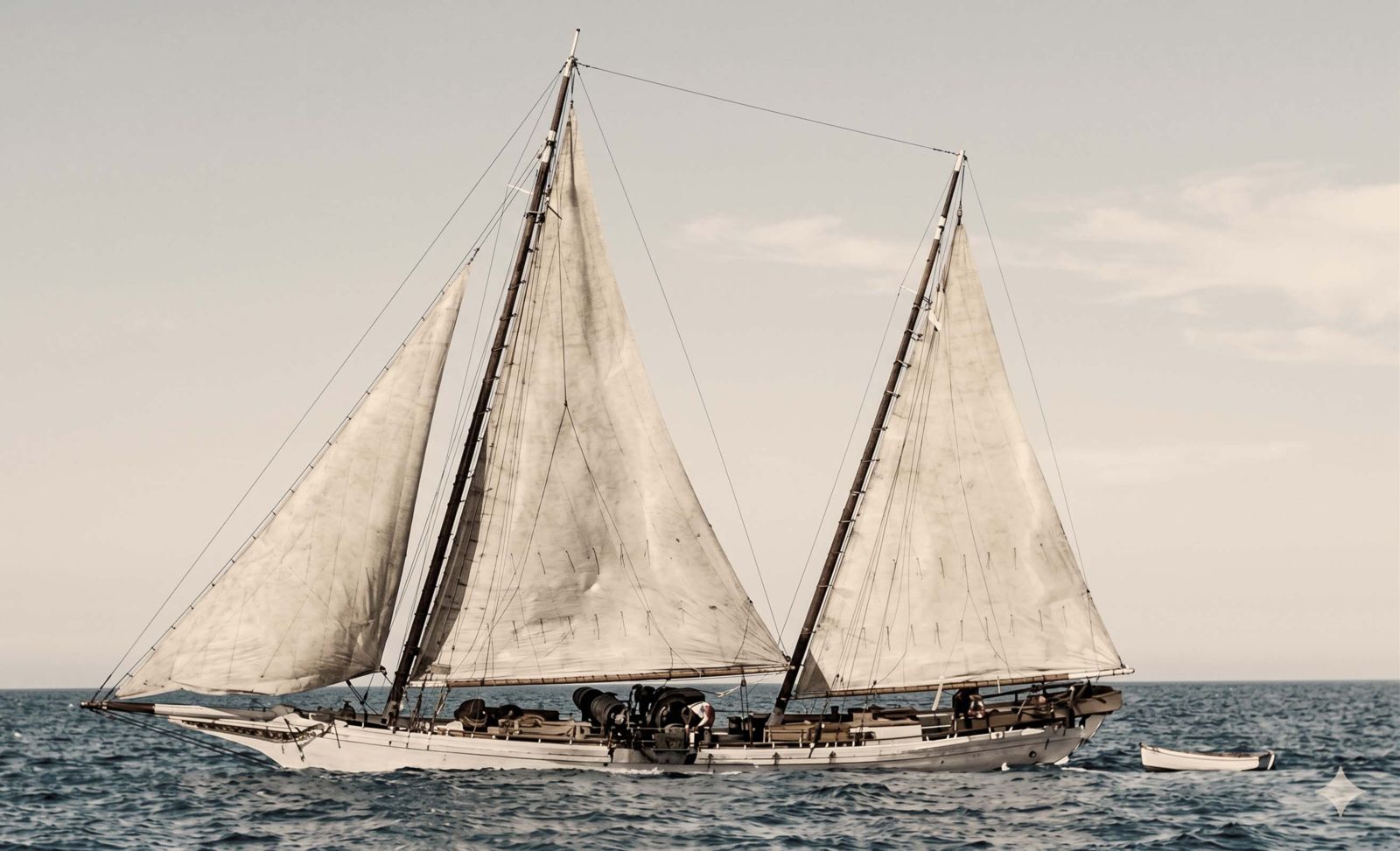
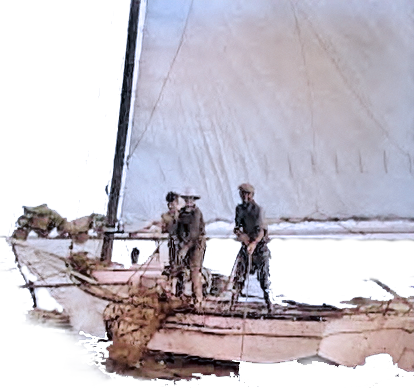 a “scrape” was used. In 1884 there were 15,000,000 bushels of oysters taken from the Bay by over 1,000 drudge boats: including 955 in Maryland alone. In 1889 there were 860 in Maryland with 6.6 million bushels taken.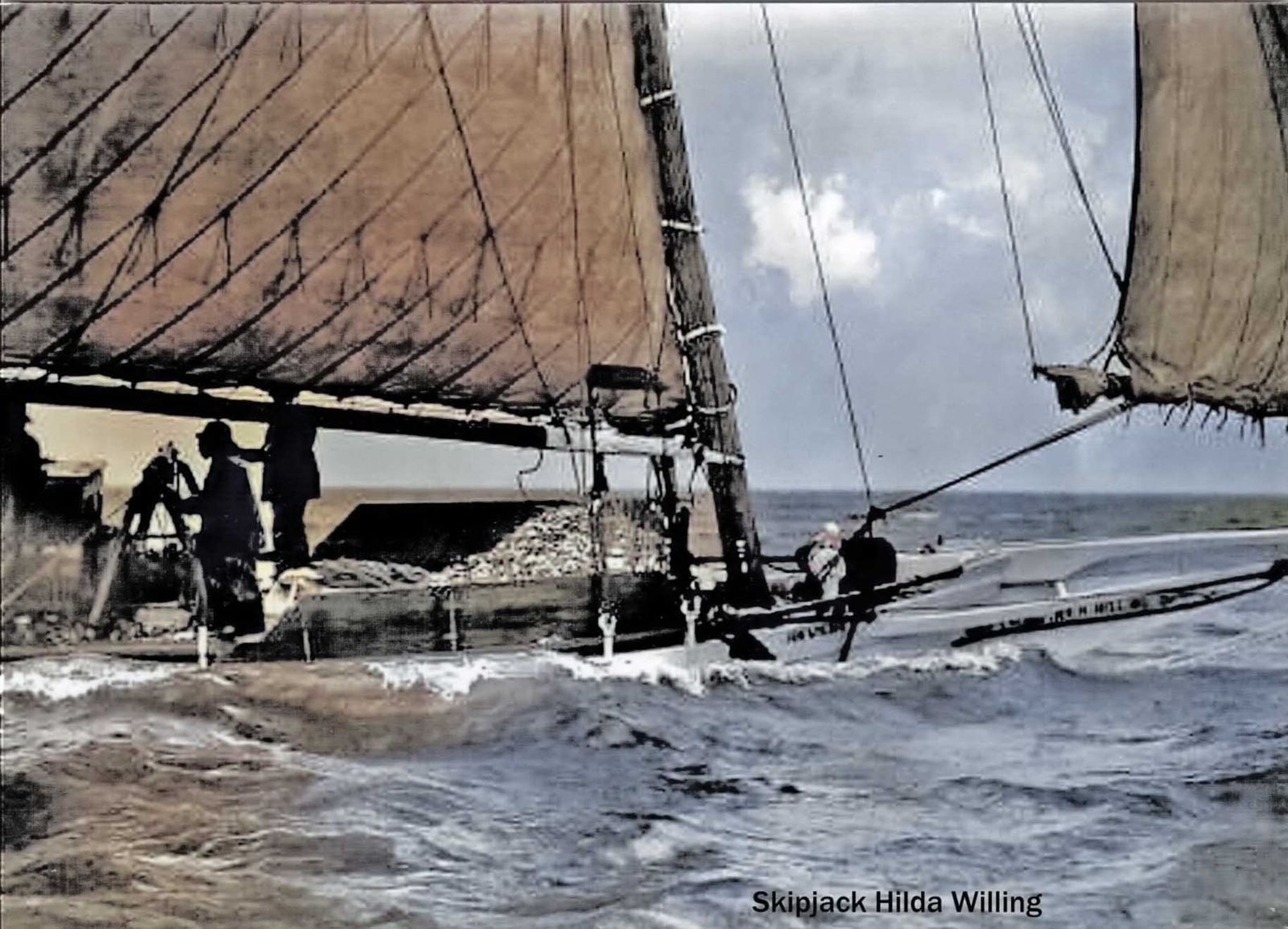

 time.
time.