| DEAL ISLAND WEATHER |
| Web Counters | ||||||
|
|
Something different on a personal, first person experience........growing up on the water and around boats the author can remember pulling his grandfather up the mast as a teenager with everything he had, put yer'back into boy!
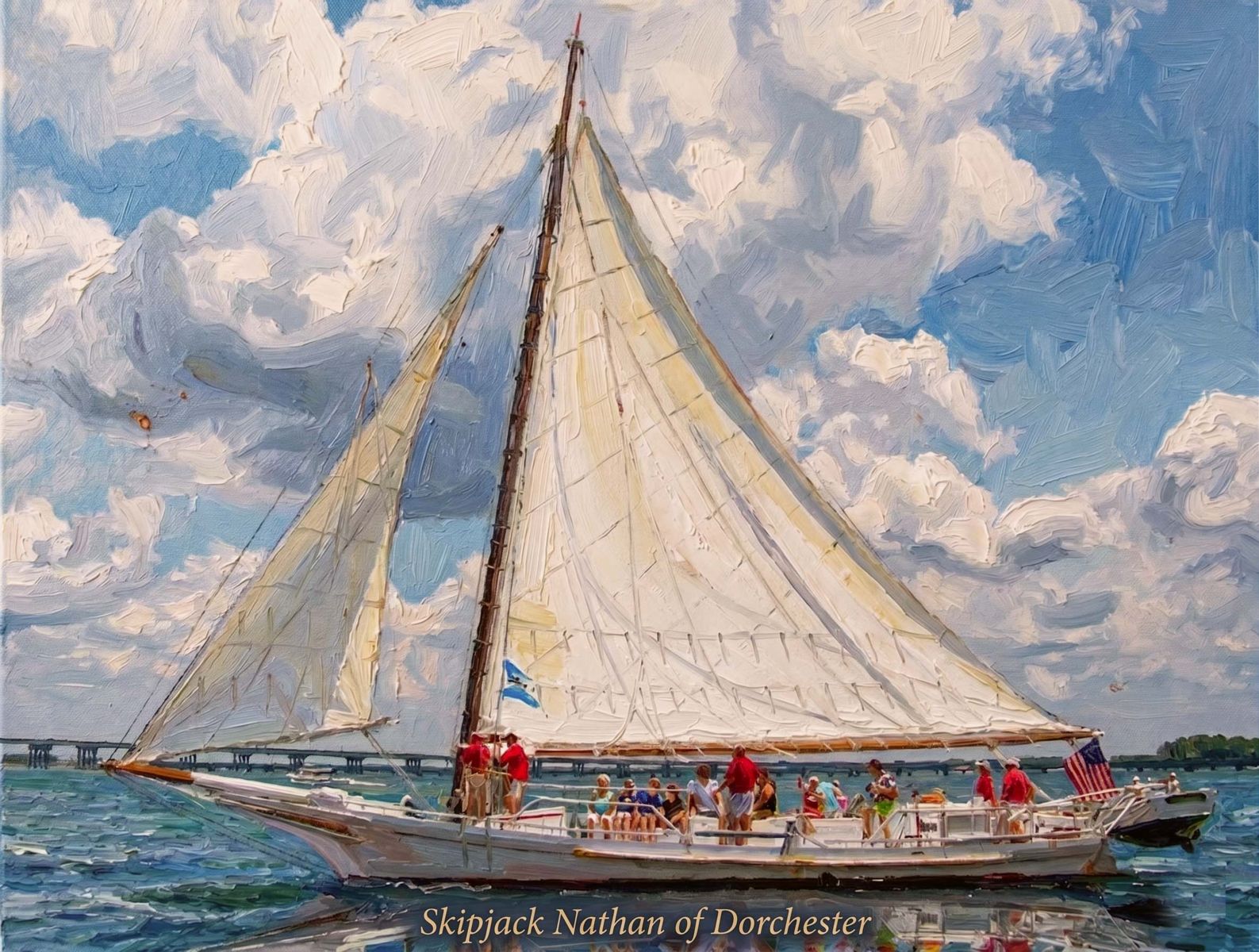
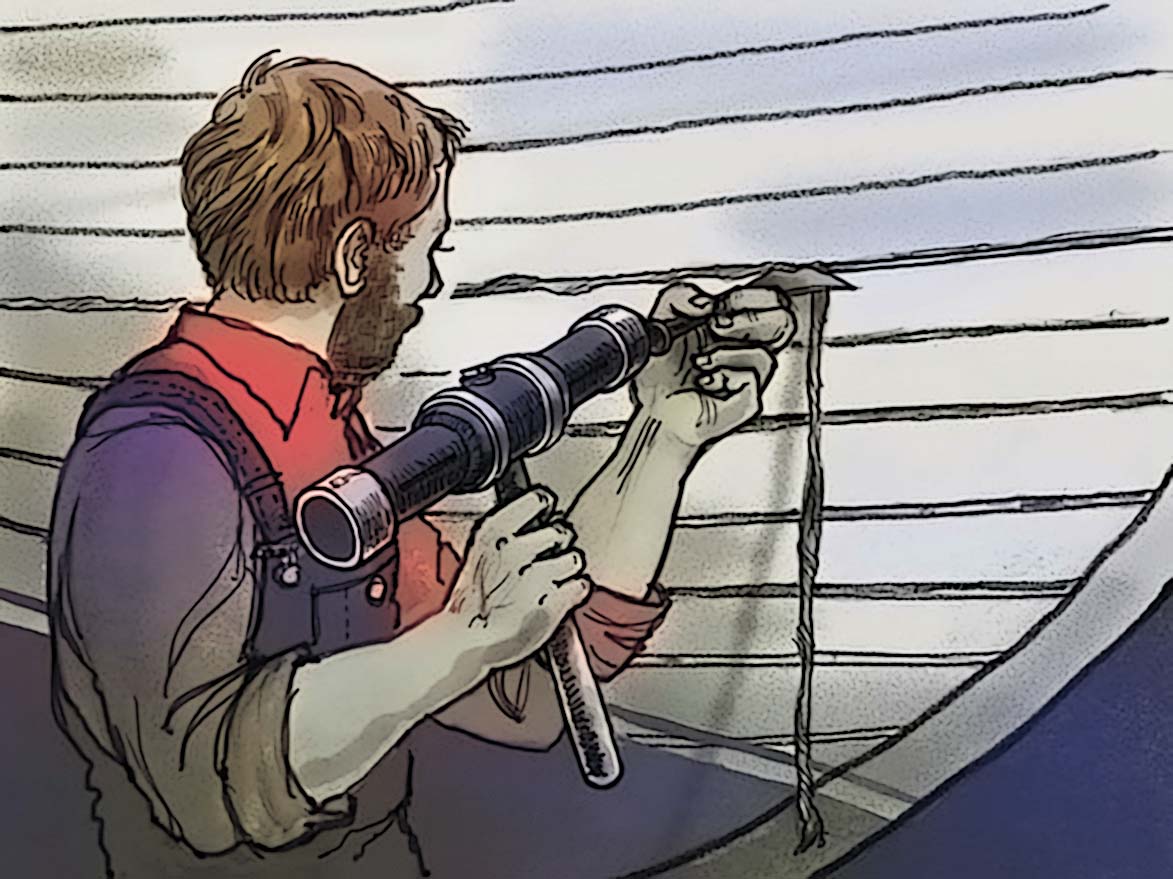
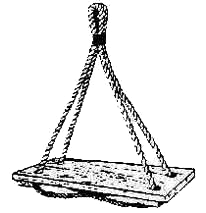
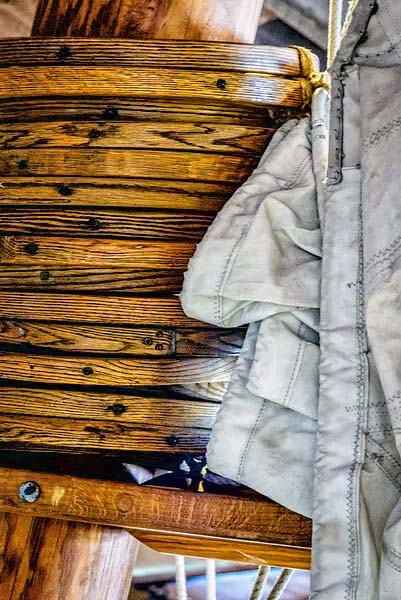
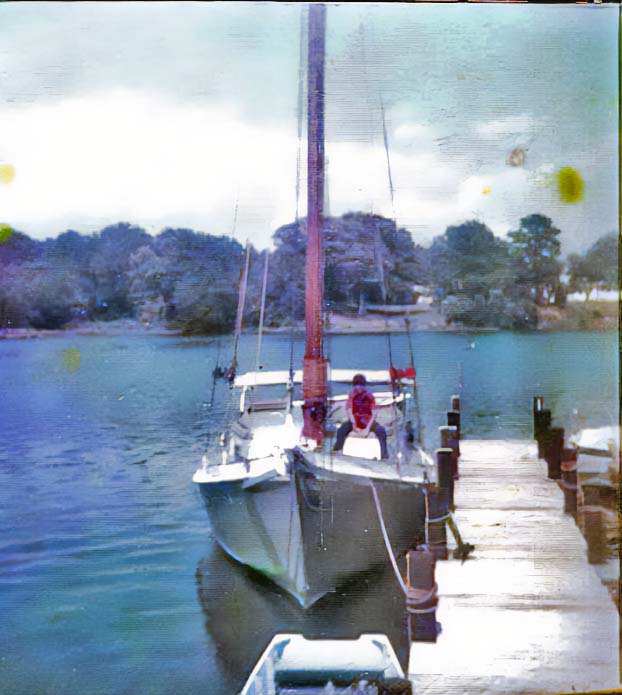
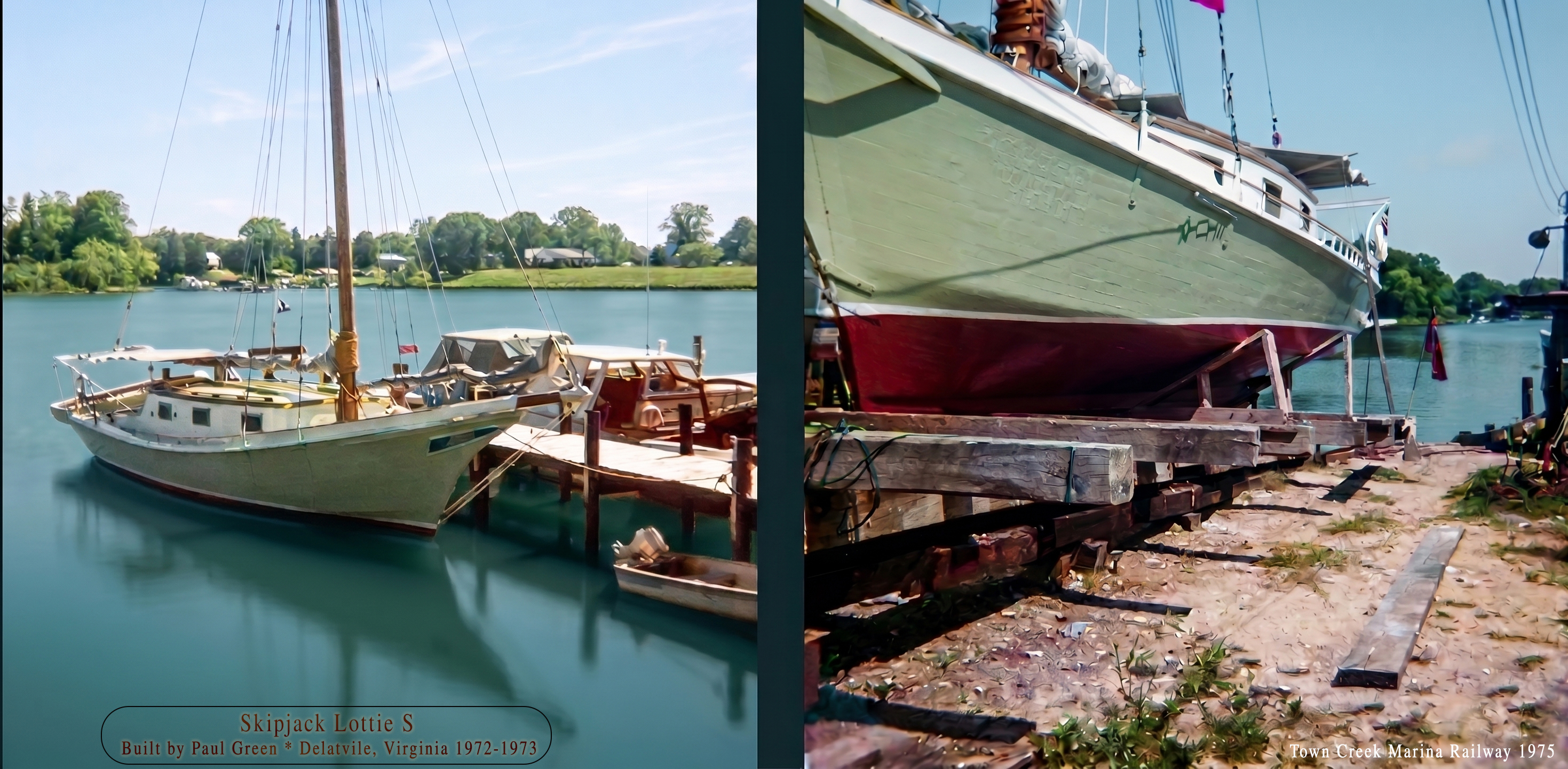
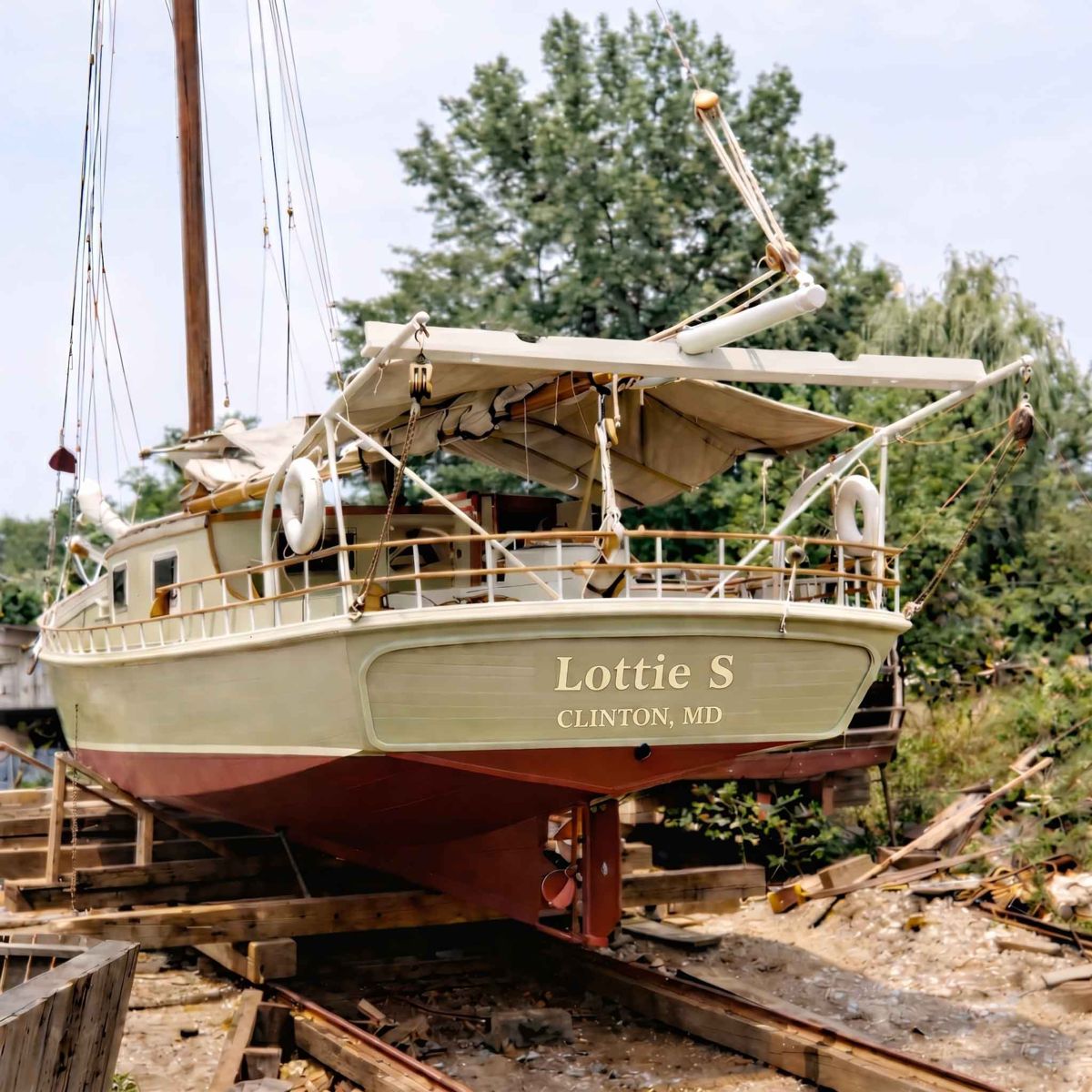
There was always work to be done. Swapping out the zincs on the prop, crawling inside the hull to lay down a coat of Cuprinol every year once the cold started settling in, fighting mildew wherever it tried to take hold—you learned quick that a boat like her demanded constant care. She measured 56 feet from bowsprit to davits, with a 13’6” beam, and a mast rising about 51 feet. Built one board higher than a working skipjack, she carried herself just a little different. Auxiliary power came from a 453 Detroit Diesel—reliable, loud, and part of her heartbeat. I can’t recall the exact centerboard dimensions anymore, but if you knew her, you could figure it out. Some of my “favorite” moments—if you can call them that—were dealing with the stuck mast rings when trying to haul up the mainsail. You’d fight them every step of the way. Going up the mast in a boatswain’s chair cured any fear of heights I ever had. As a teenager, I was fantasizing I was in Captain Courageous. The movie may have been a bit before my time, but it’s hard not to think of Captains Courageous—and Spencer Tracy and Lionel Barrymore—when you look back on those days. I used to wonder if the old-timers had it right all along with with just simple linseed oil—maybe those mast rings wouldn’t have stuck so bad. One year, carpenter bees were thick along the Bay and got into the mast so badly we had no choice but to replace it, afraid she might give way. Stripping off the mainsail and rigging her back up again was no small task. And then there were the traditions. Always placing a new silver dollar under the mast—heads up—for good luck. Plenty of superstitions came with these boats and you didn’t question them. Since green was my grandfathers favorite color and he loved pungies, he painted her green. It was rooted in tradition and practicality as well. The Chesapeake Bay Pungies, especially from the late 1800s into the early 1900s, were often painted in earthy, working colors—greens, ochres, and dark tones that blended with the marshes and water. Green, in particular, had a few advantages:
A man fond of Pungies—fast, sharp-built workboats—would have appreciated efficiency, purpose and a certain clean, no-nonsense beauty. Choosing green could easily reflect that mindset: practical, grounded, and tied to the Bay itself. And “great paint” might not just mean the color—it could also point to pride in how she was kept. A well-painted hull was a point of respect. Among watermen, you could tell a lot about a man by how his boat looked. Hard to forget the smell of it all—scraping the bottom, dead barnacles turning ripe if left too long. The red lead paint, especially when the wind picked up, would cover you from head to toe as you brushed and rolled it on. It wasn’t glamorous work, but it was honest—and it was ours.
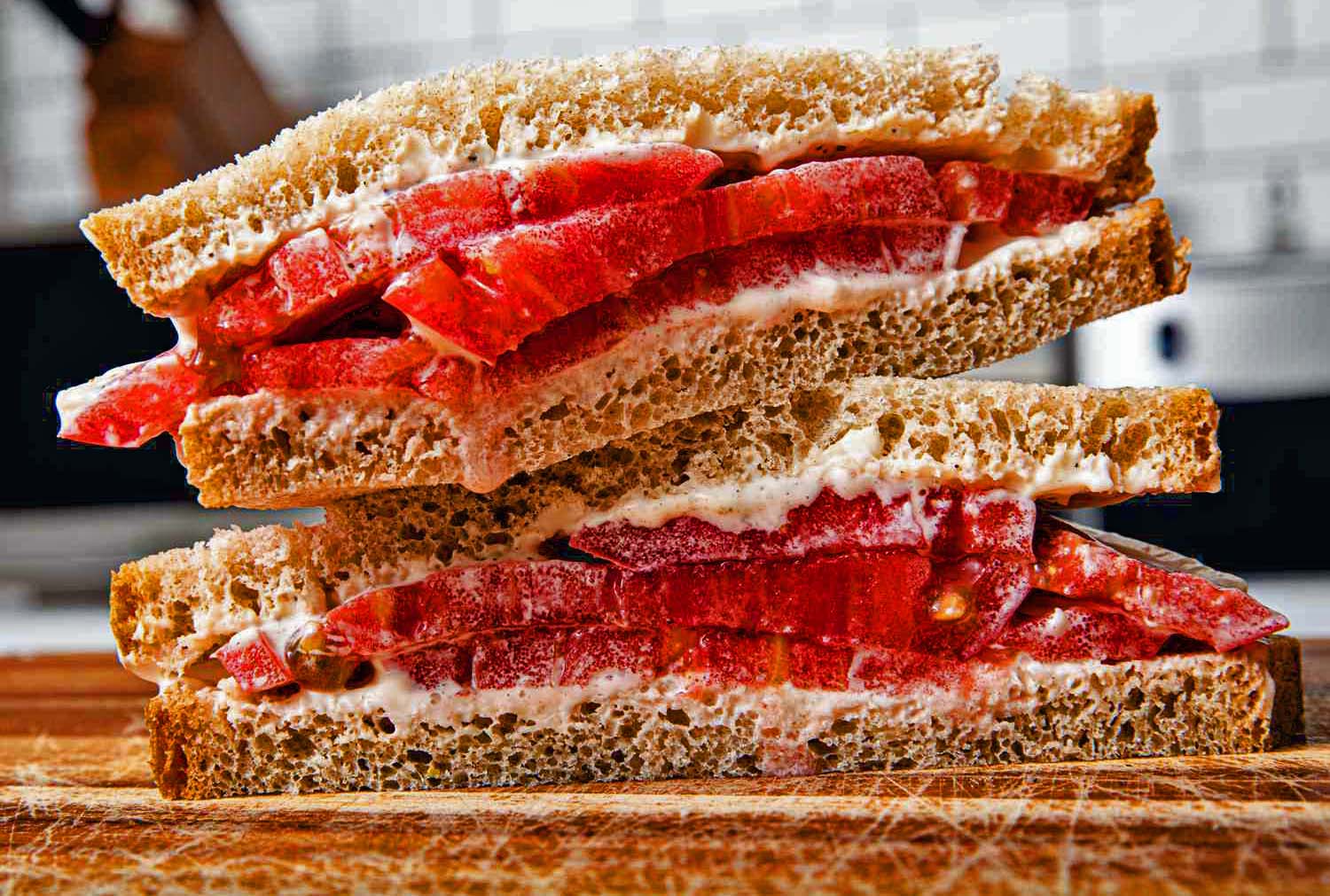
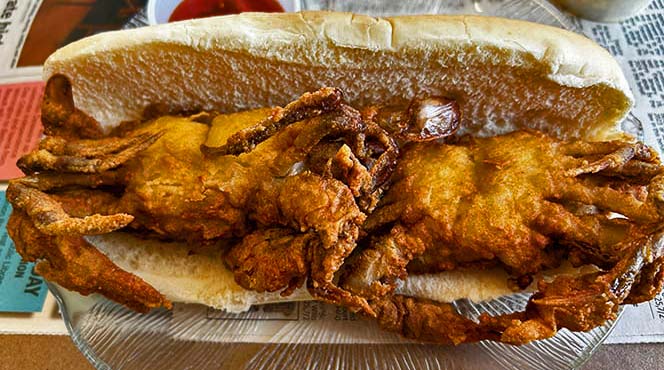
But alongside the hard work were the good memories. Getting up early to crab the grasses, netting soft crabs for breakfast. Sitting down to plates of country sausage, scrapple, eggs, homemade biscuits and sometimes sweet ’tater biscuits straight from the garden. I can still remember falling asleep to the sound of rain on the cabin, watching sunsets stretch wide across the water, and trolling for rockfish with nothing but the jib sail pulling us along. At night, we’d watch jellyfish glow beneath the light while we fished—something you don’t forget. Coming up to the dock, I’d sometimes have the wheel all to myself, wearing my captain’s hat proud. My grandfather, from Mt. Vernon in Somerset County, would head below for a catnap—but not before giving me a compass heading, pointing out a buoy, or a landmark. “Read your chart, boy,” he’d say. Down he’d go, trusting me to hold the course. As I got older, I didn’t need the chart as much. Lunch might be fish we’d caught an hour before, soft crab sandwiches, big mater sandwiches, fresh Eastern Shore cantaloupes—simple food, but nothing ever tasted better. And then there were the dolphins, swimming alongside like it was the most natural thing in the world. To a young, snot-nosed kid, that was something special. Last time I checked, there aren’t any fast-food restaurants floating out on the water. You either brought it, or you caught it. Young folks today, unfortunately, don’t have much of a clue what that was like.
It would never fail when coming alongside, getting closer to another Skipjack, even a pleasure sailboat that the race was on. Because our Skipjack was built as a non-working Skipjack she was built one board higher, roomy cabin with auxillary power. She was built by Paul Green in Deltaville , Virginia where his father and grandfather also built many a boat. As is the tradition there still as the majority of boats built there, Reedville included are pretty
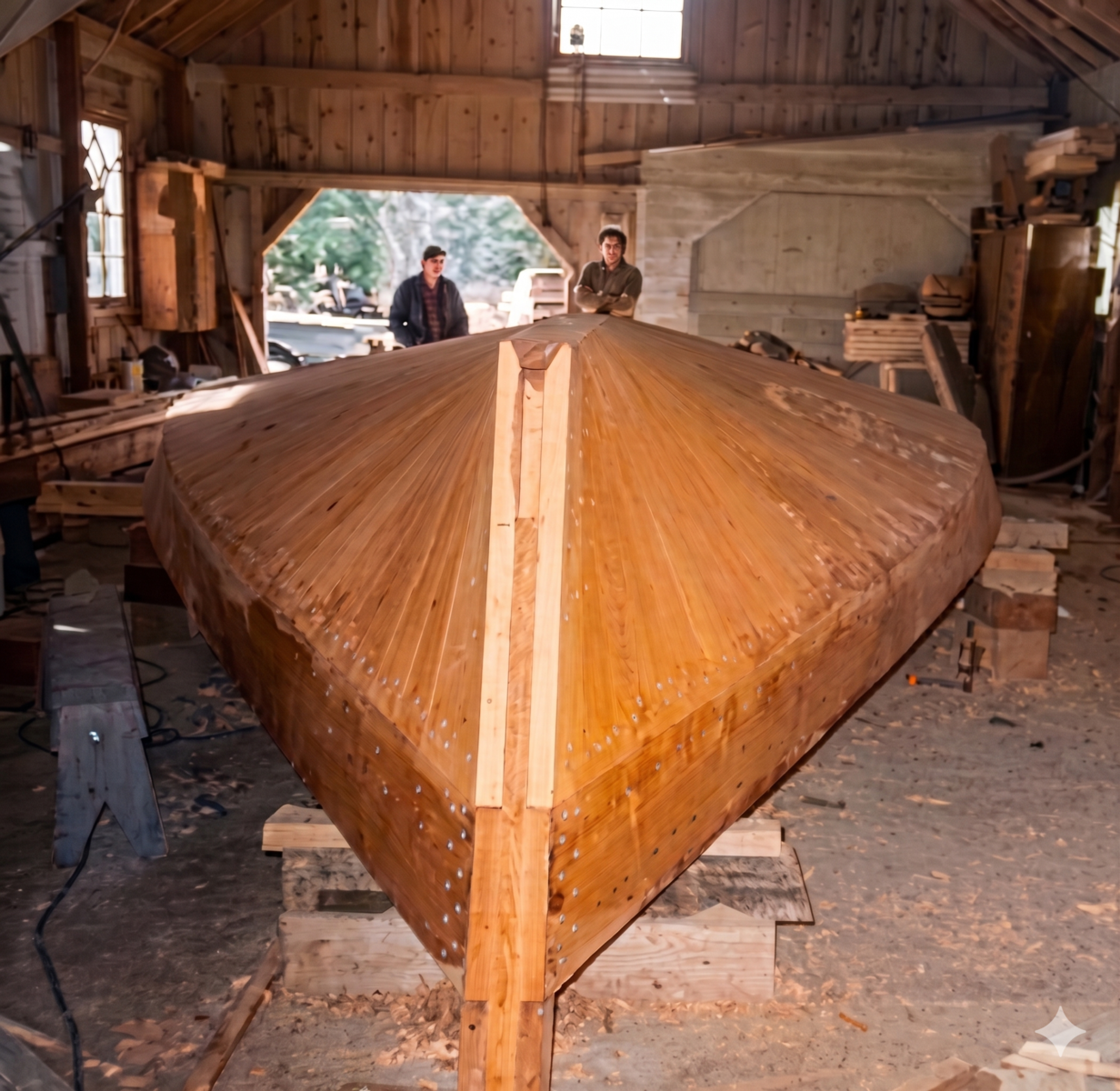
Walking the woods to find the perfect mast, boom, and bowsprit was always an adventure. If I remember right, it had to be white pine—straight, clean, no knots. That was the rule. I can’t recall exactly how long the centerboard was, but it had to be at least eight feet. She carried a 4-53 Detroit Diesel for auxiliary power, and that engine could push her hard enough to keep pace with the working boats—which always came as a surprise to their captains. We never talked in knots back then, just RPMs. Before the mast and boom were stepped, I remember how easily her bow would lift out of the water. As a kid, I thought that was about the coolest thing there was. One memory stands out clear as day. An uncle of mine—a retired oysterman from Mt. Vernon—was at the wheel while we were out in the Tangier Sound. A sudden puff hit the mainsail, the kind of wind shear you don’t see coming across the water. She heeled hard—real hard—with water pouring over the deck and the rails nearly under. He just scowled over at us—my grandfather, my father, and me—and said, To him, it was nothing. Just like riding a bike. And truth be told, most skipjack captains would say the same. Skipjacks carry ballast such as stones, cinder blocks, chains, lead, heavy materials, etc. heavy placed low in the hull to provide stability, prevent capsizing and reduce excessive heeling. It acts as a counterweight against wind force on the sails, enabling the boat to remain upright, steer effectively, and return to center. The rumors that gravestones from cemeteries being used for ballast are doubtful. Captains and their crew were suspicious enough. Sail drudgin' which is what all dredgers did before the law was changed to allow 2 days of power-dredging in 1966 as noted prior. The ideal speed for dredging is about three knots, which is why drudgers would start reefing Per author Pat Vojtech who wrote the book Chesapeake Bay Skipjacks the following applies
The Skipjack "Lizzie" is the smallest or shortest Skipjack recorded the author has been able to find, closer to a smaller bateau (which they were called prior to the 1930's mostly). The "Robert L. Webster" being the largest by over 29.6' and 9.2' wider to the Lizzie. The "Rowerna" in comparison drew only 2.5' of water compared to 5.8', a difference of 3.3' to that of the Webster. The Webster's centerboard drew over 12+' of water. The Skipjack with the largest diet was the "Connie Francis" who could carry 45 tons vs. the "Lizzie" of only 5 tons. Quite the contrast in physical characteristics. Sixty feet would be more proportionate to a Bugeye.
The beam would be equal to 1/3 the length of the boat on deck, the mast is the length of the boat on deck plus the beam, the boom is the length of the boat on deck, the bowsprit equals the beam. The length of the centerboard equals 1/3 the length of the boat and the transom is equal to 3/4 of the beam. The mast is raked 75 degrees Somerset County (including the towns of Deal Island, Wenoma, Oriole, Mt Vernon, Fairmont, Crisfield, Smith Island, Hollands Island, etc.) had the largest number of Skipjacks built on Captian Tom Webster who owned the N. W. Webster and Brothers Company gained legendary staus as having the largest dredging fleet in Deal Island with over a "100 drudge boats." He had ship chandelers with offices in Baltimore and Solomons Island, which sold boat and personal equipment. Within 20 miles of Deal Island, Maryland......... "150+/- Skipjacks were built locally between 1894 and 1915:" Deal Island, Wenoma, Chance, Crab Island, St. Peter’s, Mt. Vernon, Oriole and Fairmont. Oriole and Fairmont had the largest majority built. This does not include all the skiffs, crab skaters and so on as well. We do not forget those built on the Islands close to Deal at Smith Island and Hollands Island as well back in the day. Hows that for a boat building community, lots of timber and skilled carpenters, builders, rigging were needed, which of course produced jobs and commerce for the area outside the harvesting of oysters and seafood. Over the years Deal Island had the largest fleet of Skipjacks as did fleets in Wenoma, Mt. Vernon, Crisfield, Cambridge, Tilghman Island, Hoopers Island, Smith Island, Holland’s Island and a few others.
The Lower Delmarva region (Eastern Shore of Maryland, Delaware, and Virginia) is especially important—home to tight-knit communities where watermen “worked the bay” harvesting oysters, crabs, and fish, and where entire families contributed through seafood processing and maritime trades. Skipjack Heritage’s work helps preserve stories that were long overlooked—highlighting not just labor, but also the heritage, resilience, and identities of individuals from diverse backgrounds connected to the working boats of the Lower Delmarva and Chesapeake Bay.
The story of the Skipjack is not just one of maritime engineering, but also of resilience, adaptation, and community identity. Its legacy highlights a way of life tied to the Chesapeake Bay, shaped by the rhythms of the oyster harvest and the craftsmanship of wooden boat building where I might add again were no blueprints. It was and still is in many cases
Local churches, cemeteries physically attest to their residency to the communities from and all around Deal Island. The Skipjack stands as a symbol of a bygone era, when sail-powered workboats defined the economic and cultural life of the Eastern Shore and its people. If the author has heard it once, he has heard it a hundred times that we were mostly poor, but didn't know it as it as we all were. Most important...... families, friends all stuck by each other, we had our church and we took care of one another. We always had a roof over our heads, food to eat and sometimes even tattered clothes on our back, yet even though most did not ever know better, we lived good - we survived..................................... - Misc. Recommended Reading -
List of Working - Non Working Skipjacks Remaining- Credit The Last Skipjacks Project
Skipjacks by Dredge Number- Credit The Last Skipjacks Project (Special thanks to Cindy from "The Last Skipjacks Project" for all her great and hard work!) The Last Skipjacks Project "Face Book" Page
Christine Keiner; The Oyster Question,
|
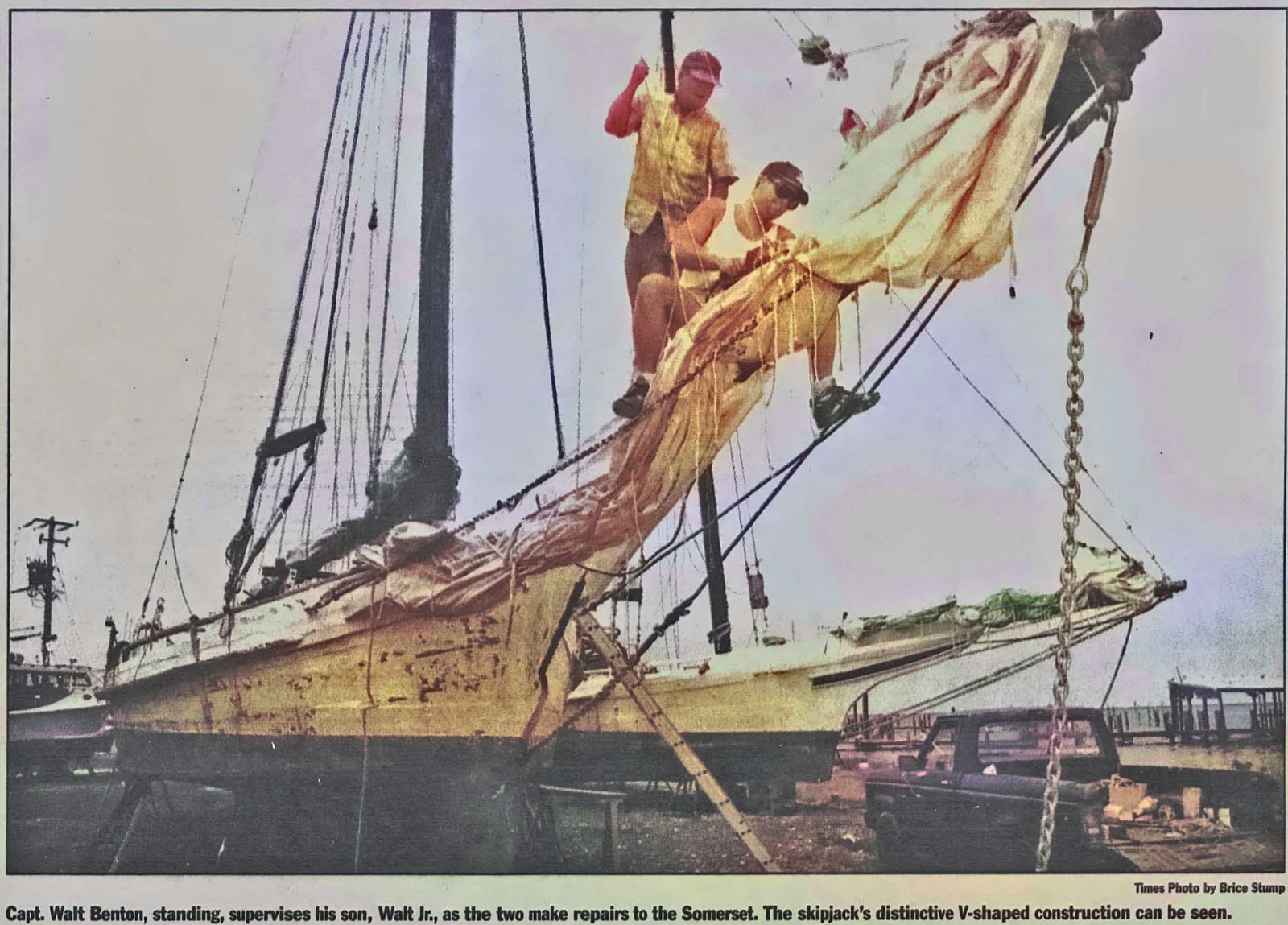 down their sails. If you sail to fast over the oyster bars the dredges start floating, sailing if you will off the bottom and you have to go back and make the same licks. After you put your third or fourth reef in, then you take in your jib'sail which was about the last thing you could do to slow her down.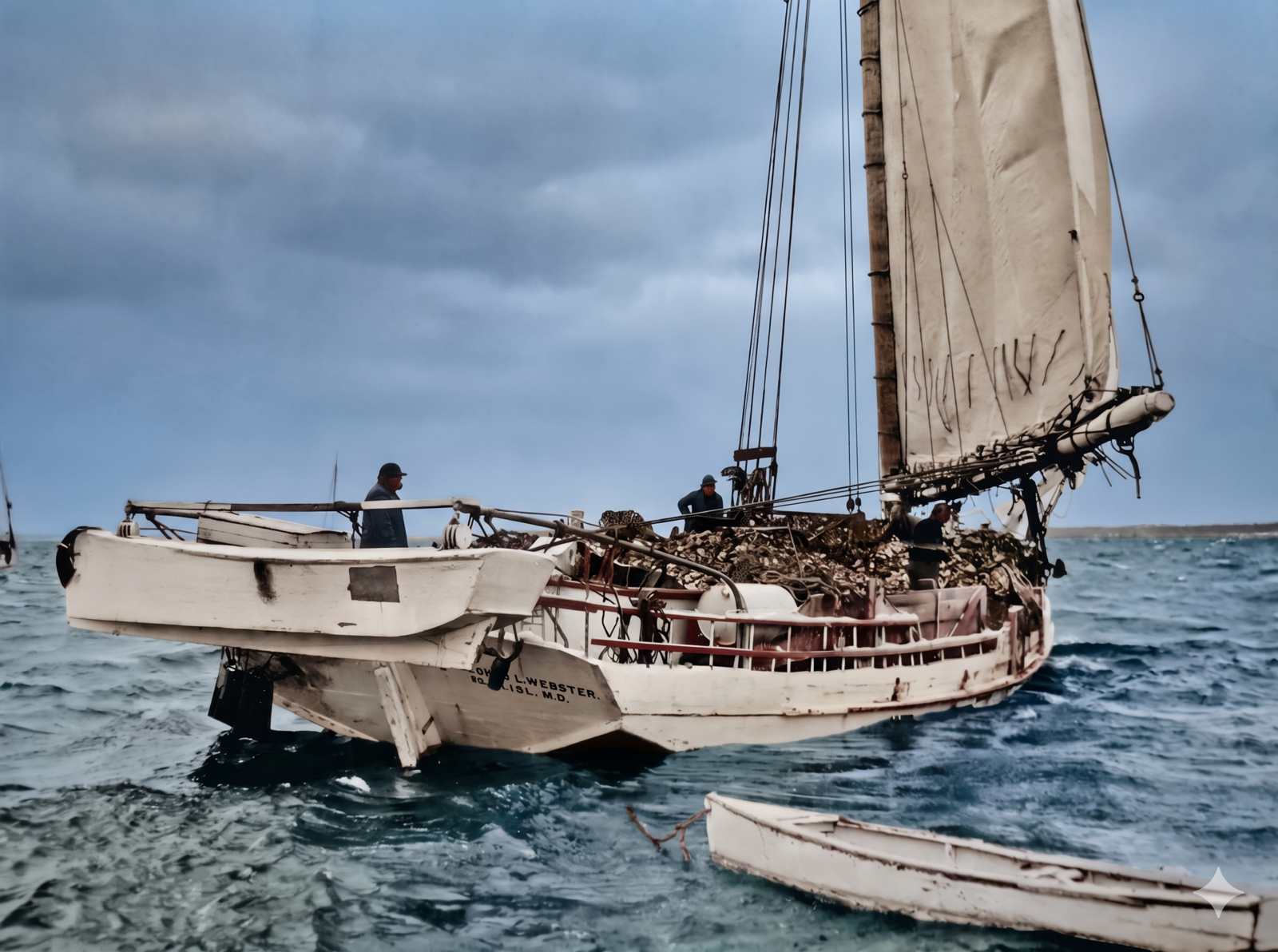
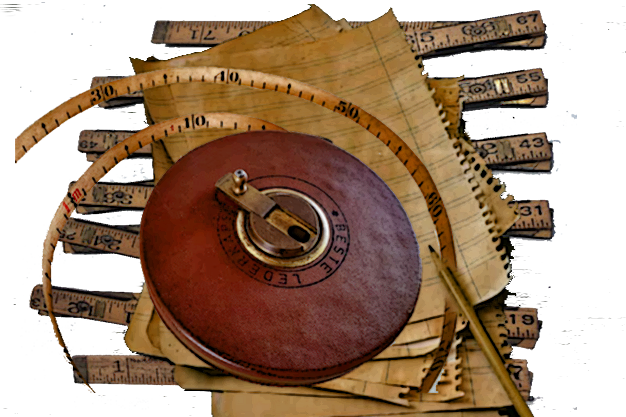
 Simple math determined the sizes. These old school builders did everthing mostly without any blueprints, fancy plans. Drew it out with pencil and paper already knowing inside their head, measured twice and cut once. They could read a measuring tape like the water and tweaked their design when needed.
 on deck. The smaller boats would be considered more appropriate for the rivers, Tangier Sound being more shallow and larger boats could handle deeper waters in the Bay. Island boats were generally more flat-bottomed where they could drudge the shoals around the Islands. Deal Island had the largest fleet of Skipjacks and is also known better for Skipjacks then any other locality.
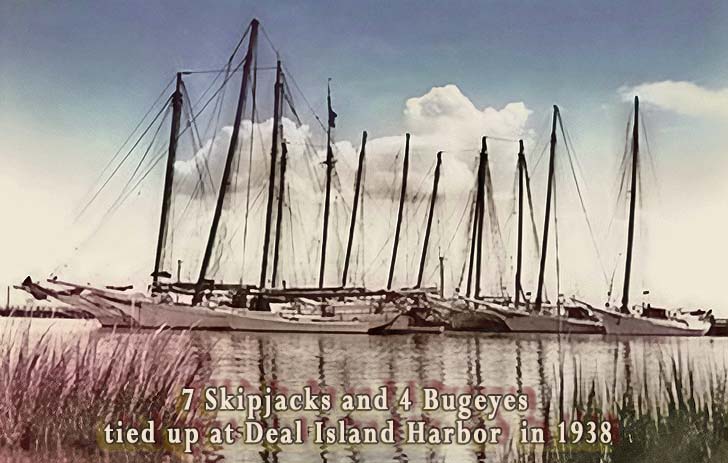 the shore. Dorchester (including Hoopers Island, Cambridge) and Talbot (Tighlman Island) counties built a good amount not to be disregarded. On the Western Shore St. Mary's County, MD and Urbanna, Reedville and Deep Creek in Virginia also built their fair share of stunning Skipjacks. It would go without saying many of these towns also built Bugeyes, Pungies, Schooners, sloops, skiffs, scrapers and so on.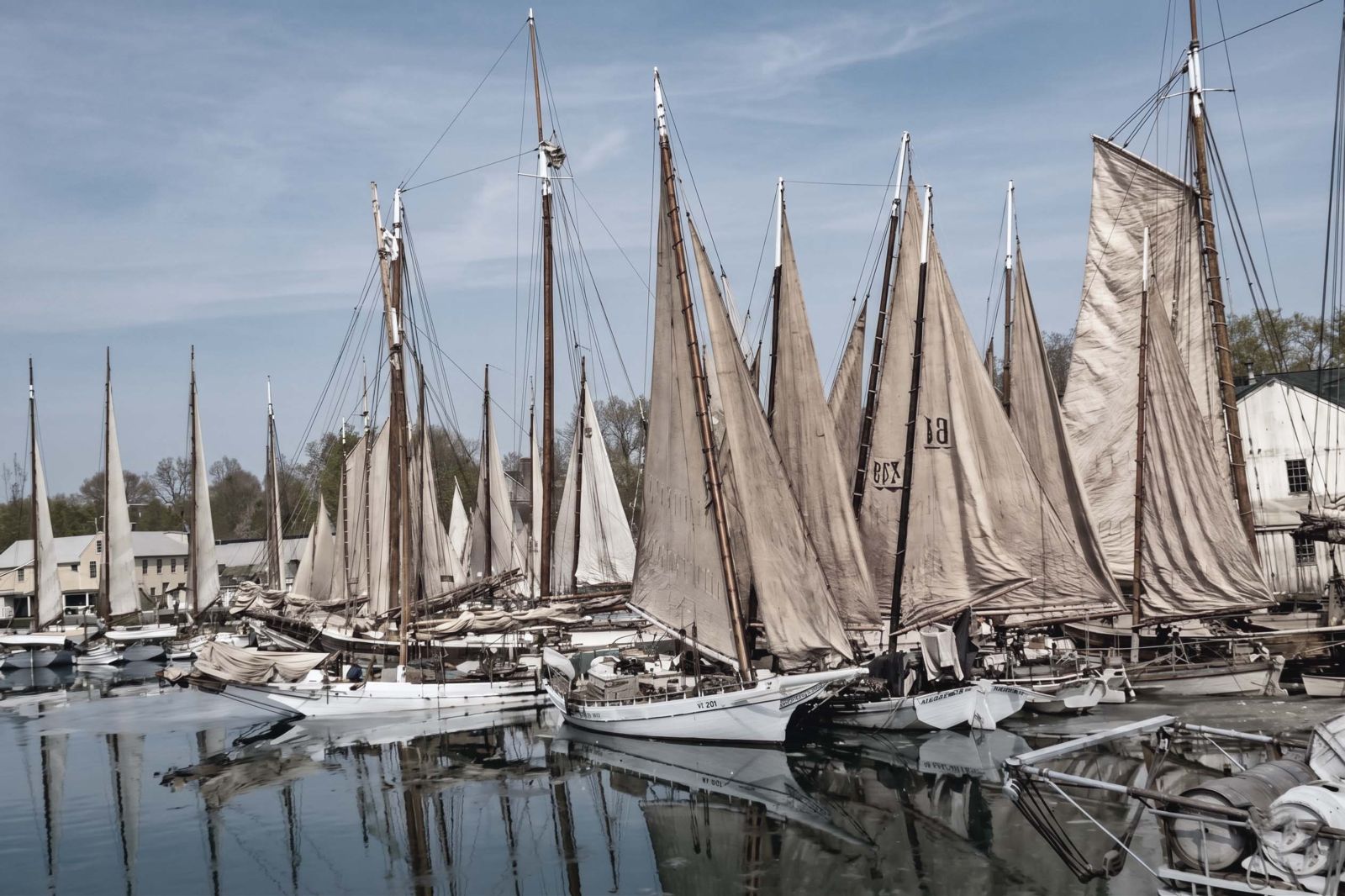
.jpg)


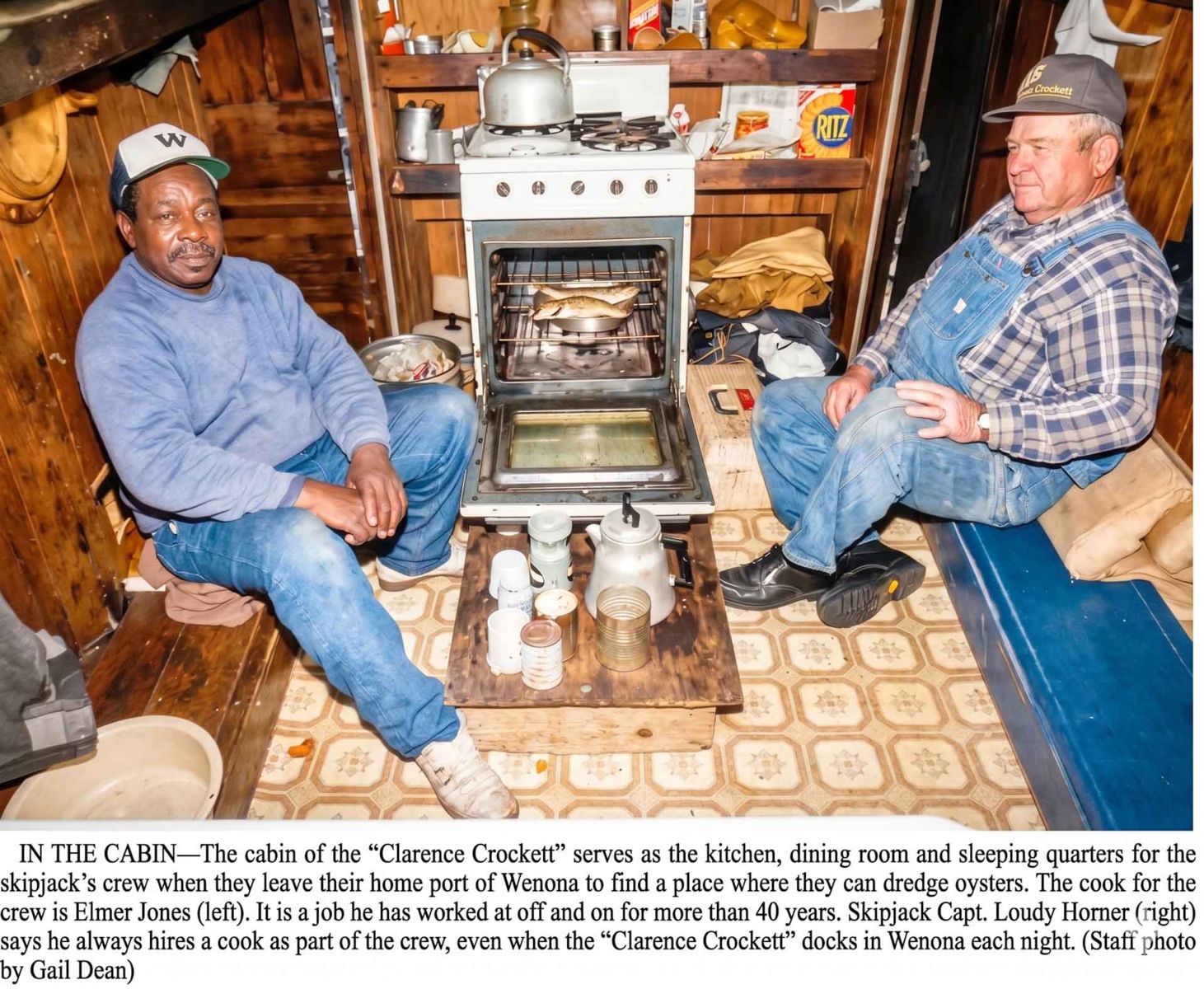 the heart and soul of the people for the area, those of us