| DEAL ISLAND WEATHER |
| Web Counters | ||||||
|

|
|
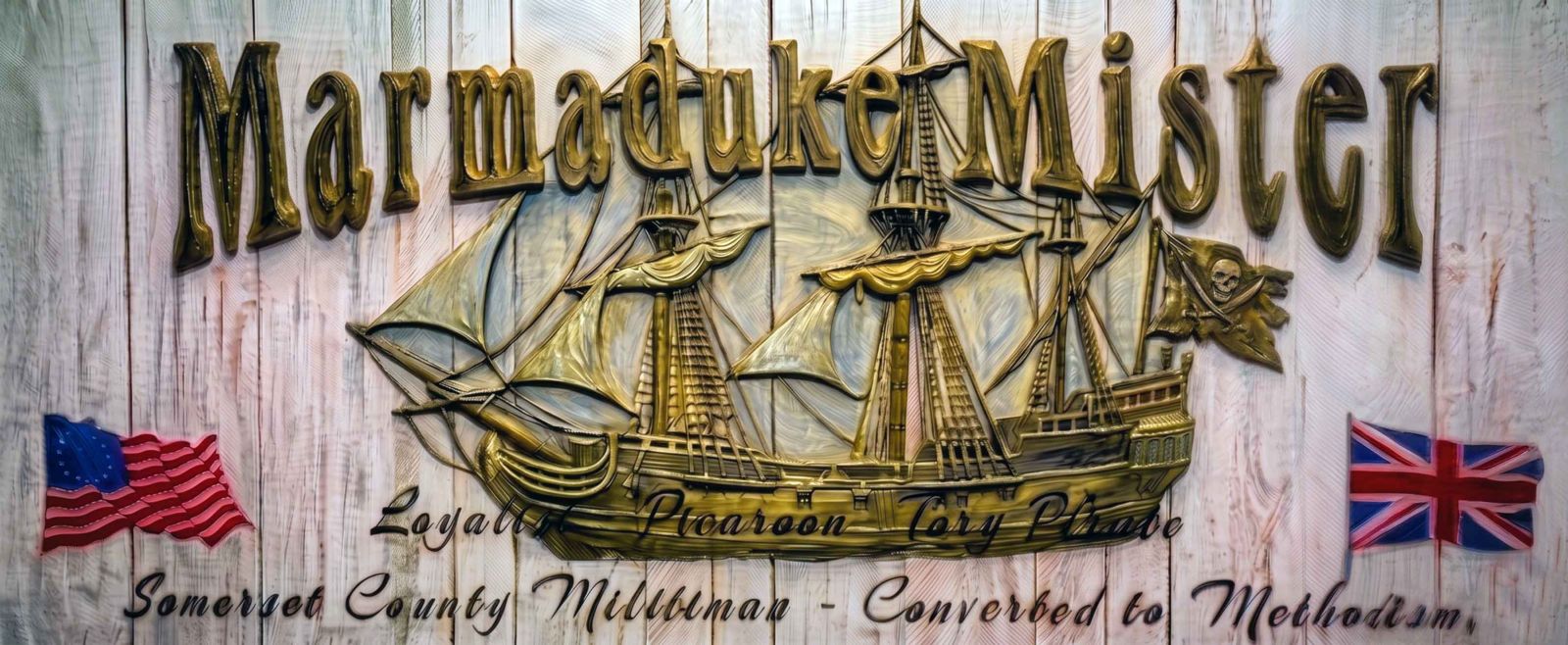
 Early Life and Arrival in Maryland
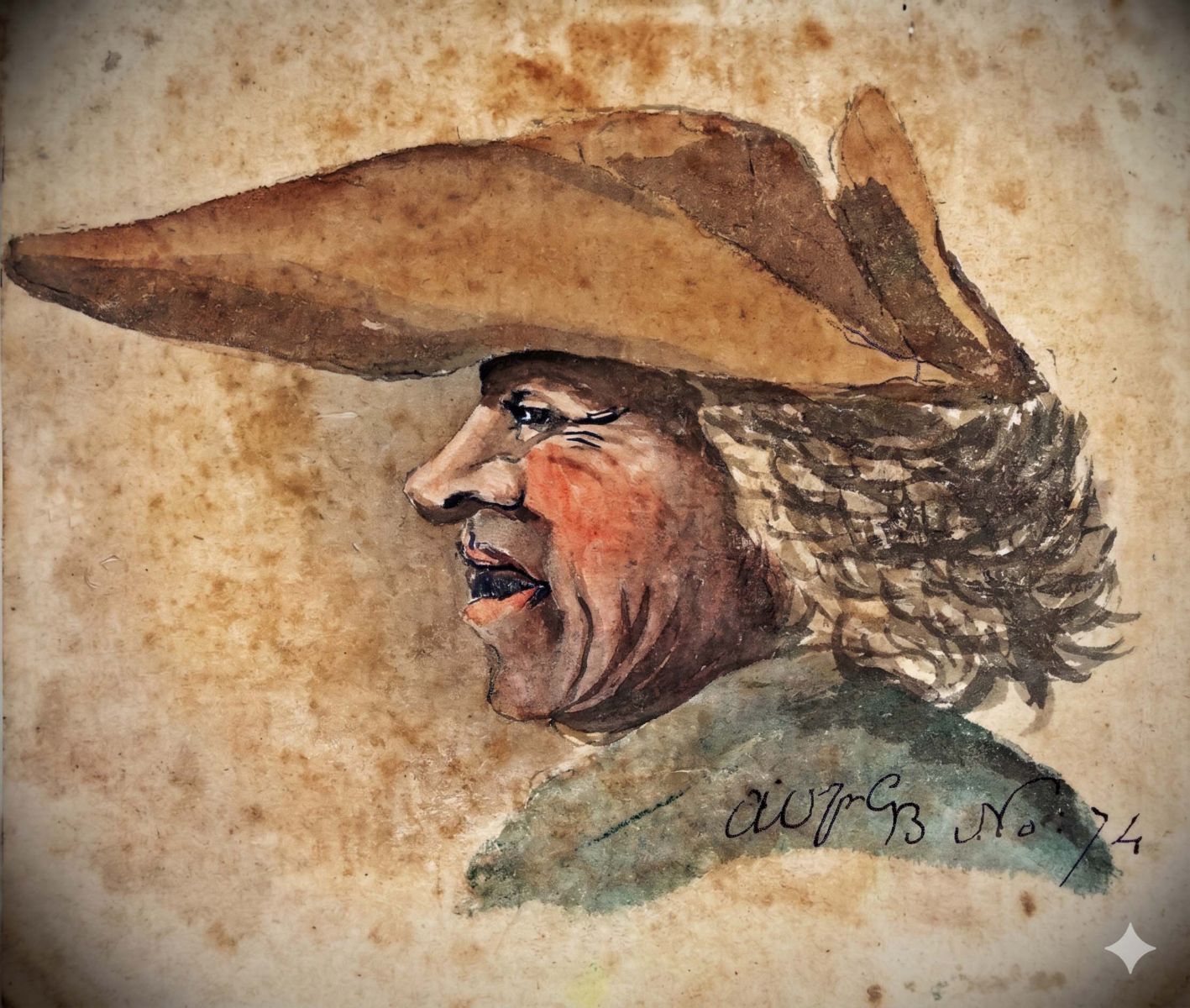 |
| Drawing of what a waterman might have looked like in colonial times on the Bay. |
Historical Significance
Marmaduke Mister's land patents of 1683 place him among the early colonial landholders of Maryland’s Eastern Shore. His relocation to the Chesapeake Bay islands contributed to the settlement and development of these remote maritime communities.
The Mister family legacy intersects with the history of maritime trade, local governance, and community development in the region. Their story is a reflection of the challenges and resilience of early American settlers.
Regional Impact
Today, the areas once settled by Marmaduke Mister and his descendants remain significant within the jurisdiction of local emergency services. The island geography and maritime culture shaped by families like the Misters continue to influence fire and EMS response strategies, resource deployment, and community preparedness across Maryland’s Eastern Shore.
Marmaduke Mister
By- Jason Mister
With such a unique name, you would think this family would be easy to track, but that is not necessarily the case. The story of the Mister family, in many ways, mirrors the story of the United States of America: A small group of people came over from Europe in the early 1600’s looking for something new, something of their own. With promises of a fertile land, good climate, and plenty of game in a tract drawn up by Lord Baltimore in 1633 to attract people in England to become colonists in the newly forming colony of Maryland, it's easy to see why. Still, these folks left behind all they knew, and packed whatever they had to take a month’s long voyage on relatively small wooden ships across the Atlantic Ocean. When you stop to think about how unsuccessful colonization of North America had been to this point, it took allot of guts to permanently relocate your family to the Chesapeake Bay Area of Maryland. Those first Misters did just that; they risked it all, to try for a better life in a new land. Glenn Tilley Morse in "The Ark And The Dove Ancestral Ships Of Maryland" described it this way: "In Maryland the settlers would have a new kind of freedom, a chance for each settler to become an owner of land, to gain wealth, to become "somebody." In England very few men and women had any chance to do better than their fathers and mothers had done before them".
The English had tried to establish a colony on Roanoke Island North Carolina beginning in 1585, but it failed miserably and is today known as the Lost Colony. They eventually gave it another shot and the first permanent English settlement was established in Jamestown in 1607. The residents of Jamestown struggled mightily for years, and in the early years over 50% of them died. The tide began to turn however, and by 1609 Captain John Smith had mapped out, what is now, the Chesapeake Bay area which led to the publication of “A Map Of Virginia” in England in 1612. With glowing reviews like this from Smith’s journal: “Heaven and earth have never agreed better to frame a place for man's habitation”, there would soon be an influx of English settlers to the Virginia and Maryland Colonies in the mid 1600’s. Even in the early 1600's, there were allot of Europeans coming over to the east coast of North America. We all know about the famous settlements like Jamestown and Plymouth, but there were many more lesser known attempts and settlements, such as Avalon in Newfoundland which Lord Baltimore's father had tried to start prior to founding Maryland, during the years leading up to 1634. It is on one of these lesser known journeys across the Atlantic that William Mister's parents traveled over from England prior to his birth in Maryland in 1634.
A search of the Mister name turns up a large presence in England, from then to the present day. Conversely, the name Mister shows up very little in other countries. From the genealogy of the family it is highly likely that it was one family that first came over from England, a conclusion that is supported by DNA testing. In talking to many different Misters from distant branches of the family, I have yet to encounter any who don't trace their roots to William Mister, born in Maryland in 1634. Not saying there aren't any here in the USA at this point, but I have yet to come across any. There is also an absence of any Misters named in the extensive index of names in the book “The early settlers of Maryland; an index to names of immigrants compiled from records of land patents, 1633-1680, in the Hall of Records, Annapolis, Maryland”.
The biggest clue we have as to the homeplace of that first American Mister family, and who they came with, is from the history of Smith Island. A 2005 article in The Telegragh (UK) entitled “Claws And Effect” states “British settlers first came here in the 1600s, arriving from Cornwall and Wales via Virginia , to farm soil that, even then, barely poked through the surface of the water”. The European population of Virginia in 1634 is about 5000 people, and Maryland is just starting to be settled at that time. In the early years of European occupation, land was claimed by the headrights system, where the overseas governments issued patents for land from 50 acres and up. Most of the patent records in Virginia and Maryland still exist, and as best can be found currently, none with the Mister name exists until 1683; which was the second generation of Mister in America. What that means is that the early Mister settlers were likely not among the wealthy or prominent, which represented most of the people who received land patents from the crown. And that fact illustrates why the Mister family is harder to track than it would be if they had come over in a more famous group, such as at Jamestown, or the Ark and Dove ships that first settled Maryland in 1634. No wealthy, no prominent, no large land grants, just regular folks. You won't even find a Mister headstone until the late 1800's. I imagine that most Misters before then were buried in the yard somewhere with a wooden marker.
The first documented sign of a Mister in America happens in Maryland: William Mister is born there in about 1634. We know little about him other than in 1659 he married a woman named Rachel J. Evans who was also born in Maryland (in 1638), and they had a son named Marmaduke. This Marmaduke is not the well known pirate, but his grandfather. One thing you learn quickly when tracking down Mister family history is that everyone wants to know how they are related to the pirate Marmaduke Mister. We don’t have presidents or governors, we don’t have rich or famous, we have a pirate! I must add that I personally have no documentation of William, Rachel, their births or marriage. This info is commonplace on the major ancestry sites and every Mister tree that I have seen. I don't know the exact source, but it would seem to be one the of books that lists marriages and births from Somerset County in the 1600's. It is also possible that these names and dates are not correct, but I consider this less likely due to the dates and Evans family connection fitting in perfectly with what happens in the coming years.
Marmaduke Mister was born about 1660 in Maryland. When talking Mister family history, this one is often referred to as Marmaduke I. There is documentation of James Wyeth and Marmaduke Mister (Spelled Mester on the patent – alternate spellings and misspellings were very common on old documents) getting a patent for a 250 acre tract of land called “Bachelors Delight” on May 3, 1683 at the location of what is today Laurel Deleware.

Historical marker for Bachelor's Delight in present day Laurel Delaware

Unlike his proposed parents, there is a ton of official documentation about Marmaduke. In addition to the Bachelor's Delight land, he also is listed as having purchased three other tracts: Bachelor's Contrivance (150 acres), Bachelor's Intervention (250 acres) were both recorded the same day as Bachelor's Delight (June 15, 1683). One other tract was recorded one week earlier: Tilbury, a tract of 150 acres was recorded on June 8, 1683. All of these plots were in Old Somerset County along the Nanticoke River and Broad Creek.
In 1688 Marmaduke shows up quite a bit in the court records of Somerset County Maryland. Some of these records deal with the estate of Jenckin Morris and the fostering of his children. Marmaduke petitions the court in June " desired to have the boy Called Jenckin Morris untill he came to the Age of One and Twenty yeares of Age & in consideracon thereof he would teach the said Jenckin Morris the Trade of a Tanner as alsoe he would teach the said Jenckin Morris to read & write & that dureing the said Tearme & time he is to putt him to noe other worke then the Taning worke Only that the said Jenckin Morris is to help the said Marmaduck Mister to make Corne & at the Expiration of the said time or when that the said Jenckin Morris Attaines to the Age of One & Twenty yeares the aforesaid Marmaduck Mister did then & there in Open Court promise to give the said Jenckin Morris aforesaid a Sett of Tanners Tooles & Tenn hydes of Tanned Leather". This Jenckin Morris is junior to the deceased father and other children int he family were fostered by other residents present. The court approved all these arrangements on August 14th. On that same day, Marmaduke serves on a jury in other cases. Then on August 15th, Marmaduke posts bond of 40 pounds sterling for a Thomas Morrison, who along with presumed brother William, had been arrested as a suspected runaway slave, but professed to be a freeman. The bond was contingent on Morrison appearing at every court held in Somerset county over the next year and having good behavior. Marmaduke also serves on a jury again the 15th and 16th of August. Marmaduke is also mentioned in December court as being subpoenaed as a witness for the plaintiff in a trespass case. This British County court took at the Coventry Parish near modern Rehobeth Maryland.
Several of the other names in the court records of the Morris estate/children show up as residents of Marion, Maryland; in Somerset County. If this is the same town that today is called Marion Station, then it is very nearby Smith Island. Considering that these folks were all trying to get custody of the children, and control of the estate of a deceased couple, it seems very likely that all of them lived near one another. This helps us get an idea of the timeframe when the Mister’s moved to Smith Island. If you are keeping score: Marmaduke moved from Laurel, 43 miles South Southwest to Marion, then 15 miles southwest to Smith Island.
There is some circumstantial evidence supporting the idea that Marmaduke 1 was a pirate himself. There is a story of eight pirates from the well documented pirate ship Bachelor's Delight, which sailed around the world in the mid 1680's, dropping off four of it's members near Laurel on their way back from selling the ship in Philadelphia. Of the men on this mission, it is the ones that went on to Norfolk Virginia whose names we know: Lionel Wafer and (John) Edward Davis, Wafer’s assistant John Hingson and the free African Pierre Cloise. One of the four unknowns that were dropped off could well have been Marmaduke. This would maybe explain how he could afford 800 acres of land. Through ancestry I came into contact with Billy Mister, who besides sharing the namesake of my grandfather, is also a descendant and has spent years studying Marmaduke 1 and his being a pirate. If anyone wants to know more about this topic, he would be the one to get in touch with.
In 1689 Marmaduke married a woman who was born in 1663, but her name is unknown. At some point in the late 1600’s the Mister family settles on Smith Island, a tiny island in the Chesapeake Bay which sits right on the Virginia/Maryland state line. This island becomes home for the Misters for nearly a century. The Evans family was a prominent name on Smith Island from that time on, and the connection of Rachel Evans probably is part of the story of how they wound up there. Maybe William and Rachel were already there when Marmaduke was living at Bachelor's Delight or Marion? It was John Evans and John Tyler who became the first permanent European settlers on Smith Island in 1686. The Misters must have been right behind them.
Marmaduke and his wife have a son named William (we do not know if he had other children), and Marmaduke I eventually passes away in 1725. In the meantime, the Mister’s became a prominent family on Smith Island and there was even an island feature named after us: Mister’s Thoroughfare. This channel (lower left of island) was still going by our name as of the printing of this 1870 map of Smith Island, even though according to historian Gail Walczyck the Misters had all left the Island by 1800.

Map of Smith Island, 1870
William Abraham Mister was born on Smith Island, Somerset County, Maryland in 1690. He married Patience Harris (born in 1693) daughter of John Harris (Harrison) and Judith Godfrey, on Smith Island in 1718. William and Patience have eight children: Abraham born in 1718, Judah (female) born in 1720, Sarah born in 1722, Hannah born 1724, Patience born 1726, William born 1728, and Sinah (possibly Dinah) born 1730, Marmaduke born 1732. This family really liked the names Marmaduke and William! It is William that is my relative and that’s where the focus of this writing will go after this generation is covered. We must, however, take a sidebar here to talk about William’s son Marmaduke. Named after his grandfather, he seems to have spent his whole life living on Smith Island and roaming the waters nearby.
This Marmaduke Mister would go on to become a well known pirate and easily the most famous person to ever bear the surname Mister. He has been written about in several books and newspaper articles and is even a character in a 2008 historic novel entitled “A Vagabond Army: A Novel of Maryland in the American Revolution”. During the Revolutionary War period, Marmaduke was one of the Tory Picaroons: privateers authorized by the British Government to raid ships not loyal to the crown. History records that Marmaduke and his contemporaries raided those vessels, and some British ships as well. Basically they joined sides with whoever benefitted them the most. At this time in history, the people on the mainland viewed the islands of the Chesapeake Bay as “a hotbed of illicit activity, a den of rogues and thieves”.
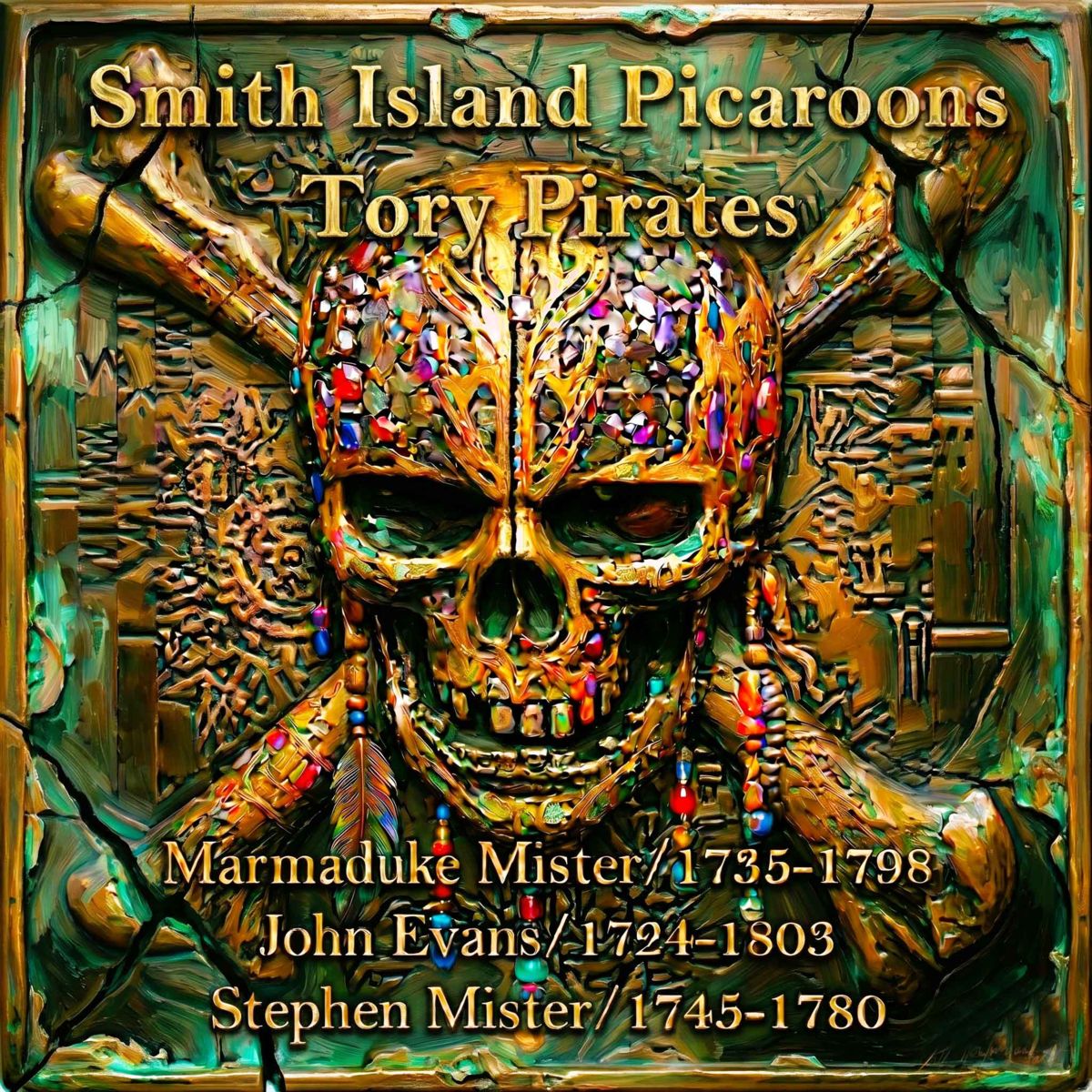
According to the book Smith Island, Chesapeake Bay (Frances W. Dize), Joseph Whayland was a picaroon leader, Marmaduke was of one his captains, and Stephen Mister, Basil Clarkson, and John Evans were among his crew. “Whayland’s gang found secluded coves and inlets where the could scud in and lie in wait for unsuspecting vessels sailing through the sound and Kedges Straits. From their hidden harbors, they could steal silently from cover, attack their prey, then return to their marshy hideaways”. Marmaduke the Pirate is mentioned often in tales of pirates, but only in bits and pieces. One such mention is by Timothy James Wilson in an article entitled Old Offenders": Loyalists En The Lo Wer Delmarva Peninsula, 1775- 1800: "Modem-day Smith Islanders still recite tales about
Marmaduke Mister--a loyalist in the Revolution-and his discovery of a pot of Blackbeard's gold" Dize would go on to say “Finally the war dragged to an end, and the picaroons disbanded. Whayland was captured several times, but he never really paid for his crimes. However the rogue Marmaduke Mister reformed and gained the confidence of the Maryland Council, who decreed: “Marmaduke Mister has permission to return home, he having brought some American prisoners from the Tangier Islands”. The council paid him nine pounds for his service.”
Later in Marmaduke’s life, his transformation from ruthless pirate to a respectable man would go even further. A man named Joshua Thomas, who became known as “Parson of the Islands” spread the Christian faith all over the area in his legendarily large canoe named the “Methodist”. Smith Island underwent a radical transformation after the war years which led to a self governing society with guidelines based on Biblical principles, and a society which grew around the church. Frances Dize says “For many years, religious services were held in the home of Marmaduke Mister, the same Marmaduke who had been a leader of the picaroons”.
In 1720, a John Evans (not the later pirate who worked with Marmaduke) stated in his will “To son Mark 200 acres on Smith's Island where William Mister and Samuel Wheeler live”. So it seems that William Mister (the dad) and family were living at the part of the island called Pitchcroft at that time, but that it was owned by John Evans and then his son Mark after his death in 1721. On May 15, 1729 William buys 100 acres of Pitchcroft which was the first piece of property ever patented on Smith Island back in 1666.

Pitchcroft house, 1986

Outbuilding on Pitchcroft property, 1986
The picture above is of the original Pitchcroft house which was built around 1700 (Smith Island, Chesapeake Bay – Dize), and the second picture is an outbuilding on the property in 1986. That home is likely the very one where our ancestors lived from the 1729 to almost 1800! The home still stood into the 1980’s and was even being used as a restaurant with four bedrooms to rent as of a May 1982 article in the Washington Post entitled “Smith Island---A World Apart”. The pictures above were taken in 1986, but the house unfortunately burned down in 1990. The Pitchcroft property was up for sale in 1996 according to an article in the Baltimore Sun entitled “Buy a piece of an island in Chesapeake Bay”.
The Pitchcroft house, which stood for almost 300 years, was known by everyone on the island and has it’s own stories and legends surrounding it. One such legend, is that of a unknown grave on the property, which many believe to be the body of a British Soldier who was killed during the War Of 1812. Others believe that the body is actually that of a pirate, and that there is pirates' treasure buried at Pitchcroft. As for the house itself, Dize says “Before it burned down, the house called Pitchcroft was large and graceful, with ancient bluish windows that shimmered from years of exposure to salty wind and faded shingles that created an atmosphere of antiquity. Inside, the floors still the original pine, and the woodwork, was just as it was in Uncle Haney’s day, pegged together with no visible nailheads marring it’s surface. Hand-hewn beams supported the thick walls, large fireplaces graced the parlor and the room that used to be the kitchen. A stately staircase led upstairs to spacious bedrooms, and a narrow set of steps at the back angled up to the garret. It was a gracious old house, where visitors could feel the warmth inside, roam the vast lawn that slopes down to the waterfront, or explore the tiny graveyard out back.”
We must take a minute to compliment the state of Maryland on the extensive amount of old records they have available for free online; they are world's ahead of Virginia in that respect. The tax records for Somerset County from 1723 to 1757 are still largely intact, allow us to get a picture of where people lived, and who they lived near. The tax was collected yearly for the administration of the colony and mostly only free adult males appear on the register. William Mister (the dad) shows up in the 1723 records and most years going forward, with his final appearance being 1743. One interesting fact is that in every record that William appears, John Evans is listed as the next household. Some years there was a father and son John Evans next door. It certainly appears that the Evans and Mister families were very close. William Sr. passes away in 1744 and William Jr is listed as resident with his mother Patience Mister in the 1747 & 48 records. At some point Marmaduke moves in with his mother Patience as documented in the 1754, 57, & 59 tax list.
There is another notorious pirate in our family that should be mentioned here: Stephen Mister. He was the son of Abraham Mister and nephew of Marmaduke, though he was been mistakenly named as Marmaduke’s son in some sources, including a May 1986 New York Times article (“Changes Sweeping Chesapeake Bay Threaten An Islands Way Of Life”). Like Marmaduke he was a Tory Picaroon and according to Gail Walczyk “With a high price on his head he sailed in and out of the guts and creeks of the islands and those on the mainland plundering American ships and homes and never getting caught.”. He has already been mentioned here as part of the crew on a pirate ship that his uncle Marmaduke captained.
While Marmaduke appears more in stories, Stephen’s name pops up in legal matters quite a bit. He was know to have escaped from prison on more than one occasion. From Accomack County Court Records dated September 31, 1777: “Accomack County Court – 16 September 1777A court held for the examination of Reuben Warrington, who was suspected of aiding and assisting Stephen Mister’s escape from jail on Monday the fifteenth of September; Mister, who had been charged with high treason against the state of Virginia, was a prisoner in the custody of the sheriff.” According to the same document, the sheriff who let him get away still got paid 270 lbs tobacco anyways: “for summoning a court for the examination of Stephen Mister (suspected of treason against the state) who escaped the morning he was to be examined”, and “summoning 7 witnesses against Mister”.
On October 27, 1778 the escaped Stephen failed to appear in court: ” Edward Ker brought action for trespass against Stephen Mister, who failed to appear. Attachment was to issue against Mister’s estate.”. At this point, Stephen was wanted in two states and still on the run: “The Common Wealth brought action against Stephen Mister for a misdemeanor, but upon hearing the attorneys, it was ordered that he be discharged from his recognizance. “Whereupon the Court beingin formed by Luther Martin upon Oath that there was an Indictment pending in the general Court of the State of Maryland against the said Mister for high treason against that state and that the said Mister had been committed to the Sherif of Baltimore County to answer the said indictment from whom he escaped – It is therefore ordered that the said Mister be immediately committed to the sherif of this county and by him to be carried under a safeguard & delivered to the sherif of Worcester county together with a copy of this order.”(Accomack County Court November 25, 1778)
According to the book Pirates On The Chesapeake (Donald G. Shomette), Stephen “began to operate an armed barge out of a base on the Annemessex River in the spring of 1779. Reportedly favoring the waters about the mouth of the Naticoke, he soon gained a reputation as one of the most active picaroonson the lower bay. In a single week’s raiding, he plundered a plantation on an island nearHooper’s Strait, captured more than a half dozen vessels in Tangier Sound, and effectively instituted a total blockade of the Nanticoke. Captured vessels were regularly dispatched to Smith’s Island, where his uncle either kept them or gave them to the British”. Shomette goes on to say: “On April 4, 1779, the Maryland Navy schooners Dolpin and Plater, in response to a growing cry of outrage from Bay mariners, arrived in Tangier Sound with orders to find and capture Stephen Mister and Smith Carmine and to put an end to their depredations once and for all”. For many weeks a detachment of the Dorchester County Militia, led by Colonels Dashiell and Hopper, pursued Stephen’s gang. The pirates would elude the militia with their extensive knowledge of the waterways, marshes, and islands of the region. Colonel Dashiell “acknowledged, however that there was a good possibility that Mister fled up the isolated Honga River to his father’s home”.
There was an ad run in the Maryland Gazzette on July 27, 1779 offering a reward for three slaves who had fled their owner Issac Smith and run off with a gang of runaways and loyalists led by Stephen Mister: “They went off in a large boat, calculated for 9 oars, of the whale-boat construction, her inside painted red, and has a white bottom, her frame cedar and mulberry, and her foremast step of oak painted red. It is believed the above-described Negroes have been influenced away by infamous Myster and Carmine, and that their intentions are to plunder, the boat being well calculated for that purpose. It is supposed they lurk frequently about the straits and islands up the Bay; Hunger River, and Pocomoke, are the probable places for them to rendez of Virg vous.” There were also three court appearances by Stephen in the summer of 1779 where he is being sued for trespass twice. Finally, According to Council Correspondence Records to Governor Thomas Jefferson dated August 3, 1780: The pirate was accused of High Treason and had escaped several times but had been “apprehended at length in Richmond”. The request was made to Virginia by Maryland to give Stephen up to them for trial. There is one possible mention of Stephen in Princess Anne in 1783 and a lawsuit by one of his victims later, but the legal trail seems to end for Stephen there. We don't really know what became of him. Moved away? Name change? Who knows.
Moving back to my line of William Mister’s family, William Mister (Jr) was born in 1728 on Smith Island, Maryland. He married Comfort Evans (also born 1731 on Smith Island) at Coventry Parrish on October 17, 1749 in Rehobeth, Somerset County Maryland. Notice that the same two families are marrying one another again? You will see this pattern repeat, and it’s no surprise when you consider how sparsely populated and spread out the people were in those early days. Smith Island, for it’s first two centuries, usually seemed to have a population of between 100 and 200 people, so the dating pool was not too deep. Between 1750 and 1760 William and Comfort have four boys: William Jr. born in 1750, Benjamin born 1753, Thomas born 1757, and John born in 1760.
It’s at this point that the family begins to make a major change: moving off of Smith Island. On June 17, 1762 William and Comfort along with Abraham Mister and his wife Alice sell their rights to Pitchcroft to their brother Marmaduke Mister: “This Indenture made this seventeenth Day of June in the year of Our Lord God one thousand seven hundred sixty two between Abraham Mister of Dorchester County and Alice his wife William Mister of Accomack County in Virginia and Comfort his wife of the one part and MarmaDuke Mister of Somerset County in the Provence of Maryland of the other part Witnesseth the said Abraham Mister and William Mister for and in the consideration of the sum of thirty eight pounds current money of Maryland to them in hand paid by the said MarmaDuke Mister at or before the sealing and delivery acquitt exhonerate and Discharge the said MarmaDuke Mister his executors and administraters hath given granted bargained, sold alined released conveyed, confirmed and by these presents doth give grant bargain and sell alien releas convey confirm un to the said MarmaDuke Mister his heirs and assignes forever all the right title interest claim and demand which they the aforesaid Abramham Mister and Alice his wife and william Mister and Comfort his wife hath in and unto all that moiety or tract of land called Pitch Croft bounded as followeth beginning at a marked Locust post marked with sixteen notches standing at the mouth of a gutt between two hamocks called North End and Pitchele Hamock from thence with a line drawn south one hundred and eight perches thence south west and by west twenty perches thence with a line drawn south by and west by west two hundred perches to a marked Locust post standing by the side of a Creek Called Doggwoodridge Creek and from thence up the north of the said Creek to the head ther of from thence west to Chesapeake Bay from thence along the said Bay Side to the Mouth of Smiths Island Thorofare from thence bounded on the southern side of the said Thorofare to the first bounder containing and laid out for one hundred acres be it more or less together with all the improvements profits previledges herediments and appurtenantices to the same belonging or in any manner appurtaining to have and to hold the aforesaid bargained land and premises with the appurtenances hereby granted or mentioned to be granted released unto the said MarmaDuke Mister his heirs assignes forever and to no other use intent or purpose whatsoever the said Abraham and William Mister for themselves their heirs Execs and Adms doth covenant to and with the said MarmaDuke Mister his heirs assignes that the the aforesaid Abraham and William Mister the the land and premises aforesaid hereby cinveyed and released unto the said MarmaDuke Mister his heirs and assignes shall and will warrant and forever defend the same against all manner of persons whatsoever lawfully claiming the same under us or our heirs in Testamony hereof the partys aforesaid to these presents interchangably their hands have sett and sealed fixed the day and year first above written”
Beyond the permanent relocation of my line of the Misters, this likely means that Patience Mister (widow of William) passed away around 1757. Dates of death are very hard to know in the 17th and 18th century in the pre-independent days of America. Most folks didn’t have much money, and resources were usually limited as well, so there are few headstones that go back before 1800. Even though many of our ancestors are surely buried there on Smith Island, the earliest headstones that exist there are dated 1794 and 1814. In my branch of the Mister family, you won’t see any headstones at any location until the late 1800’s. Marmaduke died in 1798 and his descendants migrated to Deal Island Maryland, where some are to the present day. I have not researched where Abraham branch of the family eventually migrated to, but according to Gail Walczyk: “By 1800 the Mister Family had spread from Smith's Island north to the Hungar River in Dorchester County Maryland and south to Chesconnessex Creek in Accomack County.” (Facts about Smith's Island).
