| DEAL ISLAND WEATHER |
| Web Counters | ||||||
|

|
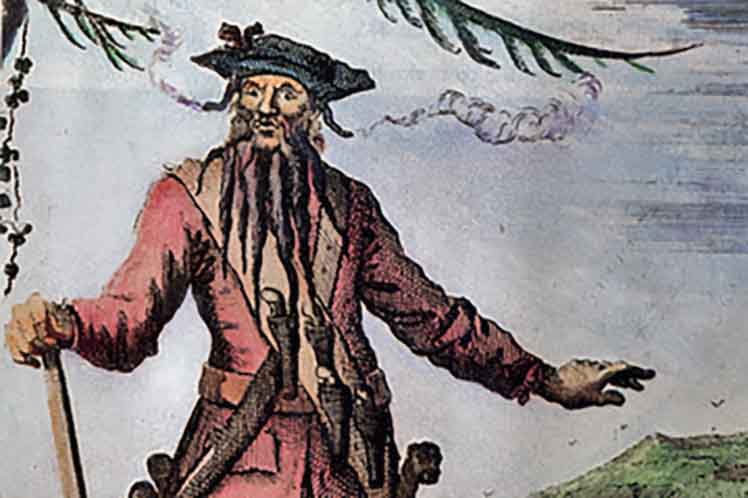
Additionally and to compliment the excellent and extensive narrative written by Billy “Matt” Mister on his and to the many descendants, the myriad times over great grandfather Marmaduke Mister (1722-1798). Billy put a lot of time and effort into doing his research where we all benefit and are in debt for his sharing with family, friends and those interested. We at It should be remarked there exists a large sum of island people who have descended from the first few families who chose to live on secluded bit of land being an island or islands as their frontier homes. Perhaps the most logical ideology for toryism at the heart was the rejection of changes initiated by the Whigs during the Revolution and a preference for retaining the British connection. Many loyalists, tories, pirates famous and obscure frequented the Chesapeake Bay in the 17th and 18th centuries and preyed on those trying to survive. In general we discover..........Edward Teach- Blackbeard, Captain Kidd, Stede Bonnett, Edward Davis and Captain Cook. Bartholomew Roberts - Black Bart, Roger Makeele, William Claiborne, Captain Roache, Smith Carmine and many other lesser-known pirates prior to the Loyalist, local tory picaroons in the Chesapeake Bay. While Blackbeard, Edward Teach whose decapitated head was triumphantly brought to Virginia from North Carolina in 1718, generally he is not associated with plundering in the Chesapeake Bay while some historians believe he was at Parramore's Island on the seaside in Accomack County, Virginia. Legends about him still persist in the lower Shore and his treasure is said to lie hidden in more than half a dozen places including Damned Quarter known at the time. The majority of loyalists at the time came from the poorer fishermen who lived on the creeks, guts and necks of the bay, most certainly in what we call the lower Delmarva today. These tory pirates are not to be confused with the "oyster pirates" of the 19th and 20th centuries. The author was not aware of the Chesapeake Pirate "Roger Makeele" until now who was before our Mister ancestor and others. Roger Makeele appears in Maryland records in January 1685. Makeele and his crew of nearly 20 men and women plundered Chesapeake Bay vessels, towns, and Native American settlements from Tangier Sound in Virginia to the Choptank River in Maryland and reportedly some western shore homes in Maryland. When the Maryland Council issued a warrant for Makeele, the pirate fled the region for the sounds in North Carolina, another haven for pirates of the time. The cause for independence was not universally popular on the Eastern Shore of Maryland or Virginia. Among those who As recorded by Captain Charles Johnson and started with Bartholomew Roberts (Black Bart) regarding the ARTICLES OF PIRACY:
Somerset County was an important location for Loyalist activity where we find a Joseph Wheland (Whayland, Wheyland, Wayland, Wheland, etc.) and his men often operated out of personal vendetta’s rather than Loyalism. Joseph Wheland, a colorful, wily and said to be a tall, slim gallows looking fellow who often wore a gold laced stolen jacket. By trade he was a waterman intimately familiar with the shallow channels, shoals of Somerset and Dorchester and said to have committed every crime in the book in defiance of mainland authorities. He operated mostly out of Tangier, Smith and other islands in the region.
William Roberts says his home was much hurt by the enemy as were other buildings (barns, meat-smoke houses, slave quarters, barns, stalls for his livestock and such) on his plantation-estate. Tory Pirates Joseph Wheland from Garden (?) Island was one of the most notorious leaders. Marmaduke Mister, another direct ancestor to the author, was one of Whayland’s captains, as well as family members Stephen Mister, John Evans, Basil Clarkson, Richard Evans, etc. They operated as privateers for the British and caused much fear and depredation. These rogues sought to seek revenge on William Roberts who was an enemy of one of Wheland’s crew (Marmaduke Mister, John Evans, etc.?) Revenge for what is never said. Whether William Roberts was politically active with the Whigs is not known to the author? The Governor of Virginia declared the Bay is so full of pirates it is impossible for any ship to go home safely. The waters off Deal Island, then known as “Devil’s Island,” were the site of many battles and threats between countians Plagued continually by the British, deviled from within by the picaroons, Smith Islanders feared for their lives as the British and picaroons continued to torment them, those close to the shoreline on mainland or lived off the many guts and creeks even though King Richard Evans had made an agreement. George Pruit of Hog Neck (Smith Island) had his house burned by picaroons for refusing to comply to their demands as setting an example to others who did not cooperate. There were always new and independent young rogues who did not honor or knew of any agreement in regard to providing food and victuals to the tory pirates so that the residents would come to no harm. One young roe, John Evans of Smith Island was heard to say that he was determined to have several of the principal people on the island dead or alive or at least get some of their negroes. It is estimated that some 75,000+ slaves from the colonies are estimated to have escaped or were captured (supposedly freed) and joined the British military during this time. They were treated somewhat better, however in gaining their freedom from the American colonists they succeeded in only to be put under British control whom they supposedly had liberated. Many of them became pilots for the British ships who navigated the many shoals, etc. of the islands, shallow harbors, creeks and so on. They also directed them to where they could get fresh water and victuals. It should be stated that it wasn’t only islanders, but a number of fugitives had come over from the mainland to join Loyalist islanders and seek refuge in the many marshes as well. The schooner “Greyhound” ……………. laden with salt, peas, bacon and dry goods was taken in Hooper Straits by the loyalist picaroon, pirate Joseph Wheyland, John Evans, John Price, etc. in 1782. The captain of the Schooner, Mr. Furnival and hands were sent to what was then called Damned Quarter (near Devils Island) after being detained 24 hours aboard (Wayland’s) barge he was plundered of his money, watch, hat, etc. Tory Jo, John Evans and others were later captured in a creek making out to Hoopers Straits where he was sent to the Frederick County jail (a logged jail).
Colonel George Dashiell of Somerset County sent a message to Maryland Governor Thomas Johnson requesting permission to use military force against the picaroons in the future as Somerset, Dorchester, etc. areas were being constantly harassed and plundered not only by the British, but local residents who were loyal to King George of England. Stephen Mister, a crew member of Joseph Wheland, struck out on his own in 1779 operating an armed barge from his base in the Annemessex River. Abraham Mister, Marmaduke’s older brother who married Alice Keen, lived on Hoopers Island in Dorchester County on the Honga River. It was Alice Mister (and Abraham) who gave birth to the more dreadful “tory pirate” Stephen Mister who was born supposedly about 1745. He was more than likely in his mid-twenties when he began privateering enterprise upon the vessels and fellow residents of the Chesapeake Bay. His exploits took him from the mouth of the Nanticoke River into the Tangier Sound where he not only plundered plantations, but shanghaied boats for use by the British. It (Maryland Archives) mentions Richard (probably King) Evans and Marmaduke Mister specifically. Richard Evans agreed to feed the picaroons if they left him and the rest of the islanders alone doing no harm. So, they had an agreement or truce. In Richard’s defense I would suggest it was either lose everything you own, protect your family, serve with the British or help the loyalists as the islanders were left to fend for themselves. Richard Evans was brother-in-law to Marmaduke as he married Judith Mister, Marmaduke’s sister as did John Evans (brother-in-law) who married his sister Hannah.
Marmaduke Mister, born 1722 (1732?) and named after his grandfather………………was one of Joseph Whayland’s (Wheland’s) crew and key captains who kept guard over the captured Captain Yell in a tender. [From the Maryland archives-] While aboard and guarding Captain Yell, Marmaduke asked Captain Yell whether he was for King or country? Captain Yell replied that he was a friend to every person that behaved well. Marmaduke then commanded in the Kings name to tell him the truth. Captain Yell answered telling him he was born in this country and had a right to defend his liberty. Marmaduke Mister then said what those damned rebels call liberty, I call slavery and so the people will find it. Marmaduke gained a reputation as being a ruthless Loyalist and pirate on the Chesapeake Bay who openly spoke out in favor of the British Crown. Captain Yell (the deponent) further said that Marmaduke set fire to one of the vessels that was burned and was said to have the iron (nails, anchor, etc.) from or for doing it. Captain Moses Yell said John Evans, Roberts Howith and one Price were likewise aboard as well while under the command of Joseph Wheland. He also heard John Evans say he was determined to have several of the principal people on the islands (Smith Island, etc.) either dead or alive or get some of their negroes. Additionally, Wayland had asked Captain Yell’s mate from whence he came and what he had in (Cargo). Joseph Mariman answered they were loaded down with plank and tar (wood and pitch) from the Hunger River headed back to the Potomack (Potomac) River. The plank and tar were to be put on board Richard Evans boat. Seems like Wayland was somewhat gentlemanly asking them if he was hungry? Wayland then ordered them to get in the canoe with the Mulatto fellow Lazarus and to go up to the three schooners and tell them to give him some victuals (supplies, food) It was right after this occurrence that Joseph Wayland was captured in July in a small schooner inside a creek off Hoopers Straits. He was imprisoned in a log jail in Frederick, Maryland (as was Marmaduke Mister and John Evans from Smith Island- albeit some sources say that John Evans, Price and Howith posted bond). Another true story (albeit a rabbit trail not to get off topic too much) of British activities against local residents would also connect to another ancestor to the author named “John “Jackie” Roberts from Dames Quarter” as well and who is buried in the “Rock Creek Cemetery” in Chance, Maryland (adjacent to Deal Island). Credit “Per Find a Grave,”…….beyond any shadow of a doubt John Roberts (Jackie) was the son of Rencher Roberts, son of John Grandee Roberts, son of Francis Roberts, immigrant, for there he lies among the Websters, the family of his second wife. He was born June 3, 1762. Around him clings the story of his capture by the British, impressed into the Royal Navy, his subsequent escape and return to Somerset County. Reverend Emerson Pierce Roberts, heard his father William Underwood Roberts, tell and retell the story, as he had heard it from his grandfather, “Jackie,” himself.
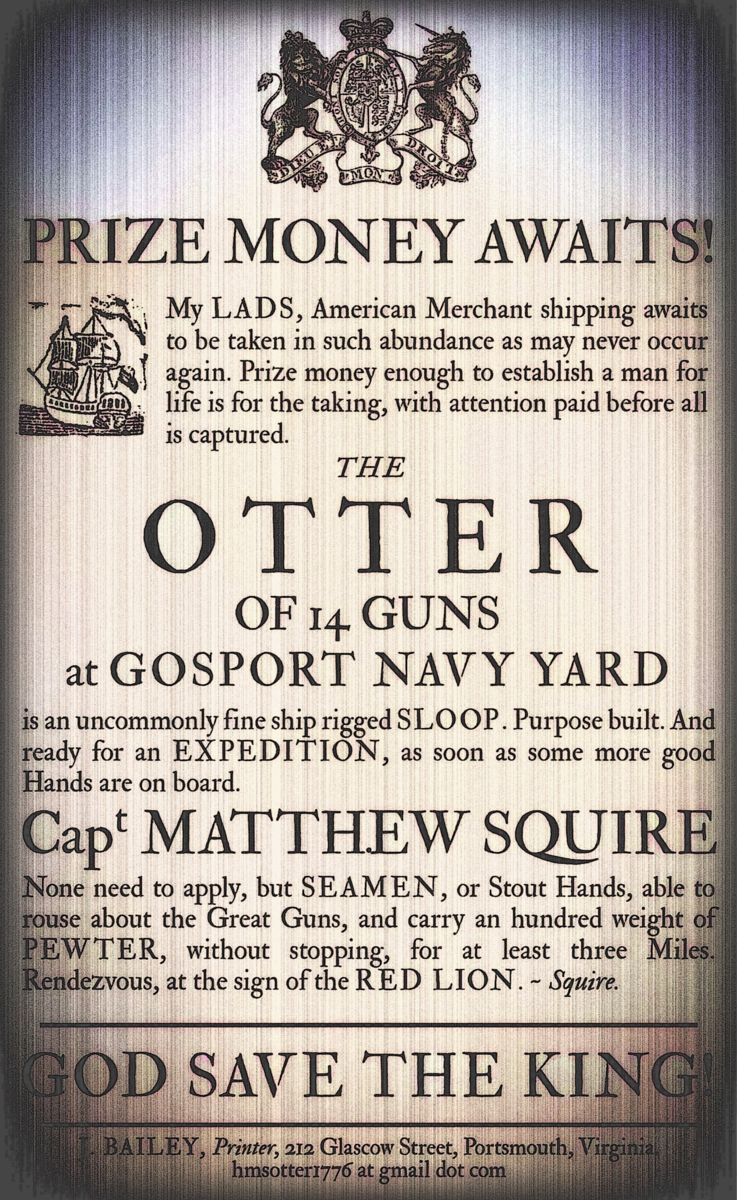
McSherry in his “History of Maryland” (Pages 155-6) tells the story of the plunder of the lower Eastern Shore of Maryland, by the “Otter”, British sloop of war,…” Early in March 1776, the Otter, British sloop of war, made her appearance in the bay (Virginia) with two tenders and captured several small vessels. After hovering about Annapolis, it anchored a few miles below Baltimore with the intention of destroying the state Ship “Defense,” then nearly completed in the harbor. Captain Nicholson, who commanded the Defense, determined to retake the prizes and having hastily got is vessel ready, and shipped a number of volunteers, with a portion of Captain Smith’s company as marines, bore down upon the enemy. He was accompanied by several smaller vessels crowded with men. The morning was hazy and the British were taken completely by surprise. The tenders escaped with difficulty and all the prizes were recaptured, manned, and cleared for action. On the deck of the American craft, he told his story, and was doubly rejoiced, when he found her bound for America, Baltimore to be exact. Not sure which is non-fiction and fiction? Others tell the same story of the capture, but believe he escaped within a few hours and before the British left the vicinity of Dames Quarter. Another variation of the story relates that “Jackie” Roberts, when a youth, and right before the American Revolution, ran away from home and joined the British Navy, and that after war broke out, he deserted and returned home, later to enter the Armies of Washington. In a letter written by a Mrs. Martha Parks (see below) she states Jackie Roberts was captured in the Colony of Maryland and was impressed into the service of the enemy (British) as a prisoner on a British Man of War in 1777. He was impressed into the service of the enemy for the duration of the war as a sailor. The rendition of him joining the Patriots does not work as he is not recorded anywhere serving during the Revolution. (He did enlist and serve as a Lieutenant during the War of 1812, which is documented). This is per a letter written by Mrs. Martha (Roberts) Parks to Mr. Henry Pringle Ford on 27 December 1900/Mt. Vernon, MD. The letter was submitted to the DAR by Mrs. Mary Anne Roberts who was a member of the Samuel Chase Chapter in Wicomico County on 22 October 1943. At any rate his blue uniform with swallow tailcoat, brass buttons and knee pants, were kept for many years in a hairy trunk in the possession of his daughter, Mrs. Eleanor (Nellie) Roberts Ford, at Dames Quarter. They bear mute witness to the fact that he saw service on behalf of the cause of the Colonies. The uniform has been described to the writer by several older members of the family who have seen it and who, as children played with it in the attic of Nellie Ford’s home, in the words of one of them, as “long to the shoes, coat swallow-tailed and blue, closed to the collar, with large brass buttons” (Warren Ford, letter dated July 28, 1928). There is testimony that the hairy trunk and its contents existed until about 1886, when they were destroyed partly because they were completely motheaten and partly because the children had completely demolished them in play. Loyalist activity was brazen to say the least. Some of "Tory Jo's" or Joseph Wheland's crew stole up the Wicomico River and hauled Captain Henry Gale of the Somerset militia out of his bed, spirited him away at the mouth of the Nanticoke, flogged him and then hung him. So, it is documented by Maryland Archives, etc. as well that “Marmaduke Mister, John and Richard Evans” (all ancestors of the author) had Loyalist political sentiments and made their stance known. These British loyalists more than likely received pay from British Admiral Lord Dunmore as well. Many of the tory loyalists’ boats were seized by Somerset, Dorchester, etc. navies, county militiamen, etc. due to being trapped in waterways, creeks, harbors or had run aground in the shallows. They were continuously flipped from side to side on many occasions as well. It should be noted that Stephen Mister was a crewman of Joseph Wayland before and that he recruited his uncle Marmaduke especially seeing how pivotal Smith Island was to the British. The area of Tangier Sound and Kedges Straits between the Annemessex River and Nanticoke River became the favorite hunting grounds of Stephen Mister. He was arrested in September 1777 for high treason against the State of Virginia. On the 14th of that month, he managed to escape from jail in Baltimore County with the help of Reuben Warrenton. He was arrested again a year later in November 1778 in Accomac County and was transferred to Worcester County, MD. To stand high treason against Maryland. Out of the two Mister’s, Stephen being the younger was more ruthless and unpredictable then his Uncle Marmaduke. That April of 1779 the Maryland (not American) Navy dispatched two schooners, “Dolphin and Plater” to Tangier Sound with the expressed purpose of finding Stephen Mister and another tory pirate Smith Carmine. When it was believed the two Pirates escaped traveling up the Pocomoke River its entrance was sealed off with hope of capturing Mister and Carmine a watch was kept on Smith Island where his Uncle Marmaduke lived being a picaroon himself. Marmaduke basically fenced (and did quite well for himself) most of what Stephen brought him, however accompanied Joseph Wheland on many of his scavenging and plundering expeditions of vessels and property on the mainland. So Marmaduke did not just receive stolen booty and fence it off to the British, he physically was among the picaroons who raided local residents who confiscated personal property, livestock, food reserves in addition to seizing any vessels they may have owned as well as those on the open Bay waters. Searches also began on all boats sailing through Hoopers Strait in Dorchester County. When that did not work Colonel Dashiell (Somerset) surmised Stephen Mister may have traveled to his father’s (Abraham Mister, Marmaduke’s brother) home on the Honga River in Dorchester County. Abraham Mister, Stephen’s father, was well known for his Patriot opinions where one must assume that Stephen rebelled and sought profit and adventure choosing to be a Loyalist instead. Smith Carmine’s fate is unknow, however Stephen Mister was eventually captured- not in Maryland, but Accomac, Virginia as he continued his pirate ways at least through August of 1780. As Matt Mister describes, Stephen Mister was hard to keep behind bars as he was captured only to escape multiple times.
On 6 May 1780 Accomac County tried Stephen for high treason. On 13 June 1780 Stephen was again to await trial in Richmond. During the summer of 1780 Stephen Mister, having escaped again, managed to capture at least six to seven vessels from the Tangier Sound and blockaded trade at the mouth of the Nanticoke River With the arrest of Stephen, imprisonment, Marmaduke’s own freedom at risk and not wanting to face criminal charges, the war was shifting it is somewhat obvious that he decided to swear an “oath of allegiance” to fight with the Patriot forces. Marmaduke evidently changed his pirate ways, changed sides in August 1780 and after the capture of his nephew Stephen Mister and probable long jail sentence or death penalty (hanging in the gallows) at 58 years of age he enlisted as a private in the Maryland Militia- Little Annemessex Company (around Crisfield) of the Princess Anne Battalion coincidently with the arrest of Stephen. He was both a Picaroon and a Patriot. Per Woodrow Wilson in his book "History of Crisfield" he states that Joseph Wheland who was pursued heavily by Maryland and Virginia authorities that no one would give him asylum, assistance on land or water for fear of their own lives. Pursuit became so fervent that he finally took off to the marshes near Tangier Island. For a time he lived off marsh grass, roots and whatever else washed up on the shore and finally became insane. After which and until his death his screams and groans at night could be heard for great distances while he was there dying alone. His body when later found was so emanciated that it resembled neither man nor any of God's creatures. He literally starved to death in the marshes and driven mad having fits of severe torment. Some islanders believed he had been dead for many years. When the wind blew at night they in imagination could hear his screams off in a distance where they arose from their bed to make sure that doors and shutters were securely latched. Quite the demise in general the mastermind of the loyalists and British who planned the victory at the Battle of the Barges or Battle at Kedges Straits. Marmaduke Mister's nephews from his sister Hannah and John Evans, sons William, Jesse, Levin and brother in law Richard Evans enlisted as well. On 22 November 1781 the Maryland Council actually paid him for sailing and returning captive soldiers from Tangier Island. For his service he was paid nine pounds by the council. It is known that per 1783 land assessment that he owned a 100-acre property called “Pitchcraft” located on Smith Island. The original tract of land was 1,000 acres and was bound by water on three sides. It also became known as "Mister’s Thoroughfare." This location provided ample access for rogues to transport stolen goods to the island and hide amongst the inlets and marshes. According to "God’s Island, The History of Tangier," by Kirk Mariner……….Job (Joby) Parks (another ancestor to the author) mentioned prior, in the winter of January 1780 during a bitter cold winter had been taken prisoner by the British. Finding the Bay froze over he had found his way home having made his escape from the British in the area of Devil’s Island. Parks walked across the ice-bound Manokin River, headed south overland through Somerset County and from Flat Cap Point (Near Crisfield) started
walking westward across the ice to Smith Island. There facing the most dangerous part of his journey the deep channel of Tangier Sound. Halfway across he saw a break in the ice ahead of him, desperately making a flying leap over it landing on the island side, falling and sliding towards home. The people on the island made it a Thanksgiving Day records Sugar Tom Crockett. Moving on Marmaduke married twice. First to Rachael Evans in 1758-1760 and second to Sarah Bradshaw between 1770-1775. With Rachael Evans/1744-1773 he had all girls including
With Sarah Bradshaw/1744-1834 he had 2 boys including
On 22 November 1781 Marmaduke Mister and his brother-in-law John Evans (who married Marmaduke’s Sister Hannah) were released from prison and allowed to return to Smith Island and their families. In the Maryland Archives, Volume 48, Page 160 it documents that Marmaduke Mister had permission to return home and having brought some American prisoners from Tangier Island (noted prior). While Marmaduke Mister was sailing for Maryland his nephew Stephen continued to plunder. This would ensure that by the end of the Revolutionary War Marmaduke was fighting on the side of the Patriots. There were many ships loaded with corn, pork, dry goods and other supplies for the "Continental Army" that were continually being captured by British and local tory picaroons who profited handsomely. Many of these local raiders are said to have returned to one of their bases at Damned Quarter richer and happier to have helped the British cause. Abraham Mister, Marmaduke’s brother and Stephen Mister’s father was a Patriot all the way and provided services for the Patriot’s and received financial reward for doing so. On 12 May, 1778 a correspondance to Governor Thomas Johnson authorized the auditor general to pay an amount of over 133 pounds for Mister's service in transporting colonial troops in his vessel on at least five seprate occassions. Todays money that would be about $30,000.00 Peace eventually came, was welcomed, but the war had changed the islanders’ lives forever. Wartime hardships caused them to turn inward and to learn to depend almost entirely upon themselves (there was no American navy and the Maryland navy was for the most part inept.) where much of that ideolgy continued well into the twentieth century and even to a small degree today.
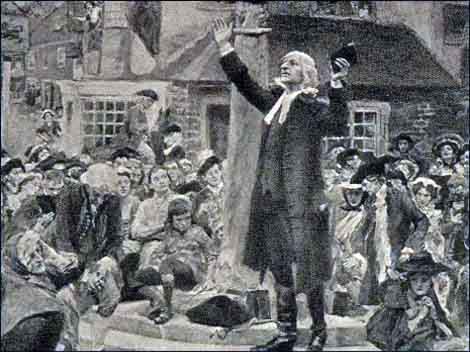
Because Tangier Island and the other small Islands of the area Tangier Island, like Smith's Island to its north, and the other small islands (Hollands Island) of the Chesapeake Bay are divided with waterways, guts and creeks where it was used by the Loyalist's as escape routes from the British. This all led to the rise and increase of the "Picaroons" or "(Tory) Pirates of the Chesapeake," who would join forces with whoever would benefit them the most. Marmaduke eventually was converted to Christianity and became a God-fearing man allowing unofficial church services in his home including well after his passing by surving family members who still live on Pitchcroft, Smith Island. In Frances Dize’s book Smith Island: Then and Now she states the following:
Stephen Mister never did change his pirating-privateering ways against American vessels or farms. Have never found Stephen Mister’s fate, yet if I was to assume he was probably hung by Virginia or Maryland authorities. In Marmaduke’s will dated 10 October 1796 he states………thanks be to God for it calling to mind the certainty of death being willing to settle my worldly estate making void all other wills; he died on 21 April 1798. Richard Evans, Solomon Evans, James Spence and William Thomas were his witnesses. As a result, we find Marmaduke serving on both sides
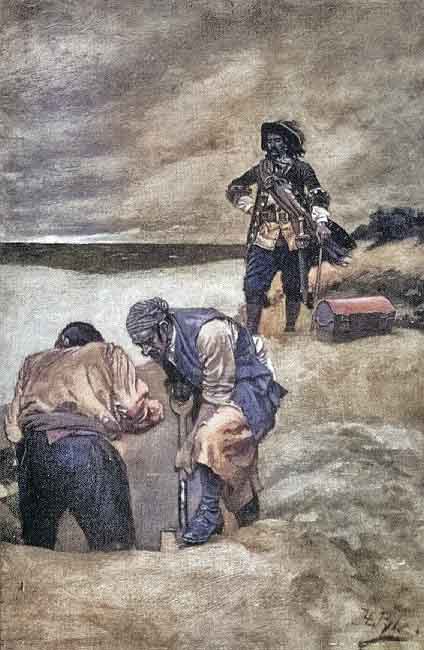
Thomas B. B. Price, Jr., got the stone quotations, the shapes of the stones and their locations in the "Mister-Rowe Cemetery" on Deal Island. Here is the quote on the stone: "In memory of Sarah (Evans) Mister Consort of Marmaduke Mister who was born on Nov. 4, 1744 and departed this life July 7th, 1834, aged 90 years, 2 mo. and 4 days. He was buried on “Deal Island” on what was reportedly the Severn Mister property. It is reasoned that Severn Mister most likely benefited from his father’s privateering operation and is how he became such a wealthy landowner and quite influential in the region. Whatever plunder that was not surrendered to the British the picaroons kept It is estimated that the majority of both Maryland and Virginia Eastern Shore residents were sympathetic to the Loyalist movement. Modern day Smith Islanders still recite tales about Marmaduke Mister, Loyalists in the Revolution and his discovery of a pot of Blackbeard’s gold. Marmaduke's treasure is shrouded in mystery. There are tales of ghostly fog and mist, of wailing banshees and of folks who have found the treasure, only to lose it again as it slipped back into the marshy soil of Kizzie's. Sources Cited:
|
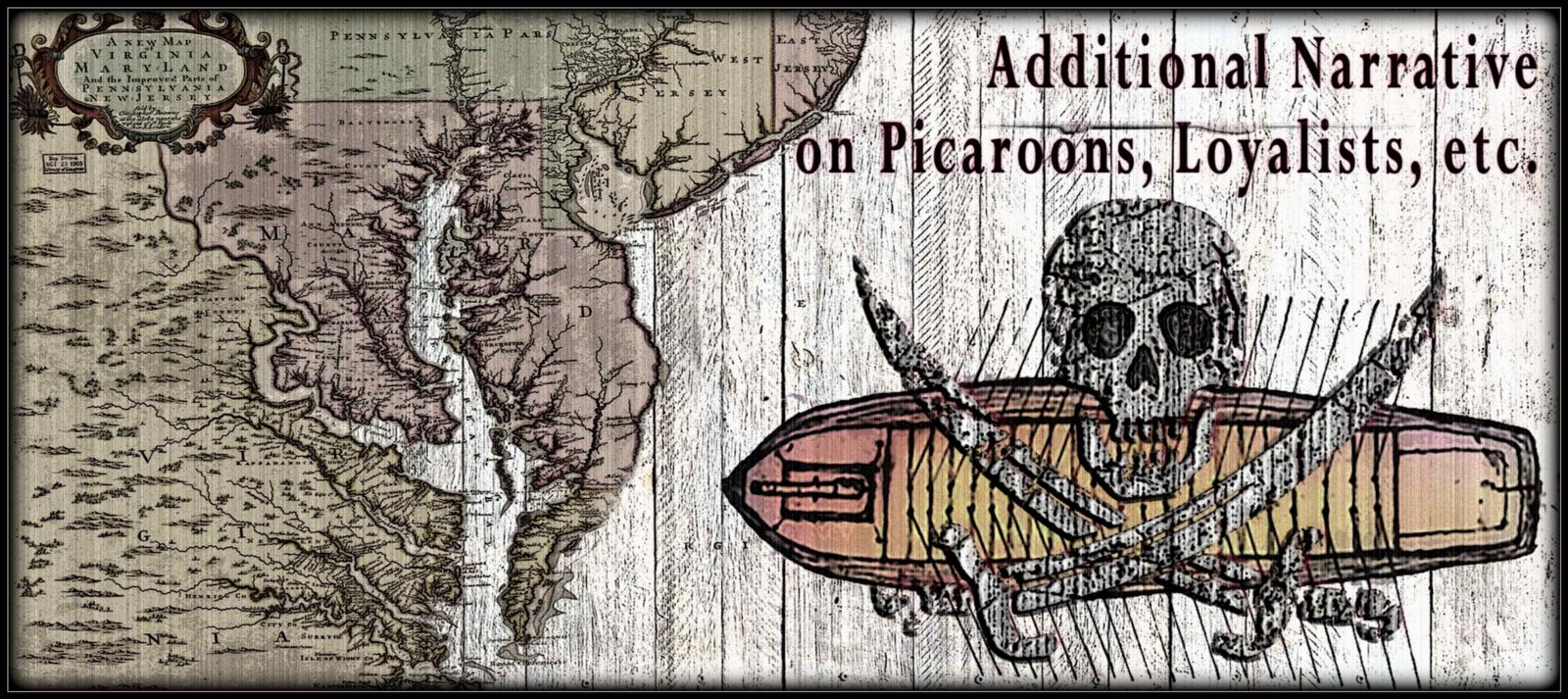
 “Skipjack Heritage” endorse his writings, take nothing away and only contribute a few things to his narrative. We aim to expand on not only the Mister's, Wheland and others aforementioned, but expand on a few Loyalist, Picaroon, Tory Pirates to the Chesapeake and true stories as they relate to British and Loyalist plunder not yet mentioned and taken prisoner from the lower Delmarva.
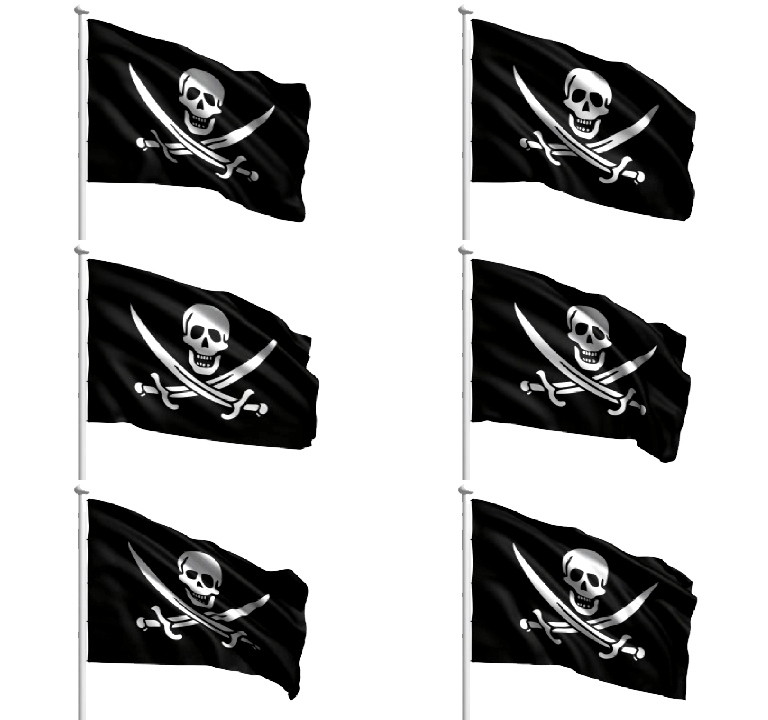 championed the Patriotic cause were the "larger landowners and planters" on the mainland- the affluent gentlemen who mostly had for generations looked down on unsophisticated islanders. Islanders from both Maryland and Virginia were left undefended by their American compatriots who were vulnerable to the British, the Loyalists and even some Patriot forces. When it wasn’t the British or picaroons as far as Maryland at least it was Virginia authorities. Virginia Governor Thomas Jefferson ordered that the boats of all local watermen be collected and put under guard to prevent them from being used by the British. Many islanders were taken, captured by the British, including slaves only to become Pilots around the Bay for the British ships including an ancestor, Job Parks from Smith Island (1758-1847).
  Under the cover of night raiding parties sailed from their island bases to plunder Eastern Shore farms, captured their neighbors’ vessels then dart back by the light of dawn to their convenient island hiding places. Loyalist, Picaroon, Tory Captain Joseph Wheland and his crew’s attack on “William Roberts” of Dames Quarter is an excellent example of one story that happened and also an ancestor to the author. William Roberts whom at least one of Wheland's crew had a vendetta against was wealthy, a large land owner in Somerset County
  and the British invaders. In the 1800’s as an appeal to Christian (Methodism being the main denomination) sensitivities “Damned Quarter” was renamed “Dames Quarter” and “Devil’s Island to Deil’s Island.” “Rogues Point” on Smith Island was also renamed to Rhodes Point. It was called Devil’s Island supposedly because it was a hideout for pirates, outlaws, rogues and a shipwrecked crew who washed up on its shore in the 1600’s before the picaroon’s and the British.
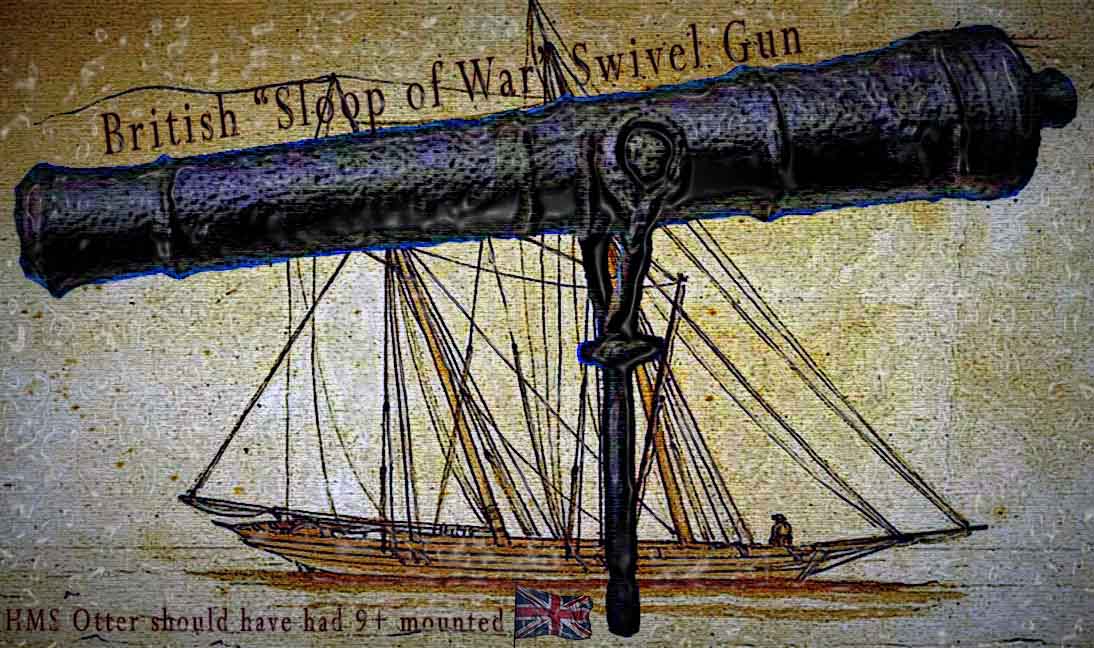
 These boats were dispatched to Smith Island where Stephen’s uncle Marmaduke Mister who lived on the island held until the British Navy arrived. Popular legend says that Marmaduke was rewarded for his services in picaroon treasure and that treasure is still buried at Kizzie’s Point. Two of the shanghaied boats captured by Joseph Wheland, Marmaduke Mister, John Evans and others along with its captain, we find a Moses Yell and a Mr. Joseph White whose sloop had been dismasted when captured on the Nanticoke River and is recorded in the Maryland Archives. Joseph Wayland (Whayland, Wheyland, Wheland) wanted the mast from Yell’s boat to put in the sloop he captured from Joseph White. Wayland was going to turn the sloop into a tender with four four-pounders and twelve swivel guns to guard the Islands and keep the Shirt Men (Patriots) from going to abuse the Smith Island inhabitants. Before this could be done Wayland received orders from British Lord Dunmore to rejoin the fleet and thus it was burned.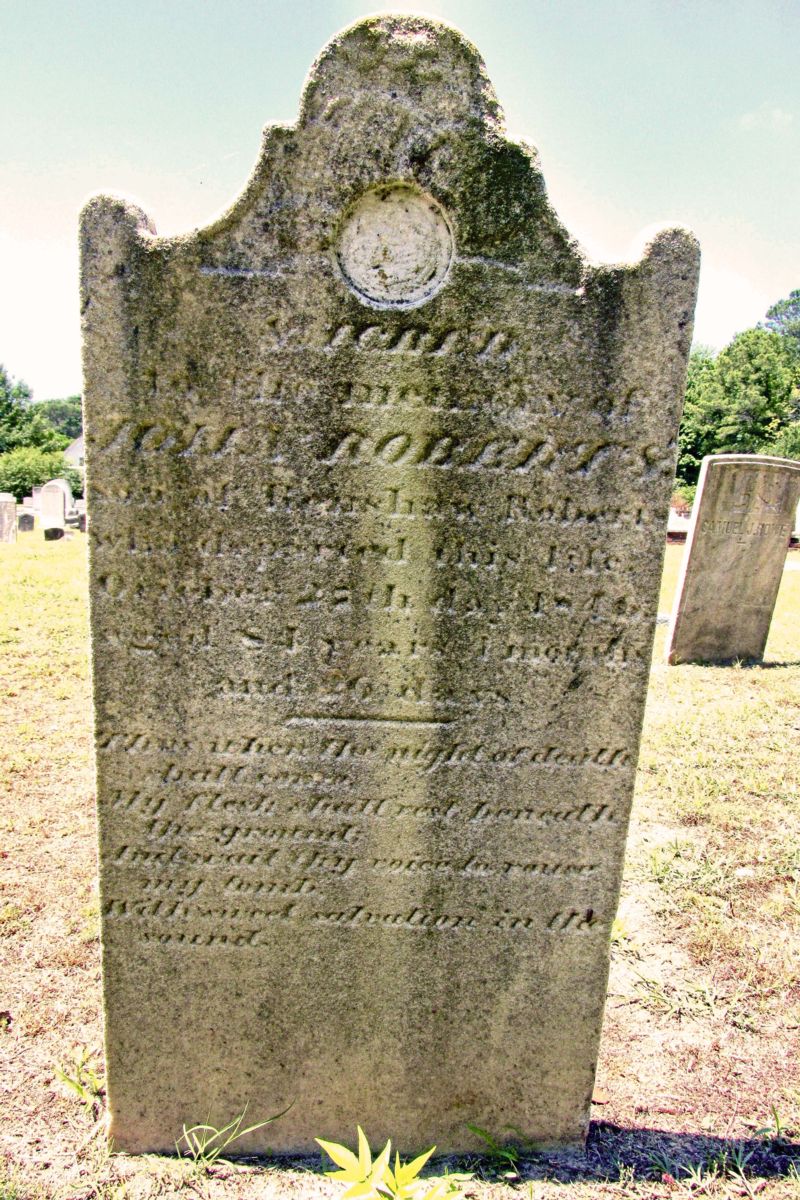
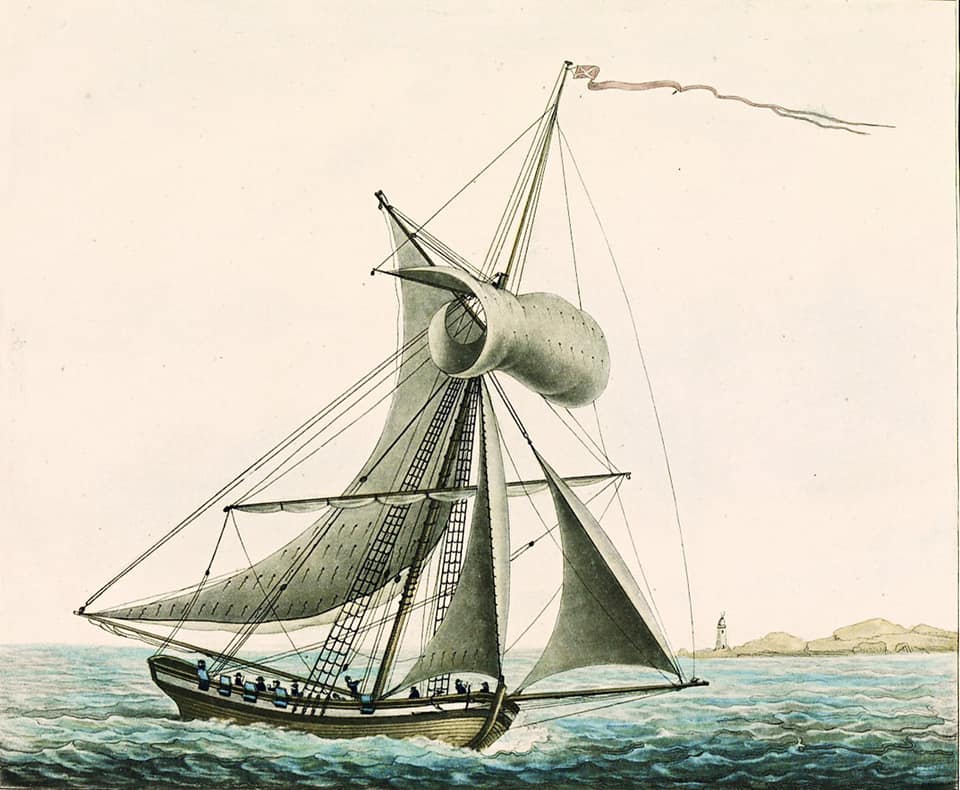 squadron, bore away for Annapolis. But finding this place equally well fortified and a strong body of the newly organized militia as well as the regulars, assembled to protect the town and the shipping, she, with her tenders, dropped down the bay without having won either booty or success. The militia and independent companies which had been put under marching orders upon the first appearance of the enemy in Maryland waters, now followed them down the bay shore as fast as possible. Having plundered a small island on the Eastern Shore they made their appearance off Chariton Creek in Northampton County, where Maryland minute men were stationed. The tender entered the creek for the purpose of cutting out several schooners, however, they stranded. During the night Captains Kent and Henry threw up a small breastwork opposite the schooner to prevent the captors from carrying her off; early the next morning the tender attempted to dislodge them. After a heavy fire lasting an hour, the tender was compelled to share off without the prize. The enemy, having withdrawn, Captains Kent and Henry were ordered by the Maryland Committee of Safety to return to the province…”
 which he had never seen, but it matched the description he had heard of the Stars and Stripes. He made his decision to risk it all. After dark he tied his clothing to his head and committed himself to the water in a desperate final effort to reach the ship that bore the new emblem. The British marines on watch, fired on him as a deserter, but their bullets fell short. Lost in the dark, he struck out for the light. Many times, at the point of exhaustion, he was ready to give up, but at length came to his goal.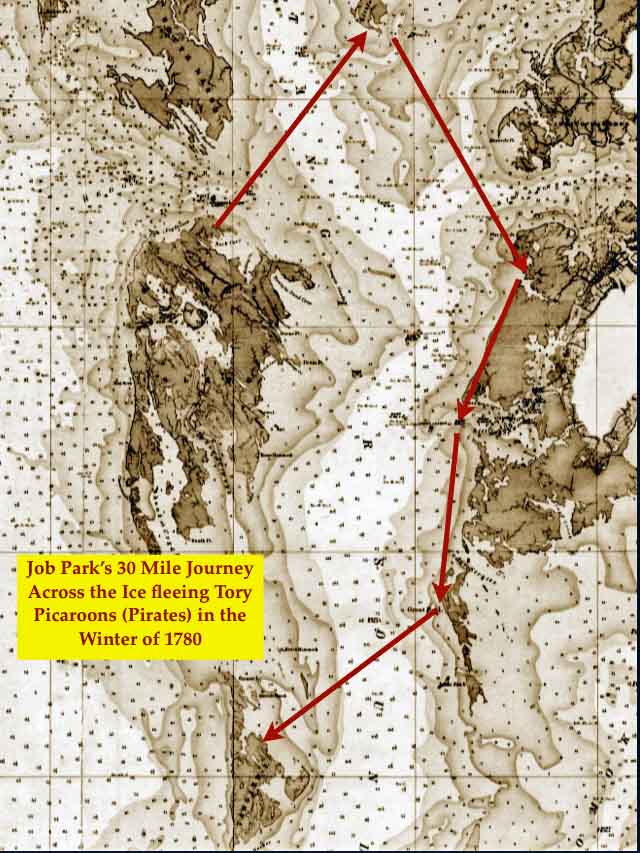
 Tangier Island like Smith Island, Hollands Island, Watts Island, Somerset County Maryland (Dames Quarter, Deal Island, Annemessex, etc.) with all of its marshes, creeks and guts became the perfect tory base or more appropraite a hideout. On 13 April 1782 the Governor's Council presented a new set of sailing directions to depopulate the Tangier Islands within the limits of this State [Maryland] . . . This command was abandoned.
 of the war and a reformed man. For all of Marmaduke's loyalist activities, other then being arrested and put in jail, when he was released he never received any additional penalties from the American side- quite remarkable. He was a wealthy man now, submitting to the Patriot cause while converting to Christianity. It should be noted that Methodism was not not welcomed by the Whig political party who controlled the majority in government at the time.
 as bounty, so in that scenario it is not difficult to fathom that financially he was a wealthy man due to the pillage from his fellow colonists at his fathers expense that he kept and passed down. Having owned a large part of Pitchcroft on Smith Island that was deeded to him by his father (when he reached 21 years of age), Severn purchased parts "Purgatory," "Barbadose" and "Self-Preservation" from Thomas Rowe in 1814. In 1815 Severn builds his home on Deal Island, MD. He then moved to the western shore of Northumberland County, Virginia and purchased what was called "Salt Pond" in November 1839 consisting of 539 acres. Their home on Deal Island was deeded to their son Bennett about the same time.