| DEAL ISLAND WEATHER |
| Web Counters | ||||||
|

|
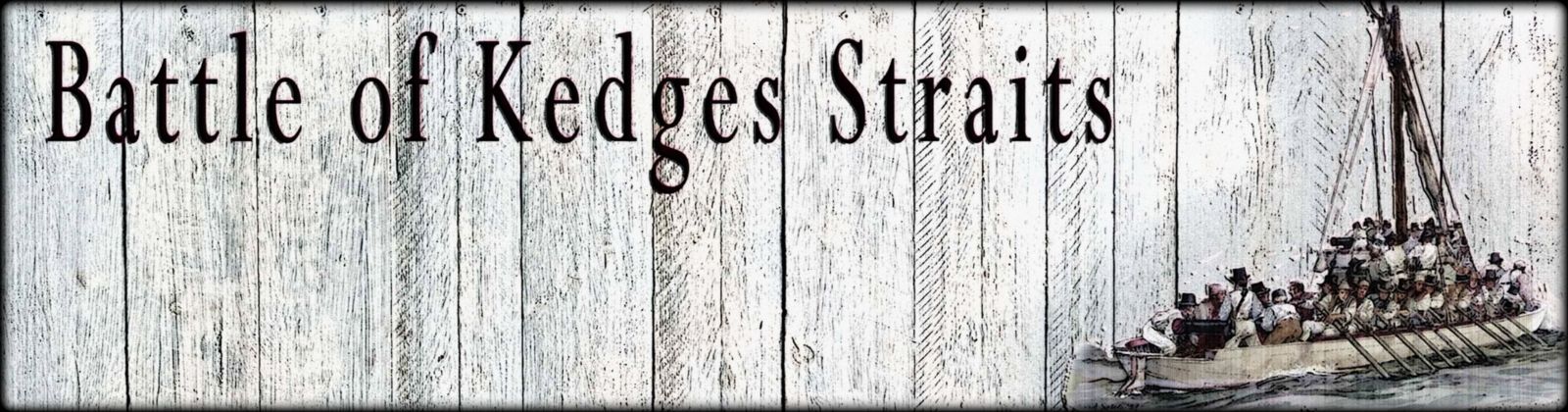
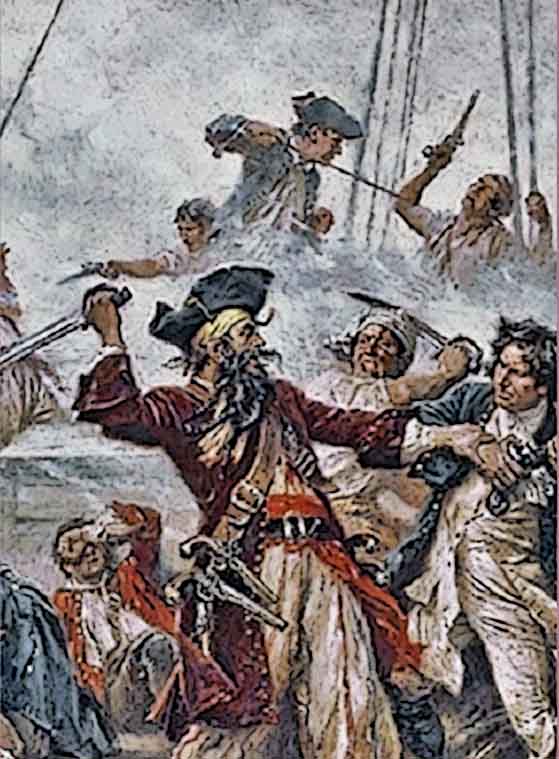
Of course, all of this was prior (from additional narrative on picaroons, etc.) to the last battle of the Revolutionary War, “The Battle of the Barges” also known as “The Battle of Kedges Straits” in November 1782. This would be in Maryland waters that divide Smith Island and South Marsh Island to the north. The final Naval Battle of the Revolutionary War and that which was fought more than a year after the surrender of the British and Cornwallis at Yorktown in 1781 was fought in Maryland waters at Kedges Straits. (The fighting realistically continued into 1783.) The battle was fought more so as part of a campaign by Maryland Militia to end the raids by "British and Loyalist- Picaroon or Tory Pirates) and their “barges of war,” escaped slaves who constantly preyed upon islanders, residents especially those from Somerset and Dorchester regions. The flotilla of Maryland Naval Militia was supported by Virginia volunteers from Onancock sailing out from Onancock Creek and appealing to Lt. Colonel John Cropper and the 25 men he raised. To help navigate the many shoals and shallows Barges were built and used as they sat low in the water and could be rigged for sail or oars. They could carry guns and men to wage war and plunder and typically escaped larger boats or ships who tried to pursue as the larger, deeper draft boats could not follow. A Captain Frazier was sent by American Commodore Zedekiah Whaley who was in charge of the fleet of barges in the protection of Maryland shores from British Captain Kidd’s (a Scotchman) marauders and his six-armed barges to locate British, picaroon barges and other vessels. Captain Solomon Frazier said that on the 27th of November 1782 that he, the fleet observed seven sail coming up the Bay and gave chase. After a 24 hour chase the Maryland fleet caught all six (seven?) British barges at the head of Kedges Straits. Night came on and they stood into Watts Island to wait for dawn. It was when Whaley seeing that the picaroons numbers were greater than those of the State Barge Fleet that an express should be sent to the commander of Accomac County, Colonel Cropper a veteran of Washington's army who had arrived from Onancock the evening before with 25 Virginia volunteers from the Accoman County Militia. The British barges were manned by regular sailors, Loyalist-picaroons and escaped slaves who fought probably more ferocious than anyone. The night before the battle sailing into Tangier, Commodore Whaley's flotilla raised the British colors and pretended to be British to fool the local tories, loyalists. A band of Loyalist pirates he was chasing was too big to handle with the few vessels at his disposal. He landed at the home of a Mr. Crockett. Crockett knew nothing about the Americans other than that he had seen them lying off Watts Island. Mr. Crockett then added and stated that 6 barges left his house early that morning and stood up for Fox Island. The barges had also informed Crockett that they would lay over at Kedges Straits that night. One of Whaley’s Onancock's barges was too slow to keep up and had to be sent back. Armed with the knowledge Mr. Crockett had given them they followed the British barges to Kedges Straits where the battle ensued. The action commenced at half past nine o'clock and lasted twenty five minutes. Whaley ordered his fleet to attack and in a short while they had closed the enemy to 300 yards. The foremost of Whaley's barges having fired a shot at long distance retreated. Encountering heavy The enemy whose resolve had nearly been broken only moments prior, took a new spirit, encouraged by this pushed on with increased fury where Whaley's his other barges turned back in fear and cowardice who fled inglorionsly leaving their commander and Protector alone to his fate. Three of Kidd's barges now less than fifty yards away were already along side of him when a second ammunition chest exploded renewing the scene of disaster and confusion. One of the American barges the Fearnaught had one of its main guns, a six pound bow gun explode upon firing, not a good start. The Protector was disabled where this certainly shifted the momentum. When the gunpowder exploded his crew jumping overboard in flames the battle was for the most part lost. The British and Loyalist picaroons, escaped slaves boarded the ship where fierce "hand to hand" combat took place. Colonel Cropper (from Virginia) describes the action at this time as "a continual shower of musket balls, pikes, cold shot, cutlasses and iron stantials for eight or ten minutes. Commodore Whaley fell, killed by a musket ball. Captain Joseph Handy fell fighting with one arm after the other had been broken (author Donald Shomette says he lost his arm by sword). Lieutenant Samuel Handy was severely wounded. In the "hand to hand" fighting Colonel Cropper was badly wounded. Lieutenant Levin Handy of Maryland, George Christian of Accomack and twenty-five crewmen were lost. (In her book Smith Island, Frances Dize states Levin Handy received seven wounds and nearly lost his life.) Cries for quarter were shouted by some defenders, but were refused by the black picaroons who charged aboard. It was later claimed that many of the defenders were most cruelly murdered and thrown overboard by the negroes. Among those thrown into the water by the explosion was William Gibb, a Scotchman who for many years was deputy clerk of Accomac. He could not swim and was sinking when his friend Captain Parker seized him by the hair and kept him afloat; they were both picked up by the enemy. As long as Gibb lived, which was for forty-five years, one thereafter he had an annual feast at his house on the thirtieth of November, the anniversary of the Battle of the Barges. Overwhelmed by a superior force, Protector surrendered. The fighting was quite bloody and deadly. Colonel Cropper and twenty-nine others were injured. British Commodore Kidd was badly wounded and several of his officers were killed and/or wounded.
In horror many residents of Smith Island watched the bloody battle. On 6 December 1782, Colonel Cropper still recovering from his wounds said in a letter, "there never was before upon a like occassion so much cowardice exhibited." Frazier and Speddin fired a few rounds shot at a long distance and rowed away. Dashiell kept his distance, Samuel Handy never fired a shot and ran off before the other two and Bryant never got up at all. Levin Handy and the Virginia volunteers who were on board Whaley's Protector accused some of the officers of cowardnice, desertion. Somerset Colonel Dashiell and Botfield were charge with highly unbecoming and improper conduct and were suspended. This battle took place in late November 1782 after Cornwallis surrendered at Yorktown 19 October 1781. Ironically the battle had occurred on the same day that the Treaty of Peace between Great Britain and the United States was signed. This loss and setback only enbolded the tory picaroons where they continued preying upon Bay vessels and residents. And still the Bay was not safe as Joseph Wheland and his followers spent that following winter on Smith and Tangier Islands. The waters of the Chesapeake were once again hazardous. Joseph Wheland and a number of his rogues by Ferbruary-March of 1783 were harrassing and plundering the Potomac and especially the Patuxent as far up river as Benedict. In March the specific objective was Devil's Island (Deal Island) immediately east of the Tangier. The island was believed to be a favorite rendevous point where the picaroons had collected their plunder. Shortly after the proclamation of peace the remaining British vessels in the Chesapeake were ordered to report to the larger British fleet in New York to begin the long voyage home. Afterwards picaroon activity collapsed. Picaroon leaders at Tangier and Smith Islands were captured and a number were hung. It is my assumption Stephen Mister was captured and hung as well even though there are no records to substantiate. Smith Islander's were never the same. Wartime hardships caused them to turn inward, to learn to depend almost entirely upon themselves for therir wants and needs. As if in self-defense they built a tough outer shell around themselves" they no longer trusted outsiders. Enter their new faith and Methodism. Sources: Chesapeake Privateers in the Revolution; Leonard Szaltis Pirates of the Chesapeake Bay; Jamie L.H. Goodhall Pirates of Maryland; Mark P. Donnelly and Daniel Diehl Pirates on the Chesapeake; Donald G. Shomette Smith Island, Chesapeake Bay; Frances Dize God’s Island, The History of Tangier; Kirk Mariner Mister Family History, Bill Mister Skipjack Heritage, Wes Simpkins History Between the Waters, The Battle of the Barges; Written by Bill Helin |

 cannon and musket fire 3 of the 4 Maryland barges turned back leaving Protector and it’s 65-man crew alone to fight the British.
  The battle resulted in a decisive British and Loyalist victory. American Commodore Whaley was killed and out of the Protectors 65-man crew 25 were killed, drowned or wounded, 29 were captured and 11 managed to escape with their lives. Doing the math 83 percent of the Americans were either wounded or killed. Local lore has it that Solomon Evans the namesake of the Solomon’s Lump Lighthouse in the Straits watched the entire battle from a tree in his yard. The battle was a complete disaster for the Americans, poorly planned and more so poorly executed. Some of the dead were were rounded up by Solomon Evans and other islanders where their floating bodies of sailors were pulled from the water, shoreline and buried on Smith Island.