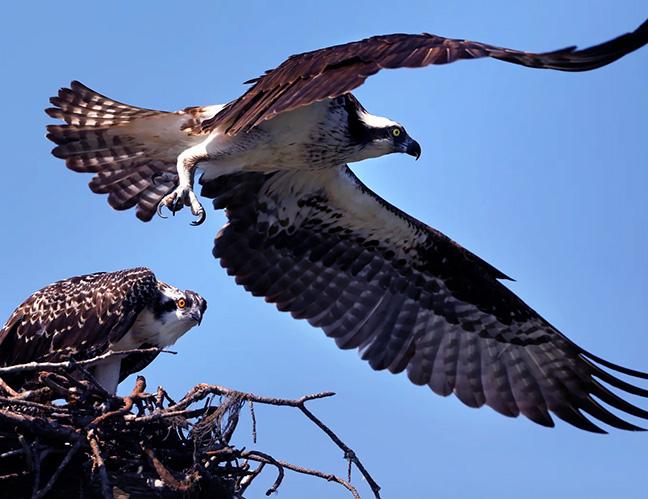
| Act now to protect Chesapeake Bay and its wildlife
https://www.dailypress.com/2026/09/22/letters-for-sept-23-act-now-to-protect-chesapeake-bay-and-its-wildlife/
Declining Ospreys
In 2014, I joined researchers from The Center for Conservation Biology to survey osprey along the Elizabeth River. We counted a record 60 breeding pairs, a milestone that symbolized the river’s recovery. One of the most vibrant areas was a creek near Craney Island, where osprey occupied channel markers and fed on Atlantic menhaden.
Today, that same place has gone silent.
In 2014, the creek hosted eight nesting pairs. By 2024, only two remained, and neither raised young. This year, there were none. According to CCB, 2026 was the worst year on record for Chesapeake Bay ospreys. On the Elizabeth River, productivity fell to just 0.19 young per breeding pair, far below the level needed to sustain the population.
Researchers have documented nest failures, starving chicks, abandoned nests and declining deliveries of menhaden, the fish osprey rely on to raise their young. The warning signs from osprey are impossible to ignore.
The Atlantic States Marine Fisheries Commission’s Draft Addendum II proposes reducing the Chesapeake Bay menhaden reduction fishery cap by up to 50%, a precautionary step to leave more menhaden in the bay while scientists work to better understand the stock.
We may not yet have every piece of the puzzle, but ospreys are telling us something has changed. Places that once echoed with nesting families now stand quiet. If we care about the future of the bay, the Elizabeth River, and wildlife that define them, now is the time to act. Public comments are open through Oct. 9. |