| DEAL ISLAND WEATHER |
| Web Counters | ||||||
|
As we turn the pages of history, we find the Island has not lacked for famous native sons. Mr. Samuel Stewart Wallace born in 1868 graduated from Deal Island Academy received his B.A degree from Dickinson College, Carlisle, PA., his M.A from Columbia University, New York, N.Y. and his Ph.D from the University of Chicago. He also received tow honorary degrees from Dickinson College and Diploma letter from University of Georgia. After leaving the Island Mr. Wallace was a professor of English in the Georgia Institute of Technology. Mr. Thomas B. Webster, son of Silas and Louisa Webster born in 1853 left the Island with his brothers at an early age and started a business at Canton along the Baltimore waterfront. They were oyster commissioners, ship chandlers, partners in the canning business operating under the name of Webster Butterfield, owners of drudge boats and three masted schooners. All their captains were from the Island or Rock Creek; Captain Tom was a bachelor and spent most of his summers on the Island. He was often heard saying, “No matter how long I have been away, no matter where I have roamed, I am always proud to say Deal Island is my home.” He is buried in the Deal Island Cemetery. Islanders serving in the House of Delegates were Lybrand Thomas, Hosea Webster and Carl Hoffman. Also serving on the Somerset County Board of Education were Lybrand Thomas and Hosea Webster. Webster was a member of the board at the time Deal Island High School was built and gave land near the newer school for a recreation center for the school. Horace Webster from Wenoma was also president of the Board of Education. The islanders survived the depression of the 1930’s. At the time Deal Island had a population Like most adolesent boys in the early part of the 20th Century they quit school to work full time on the water joining their fathers to help feed the family. The day before the banks were closed by President Roosevelt oysters were going for .30 cents a bushel. After that they were lucky to get .17 - .18 cents a bushel, shucked and shipped to Baltimore. There were times when a oyster packer would not even take them if you gave them to them. During the lean 1930's during the Depression and especially with Smith Island oystermen drudgers wouldn't even rig'em up. Without a market it was not worth the cost of working and maintaining their boat. Many were just left on the mud flats and died. Crabbing was as bad in the summertime, crab shedding businesses made so little money it was hardly worth the time and work.
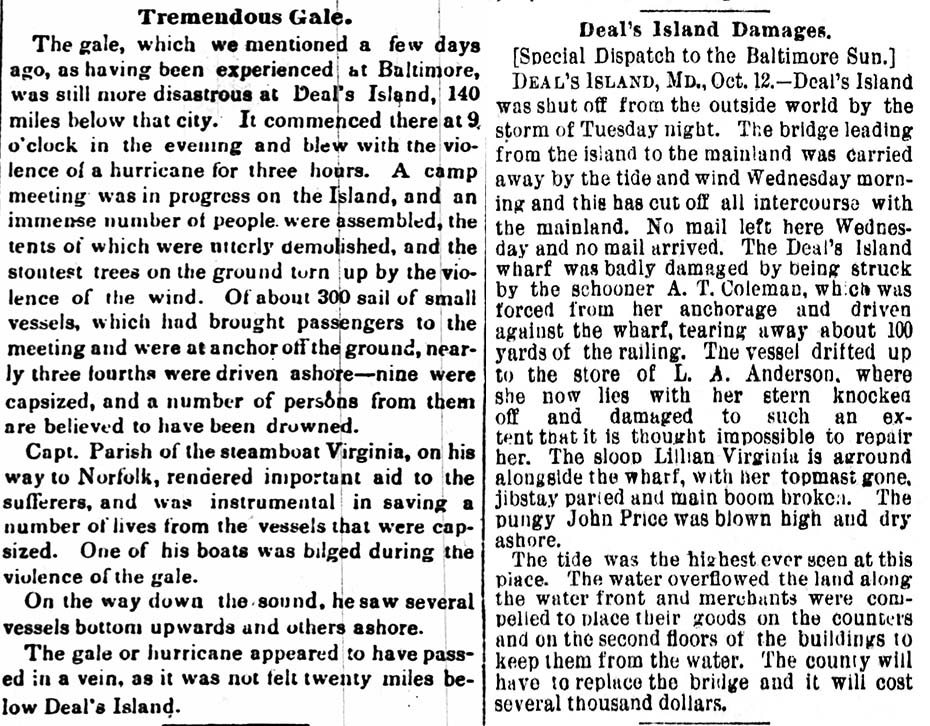
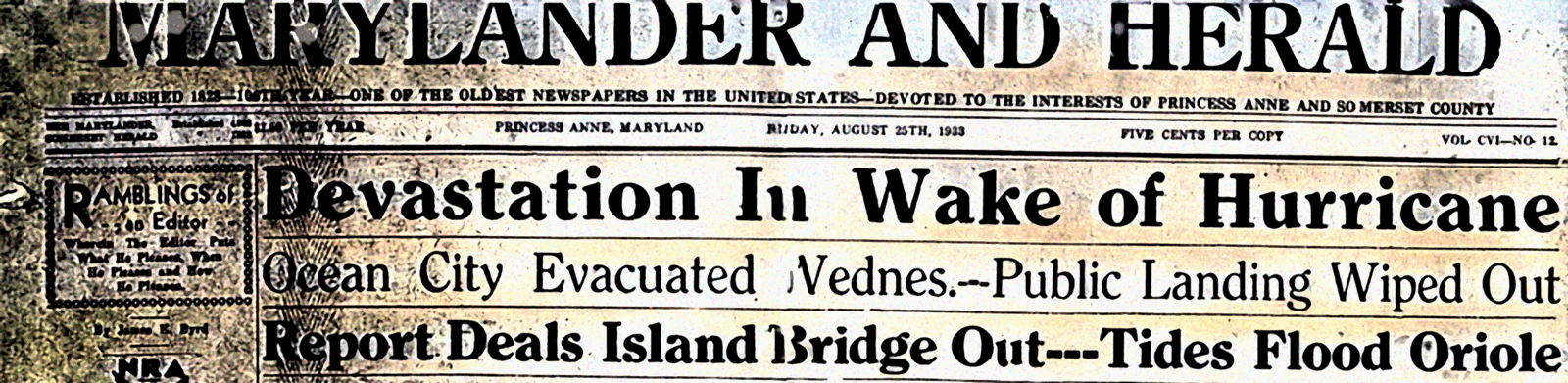
The reports received on the mainland were meager at first for telephones. The story finally came in that the bridge to the mainland was washed out, every oyster-crab house either swept away or so badly damaged that salvage was doubtful. Docks were torn down and washed away, on Smith Island homes were washed away, Holland's Island and Tangier Island to the south suffered immense damage. The upper part of Hoopers Island in Dorchester County was submerged except a couple ridges. It was bad where residents on Hoopers Island had to wade through water sometimes chest deep to set livestock loose. It was said water rose 18" an hour and some residents said it rose a foot in 15 minutes. If you lived on any of the islands you were isolated. Fifteen hundred residents of Deal Island had to rely on boats to ferry people, mail and goods across the Upper Thoroughfare. The storm took it all. The editor of the Crisfield Times..........of all the various means and methods employed now or in the past in Maryland waters of taking oysters, none has been so terribly destructive and detrimental as the use of heavy dredges made possible since the advent to the power winder (vs. hand winding). Maryland's dredging fllet that had numbered in the thousands in years gone by gradually decreased until the year 1932 - 1933, less than 100 dreging licences were issued. To make matters even worse in 1931 dredging in the Potomac River had been closed by the State of Maryland. After many attempt including 18 November,1933 when some 200 drudgers crowded a meeting room on Deal Island to testify in support of opening the Potomac River. They talked of suffering immeassurable financial loss. On 27 October, 1933 it was closed for good. Deal and Smith Islanders had relied on oysters from the Potomac at least half to two-thirds of their oyster harvest until the closure. They were not allowed to oyster on the Choptank River as it was restricted to Dorchester and Talbot dredgers only. On a personal note and not to get off topic......... the over harvested oysters local to the area, whether it be the Tangier Sound or local waters to Deal Island affected the authors family immensly. There was nothing around really to dredge for......... to the point my grandfather moved from Mt Vernon, the Deal Island area (which he and other family members called Starvation Point) moved to the western shore, Washington, DC and local. His brothers, father followed looking for work as all they knew was the water and boats, repaired boats in the marinas, chinked (with a rope called oakum) - caulked many a hull using the old hammer and rope, scraped barnacles and painted bottoms, the boat itself, was a hard hat salvage diver raising sunken boats, putting in bulkheads - docks, repairs on bridges, building of new ones, even recovering drown
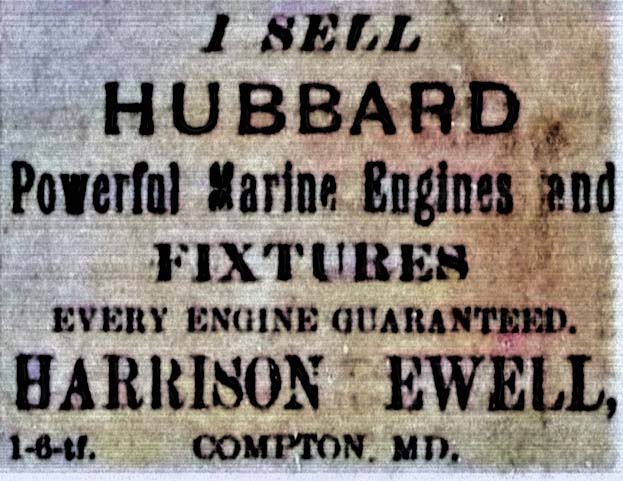
 ing victims; if it was a paycheck he did it. ing victims; if it was a paycheck he did it. The authors great-great grandfather (Harrison Ewell) originally from Somerset County who was a waterman, etc. had a big schooner and carried oysters, crabs, watermelons, strawberries, you name it, etc. with his younger brother (also from Somerset County originally) by this time living in Urbanna - Reedville, Virginia to areas such as Baltimore, Norfolk and down the coast to New Bern, etc., North Carolina.
Not seeking to be ostentatious, yet wanton to give an example of when local oysterman from "Deal Island - Somerset County" siezed the opportunity in taking their boats a little north to search for oysters and how they were empowered and aided by others away from home to succesfully dredge, make a living and take that "success - accomplishment" home to feed and clothe their familes on the shore.
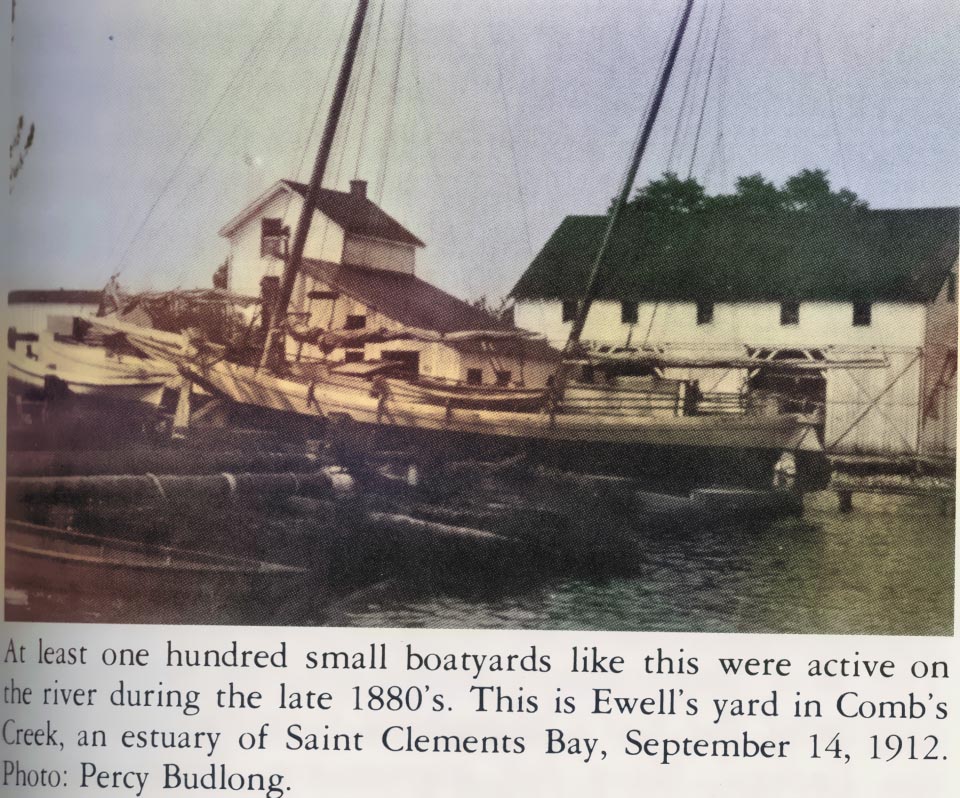
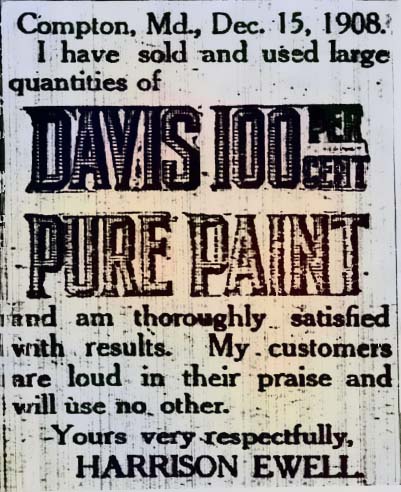
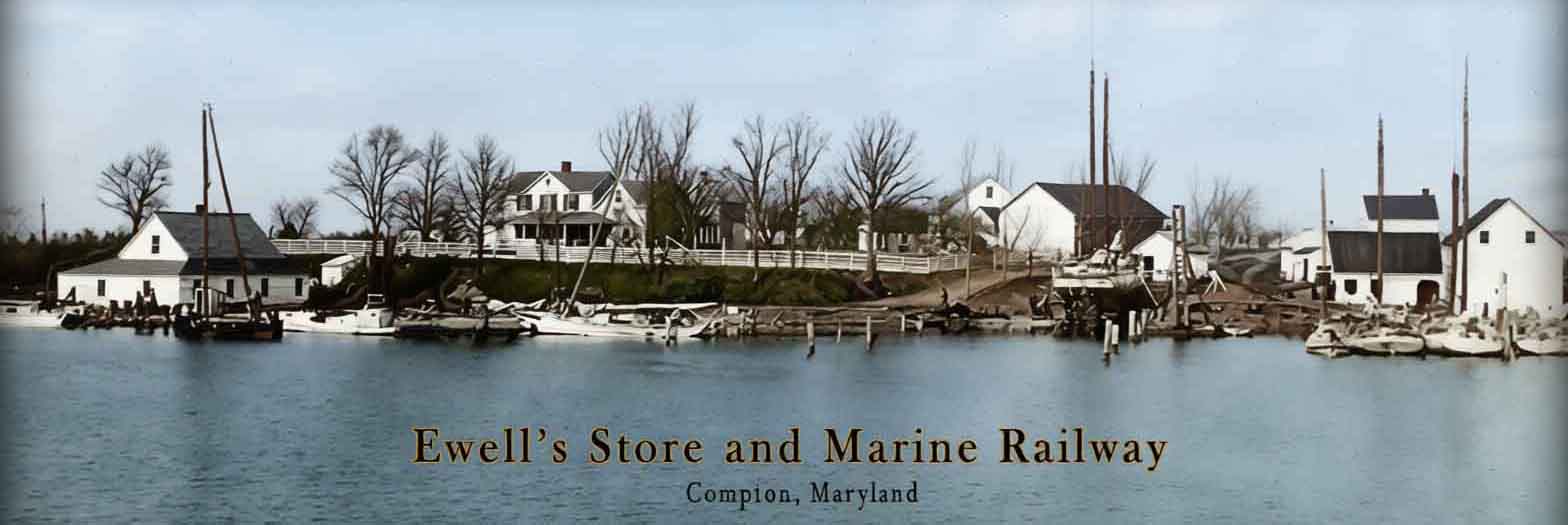
Captain Harrison Ewell eventually moved from lower Somerset County to Reedville-Urbanna, Virginia with his mother who had remarried on the Rappahonack River and then down to Vandemere, North Carolina off the Pamlico Sound where he had a larger freight vessel (big Schooner) transporting oysters, crabs, dry goods, lumber, fruits and vegetables up and down the east coast (mostly between New York and North Carolina) including the Bay- mostly to Baltimore, even the coast between New Jersey (Delaware Bay) and North Carolina. He took his Schooner to Compton (St Mary's County, MD) on Combs Creek, Breton Bay in 1894-5 where he became more of a businessman than a waterman or sailer.
There he had a large boatyard where repairs were done; crab skiffs, Bugeyes, Skipjacks, Schooners-Pungies, Dory boats, etc. There were even a few various types of boats built there. He had a store on the water where the authors great grandmother-sisters worked and he supplied many a Somerset County watermen who came over to oyster the more fertile oyster beds on the Potomac, including the authors 2x great grandfather and great grandfather among them who were out of Mt. Vernon (Hungary Neck up until 1878) with their Skipjack.
When needed he pulled their Skipjack's (Two-Sail Bateaux's), Bugeye's, Pungy's, Schooner's out of the water with mules first, then a "Ford Model T engine" for repairs. He sold - bartered supplies including groceries, oil skins, wood, nails, pegs, hammers, paint, sails you name it with them. Here they repaired or replaced broken masts - booms - jib booms, rudders, centerboards (that were leaky), rotten or damaged wood, their iron dredges, repaired - fixed, replaced their torn sails as he had a sail loft above a wood shop and so on. He even had an African-American who worked for him, was a talented blacksmith, carpenter that worked for him, actually his right hand man and was told how he could do anything, including being quite the artist. He also painted, repainted many a trailboard lettered a boat.
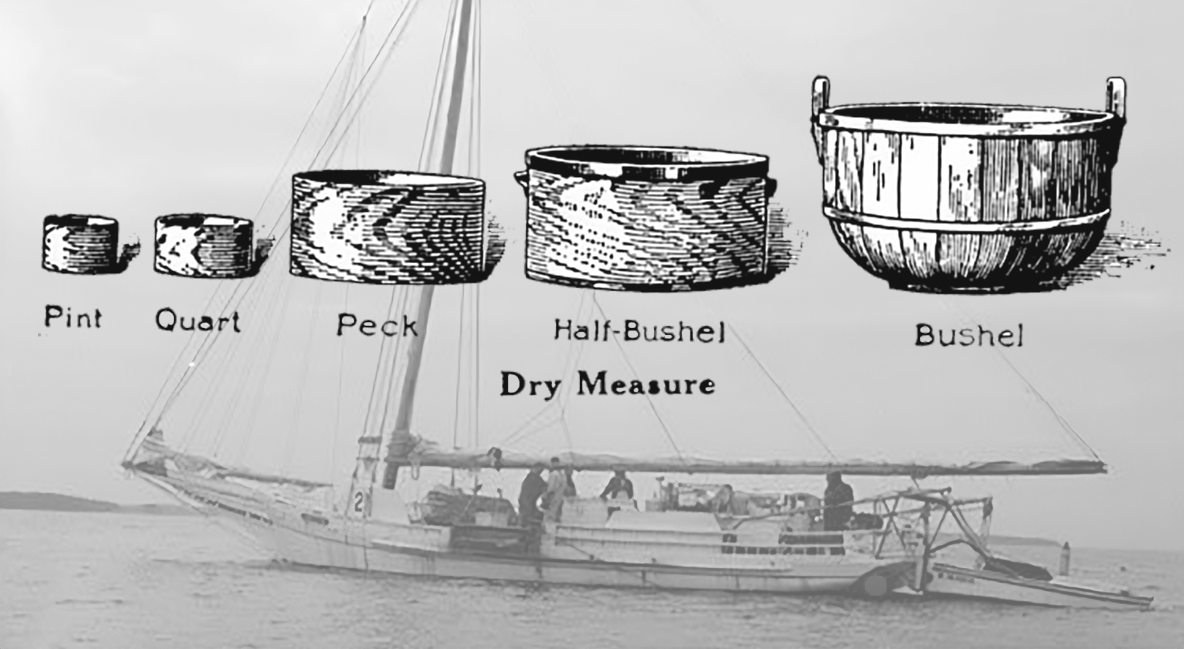 The author can vividly recant his grandfather and great grandfather, uncle saying how annoyed they were even many years after when selling their oysters to a buyboat. The buyboats (or the ones they did business with) would purchase their oysters by the "peck" (much smaller) versus a "bushel" and they always felt short changed. I reckon with the times being the way they were everything was a slippery slope. Funny how you never get over something and are still irritated. The author can vividly recant his grandfather and great grandfather, uncle saying how annoyed they were even many years after when selling their oysters to a buyboat. The buyboats (or the ones they did business with) would purchase their oysters by the "peck" (much smaller) versus a "bushel" and they always felt short changed. I reckon with the times being the way they were everything was a slippery slope. Funny how you never get over something and are still irritated.
Captain Harrison was self sufficient as many islanders were including those from Smith Island especially who had their own gardens, chickens, hogs, etc. He grew all his own vegtables, fruit trees, had a blacksmith, livestock, butcherd his own pigs-hogs, sheep, cows, etc. The author can remember the first time he went to Smith Island on our Skipjack as a boy-young teenager and could not understand what people were saying with the dialect. After so many times visiting I started to figure it out:>) Cash wasn't always the currency as Captain Harrison "sold - bartered" with many a kin-folk who himself being a Somerset countian, raised a local................. he knew to take care of his own when they came to him for help, supplies or were sick and needed medicine. Kind of like "colonial times" when tobacco was a main source of currency. His biological father died young and knew what it was like to be hungry or go without. He heard many a knock on his door especialy when the creek, Bretons Bay, the Potomac froze up, someone was down on his luck and you were stuck in the ice or freezing to death. Many would walk across the ice when the river or creek froze up where he put them up in his barn, warmed them up, sleeping on straw beds, fed them during hard times and bad weather at no cost. He was a man of great faith. He had seven girls and plenty of servants, so there were plenty to lend a helping hand and they knew how to work. Heard many a tale including how the young men would get their boats cleaned up, fresh paint and go courting with the ladies on their boat (chaperoned of course) back then as cars were for the most part just coming on the scene and roads were still dirt-gravel or oyster shells and rough going.
Per the authors great uncle some of the drudgers from the Shore came in the store and gave his great grandmother who was working the store a gospel tract called the "Gospel Trumpet" that she read and with the help of their black cook Aunt Matilda as she was called she found the Lord, was converted and started a Sunday School up in the sail loft with her younger sisters. I say that to enforce the faith and tie it in to the many souls from Somerset County, the Eastern Shore had and exibited, much to the credit of Joshua Thomas, the famous Camp Meetings throughout Smith Island, Deal Island, Mt. Vernon and so on.
The Potomac River offered some of the best oyster breeding grounds around, which Skipjacks, Bugeyes, etc. from Somerset County flocked to. Back in the day, oyster tongers believed that the oyster dredgers were harvesting more than their fair share of the best ones. When they became less plentiful, the tongers pointed their fingers at the the dredgers, blaming them for their empty pockets. Also, there was disagreement on where the line between Virginia and Maryland waters was. Watermen from both sides each thought the other were stealing oysters from their states. Virginia held fast to their portion of the Chesapeake Bay and charged Marylanders a toll to access the sea. Virginians were forbidden to fish in the Potomac River, owned by Maryland. These conflicts grew into fierce battles known as the Oyster Wars. The author still has the black powder, 10 gauge, double barrel shot gun his family used to disable the rudder, rigging, steering, etc. when someone- AKA oyster pirate tried to steel their oysters, boat, etc.
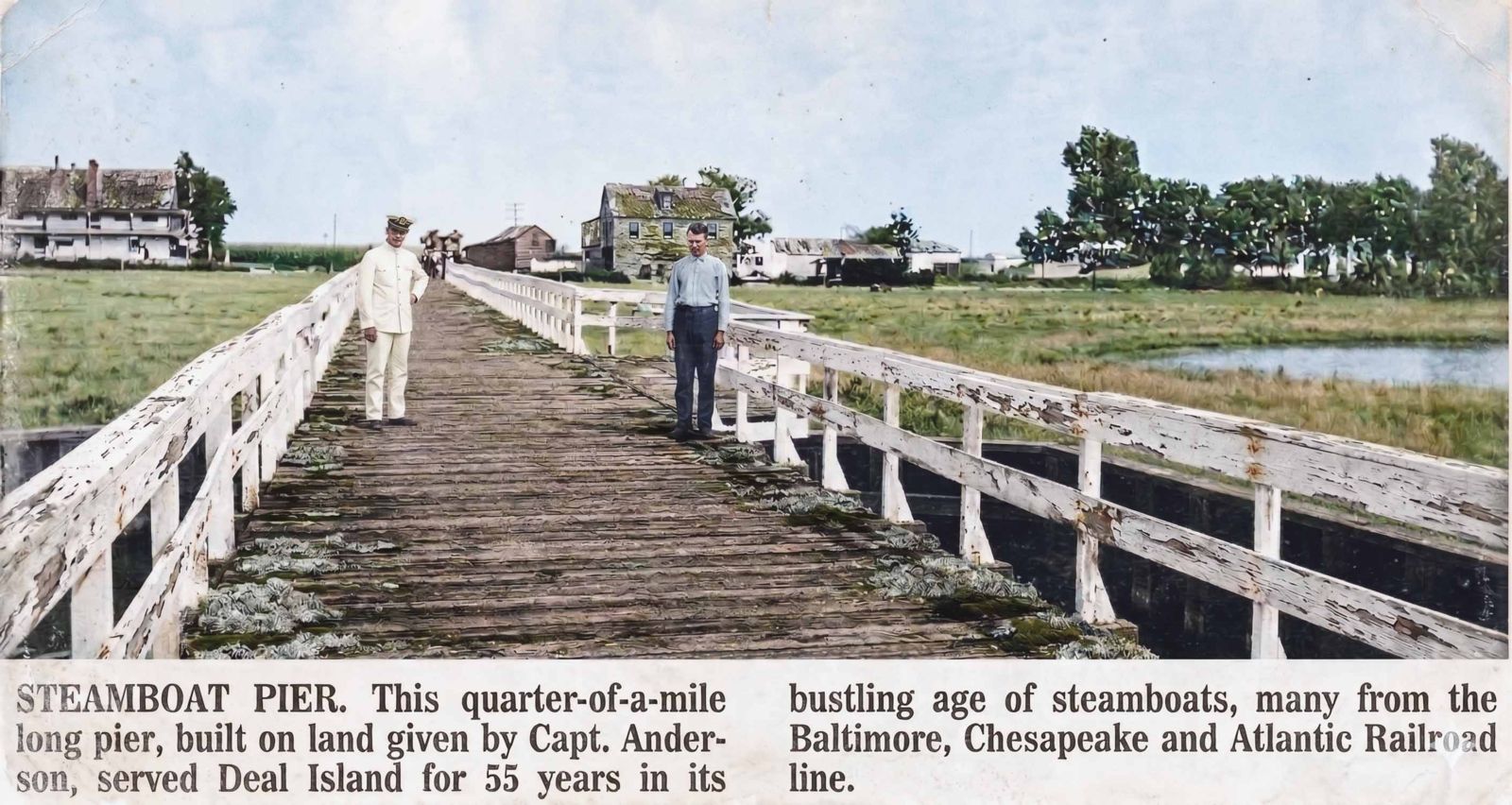
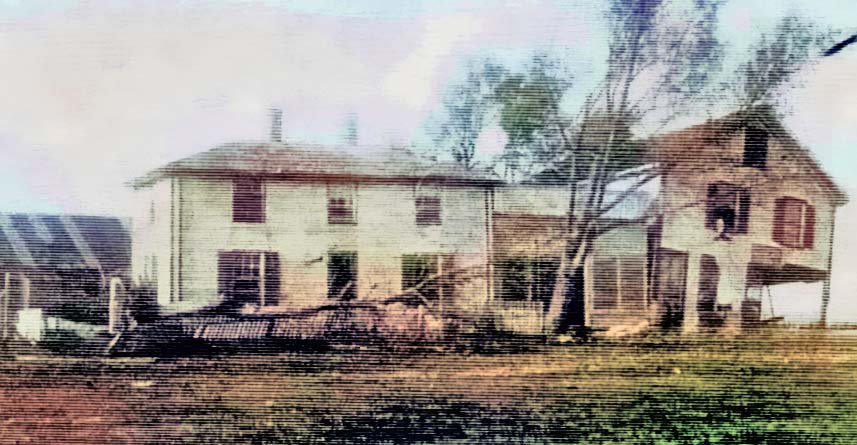
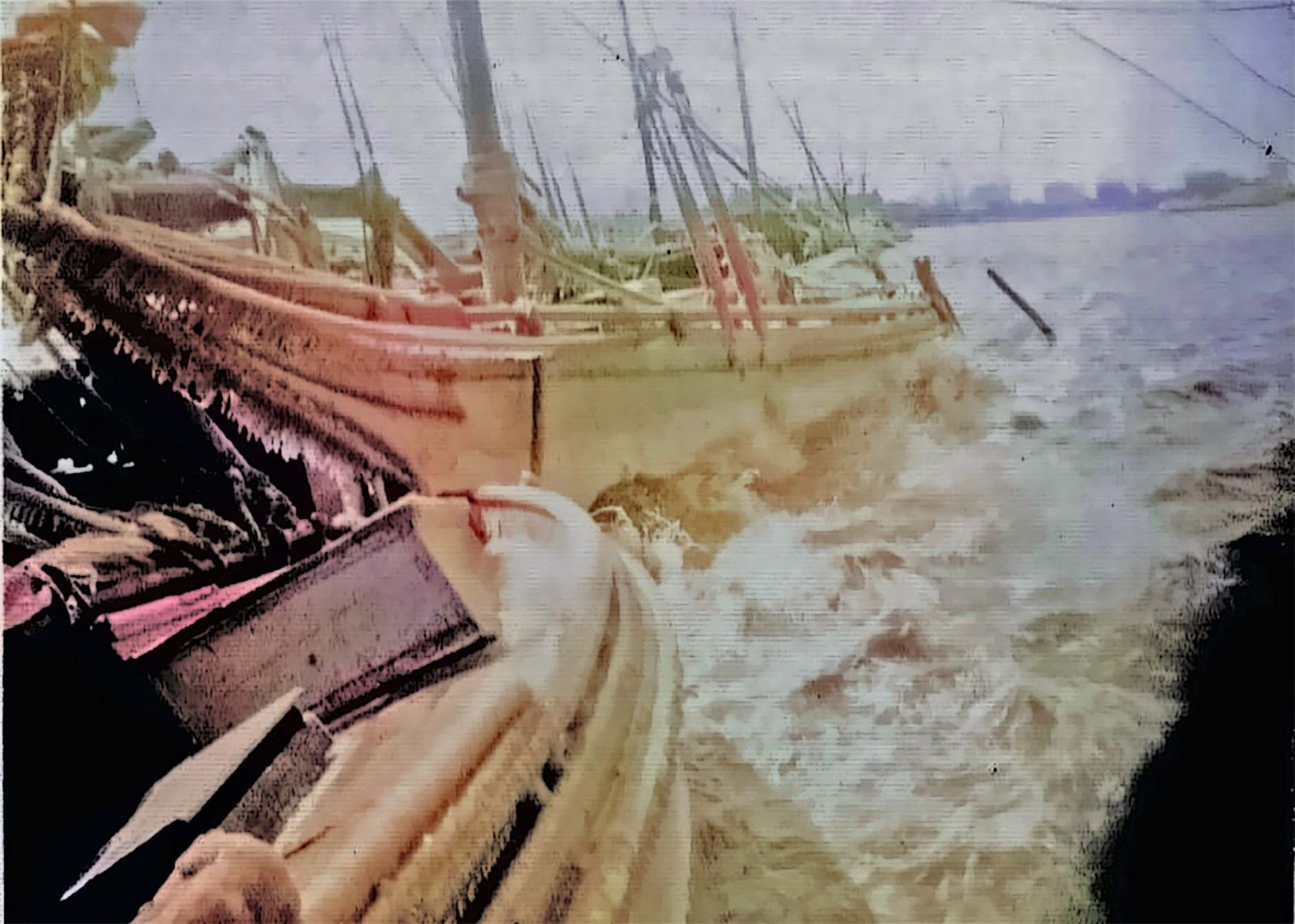
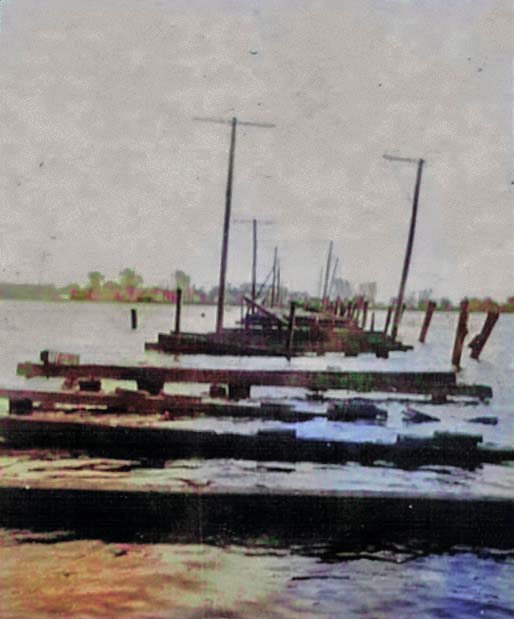
The August storm of 1933 was not kind to Deal Island. The $300,000.00 seafood industry was wiped out, the steamboat wharf was destroyed, dozens of boats including the oyster dredges, crab boats, motor boats
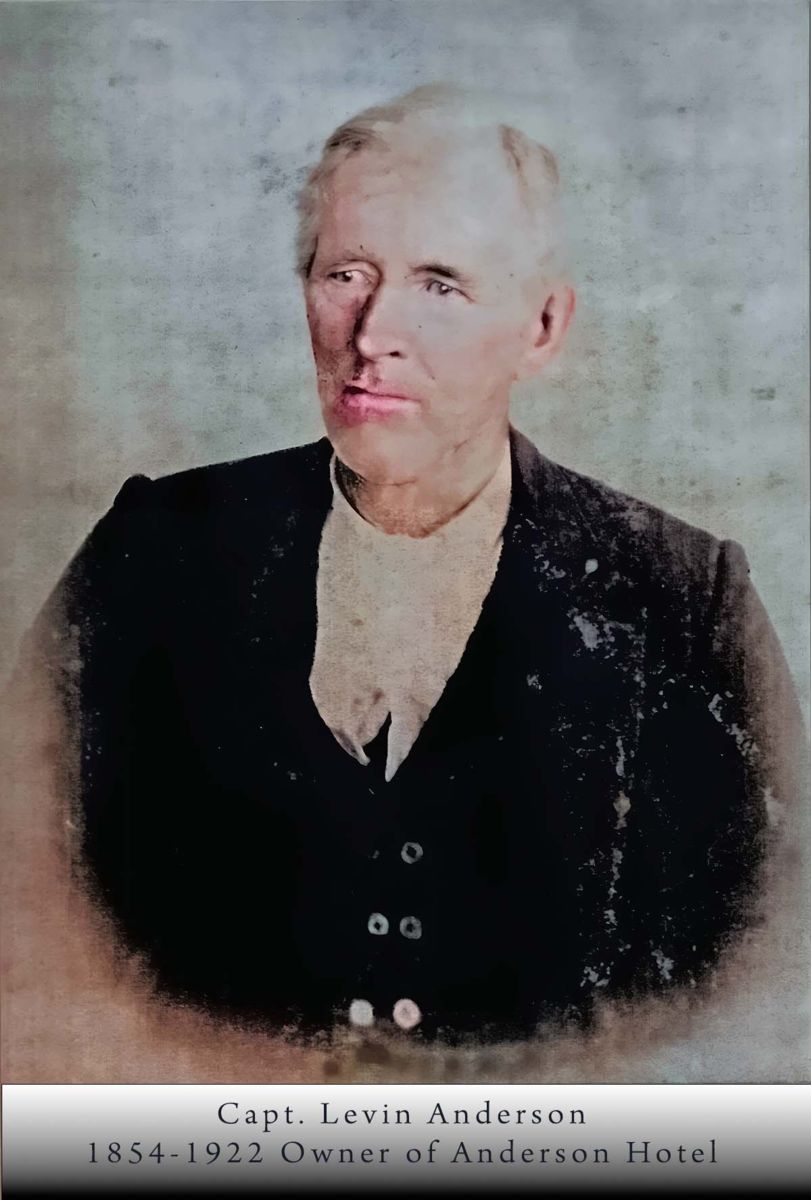
washed on shore, driven into the marshes, up against what was left of the bridge, etc. High waves threatened the Anderson Hotel, the lower floors were flooded and guests were removed by boat. Crabbers lost their pots and fishermiren lost their nets; it was devastating and impacted Deal Island residents for years. The direct damage was listed as $50,000.00 (which was low), however there was a much heavier indirect loss and for tunes lost. The damage to homes and property overall on the Island was extensive. The "hurricane of Aug. 23, 1933 cut the inlet through at Ocean City" and effectively opened it up for tourism. This was likely the most profitable storm damage in state history, but it also left 13 dead. On Deal’s Island, it was said that coffins floated out of their graves. For the record I can remember my own family telling me stories of seeing coffins floating in the Tangier not only from the 1933 storm, but others as well. What an eery site to behold.
A make shift ferry was established by the State Roads Commission while a new plank bridge was being built. Mr. Edelen Webster and Mr. Robert L. Webster, appearing before the State Relief Administration, reported 30 to 40 families as needing relief because of the storm. During the next years, the population figure decreased perceptibly because of lack of employment. Strenuous steps were taken to retore the activity of the Island, but the results were slow coming. The hurricane which carved or created the inlet in what is today Ocean City is probably just an after thought today.
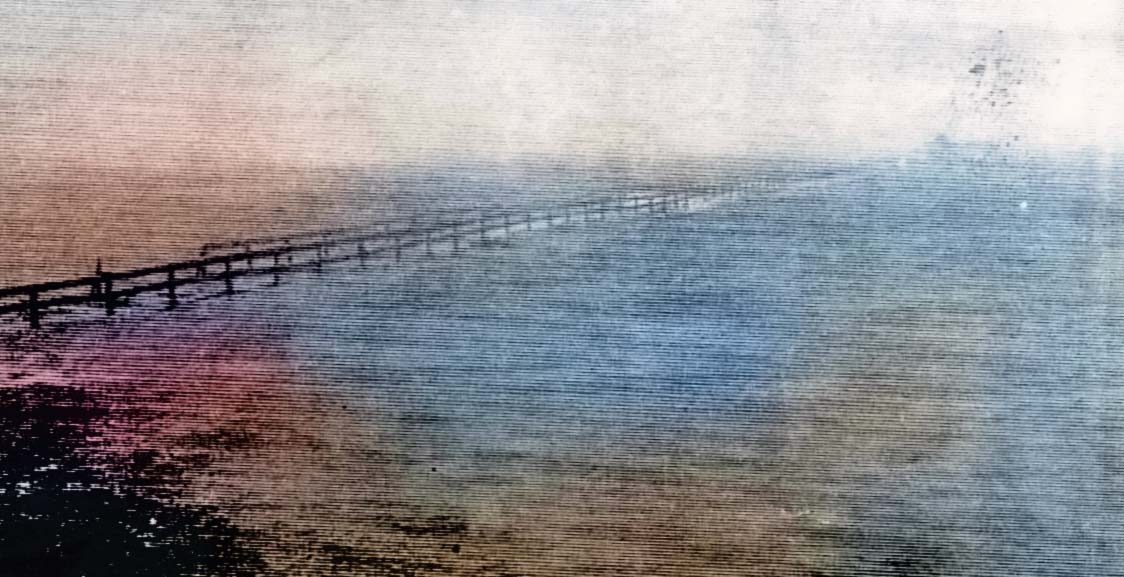
In February 1917 four Deal Islanders were forced to abandon their Bugeye in Breton Bay off the Potomac River and walk across the ice to Washington, DC in a raging snowstorm. They were Real J. Webster, J.W. Shores, Frank Horner and Benjamin Webster. In the following year the Bay froze over again, food ran low, Islanders basically fended for themselves, Over the years drownings and water, boat-related accidents have occurred periodically throughout Deal Island’s history Until the 1930’s Deal Island had one of the longest and busiest commercial steamboat wharves on the Chesapeake Bay. Shore waters around Deal Island are shallow, so when the Maryland Steamboat Company built the wharf in 1881 it had to extend the wharf more than a quarter mile- 1,420 feet to be exact into the Tangier Sound to accommodate the steamers. During the 1930’s sections of new roads were being built over the marshes between Deal Island and Princess Anne. By 1935 all sections were completed which resulted in there being a continuous paved road to the County Seat. Thus, again another change in the pattern of life on the Island. Deal Island had stepped into the modern whirl by way of a 15-mile road. Much of the Island area was restricted by bad weather as the oyster shell roads made travel with all of its ruts, seas of mud from winter thaws, marshlands made travel unbearable and close to impossible at times.
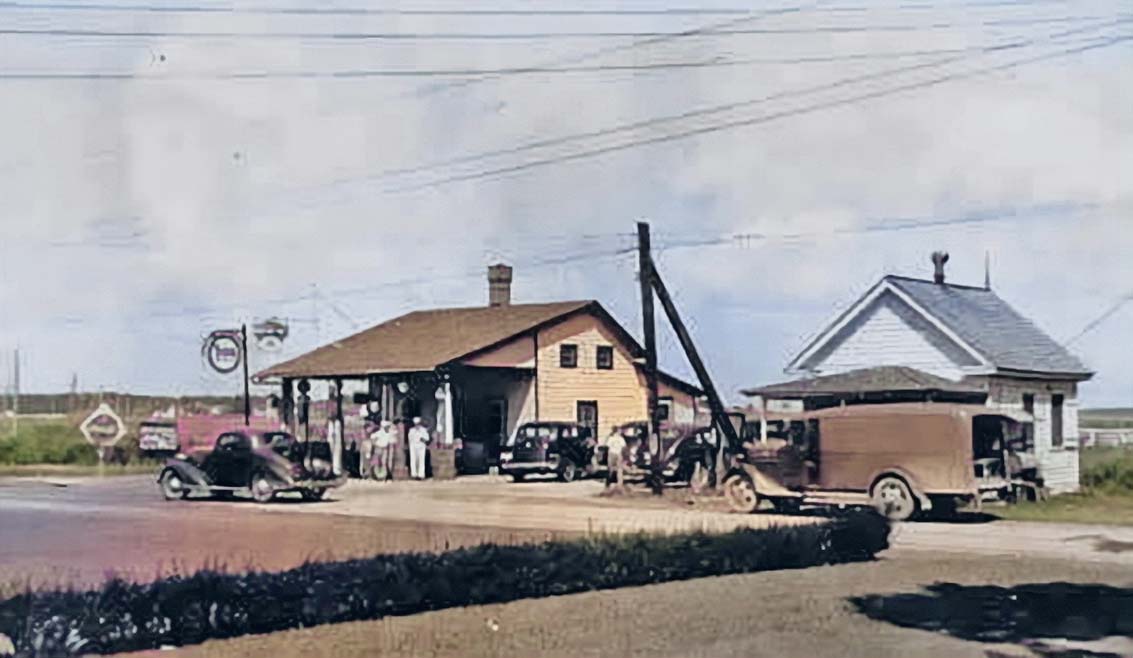
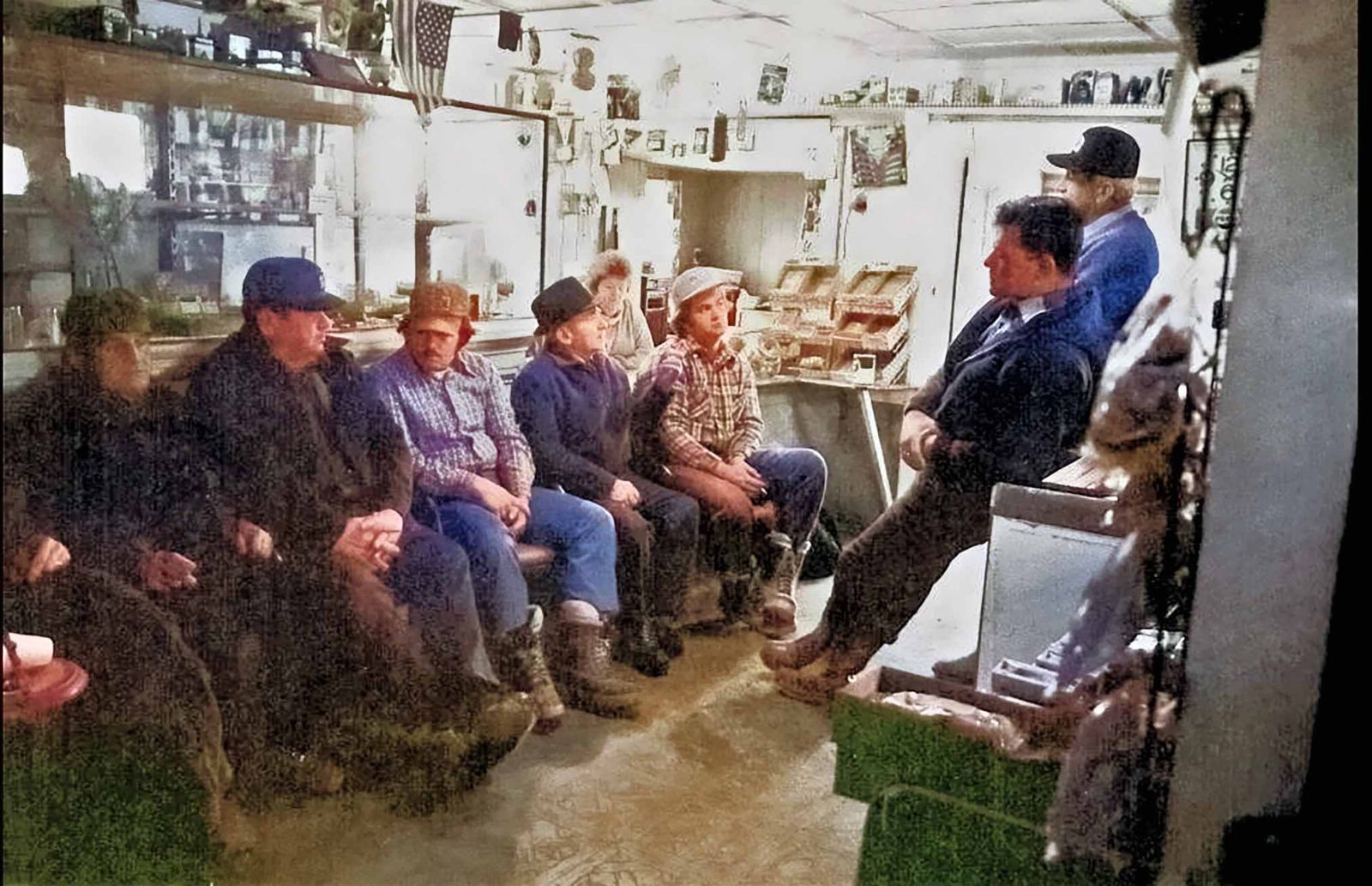
For example, a trip to the County Seat of Princess Anne meant taking a shovel, tow chains, bag of sandwiches and drink just in case. At the beginning of the marshland at Dames Quarter John Todd had a small farm. He worked it with a yoke of oxen. If he was seen in his yard when passing most made a point to wave because you were not sure if you would need his oxen to haul your car out of a rut. It was said he did very well in helping people get through to town. Roads were continually repaired with fresh oyster shells and at times whole sections were covered. These shells were bought by the state from the oyster houses where each oyster dealer was required by law to save a percentage of his shells for the roads. The rest were generally sold for chicken feed or to be used to make lime for the farms. A person was described by the location of his home on the Island unless they were a foreigner. One would an “up the roader” or “down the roader.” For example, if you were from Wenoma you were a down the roader or those on the point were “down the pointer.” A typical day for a waterman after washing up and supper would be to head for his favorite local store. Here he wouldlisten to stories and tell of his own days catch. Each store usually had a different age group. At Wenoma the young folks gathered at Corbett’s store (now the Skipjack Heritage Museum) and just across the road the Northam store would be filled with the older captains. The misc. churches some having existed for over 150 years all have faithful support. In 1959 the Lions Club with the help of Ben Evans, a former Islander, helped to revive the Oyster Fleet Sailboat Races (Deal Island Skipjack Races today). It has brought much publicity, an influx of tourists and visitors, income to the area from the East Coast and beyond. In local speech we can say the area has welcomed “foreigners or those from the Western Shore” with an open heart and many a thick relationship has been forged.
The Black watermen of Deal Island, Maryland, represent a centuries old maritime tradition that once formed the backbone of the Chesapeake's seafood industry. Historically, these skilled sailors, shipbuilders, and oyster harvesters—often referred
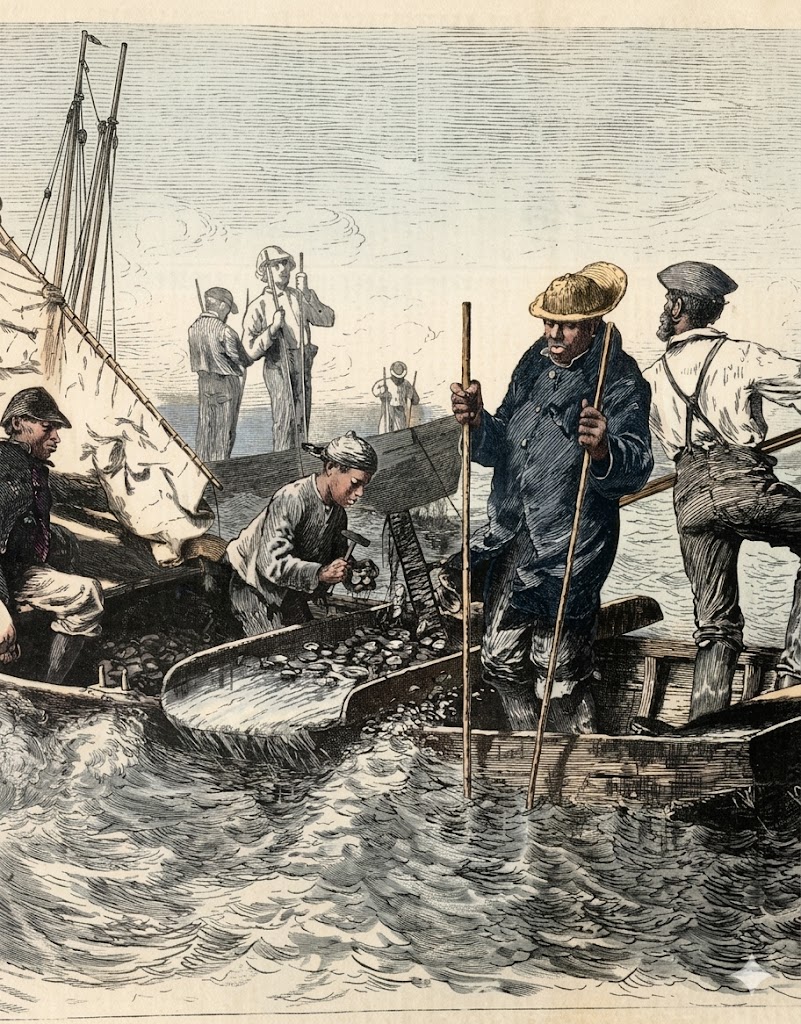 to as "Black Jacks"—found a rare degree of economic independence and dignity on the water, even during the era of slavery. to as "Black Jacks"—found a rare degree of economic independence and dignity on the water, even during the era of slavery.Historical Significance & Community
Deal Island was home to thriving Black communities, particularly in areas like Dames Quarter and Wenona.
Current Challenges: Climate & Racism
Today, the legacy of Black watermen on Deal Island is under threat from both environmental and social factors:
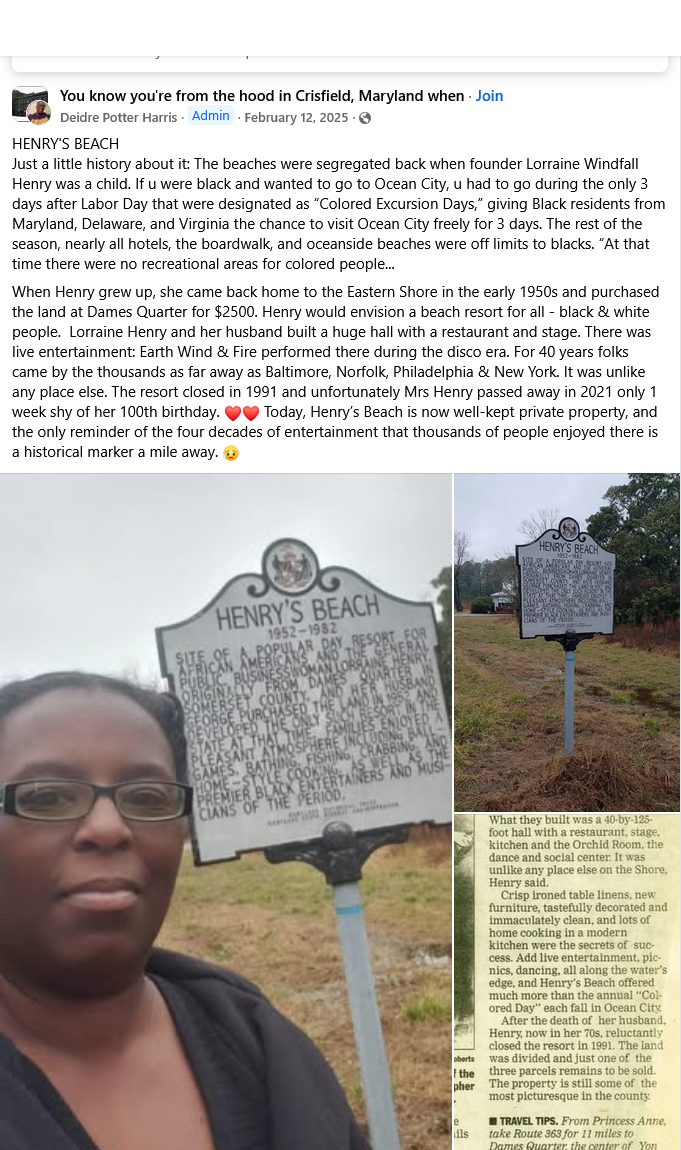
Henry's Beach, located in Dames Quarter near Deal Island, MD, was Key Details About Henry's Beach:
WORKS CITED
| ||||||||||||||||||||||||||||||||||||||||||||||||||||||||||||||||||||||||||||||||||||||||||||||||||||||||||||||||||||||||||||||||||
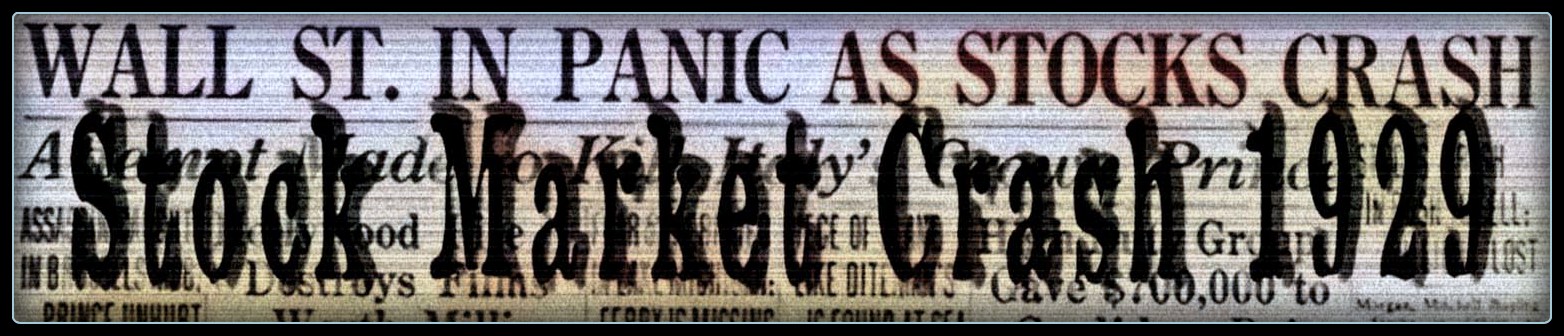 of 2,500 and the assessed value was more than a quarter of a million dollars. The yearly shipment of seafood was considered to be worth $300,00.00 and the returns on farm products were high, but depended on market conditions. The economic situation was sound locally and the mainland press called it one of the most important islands of the Chesapeake.
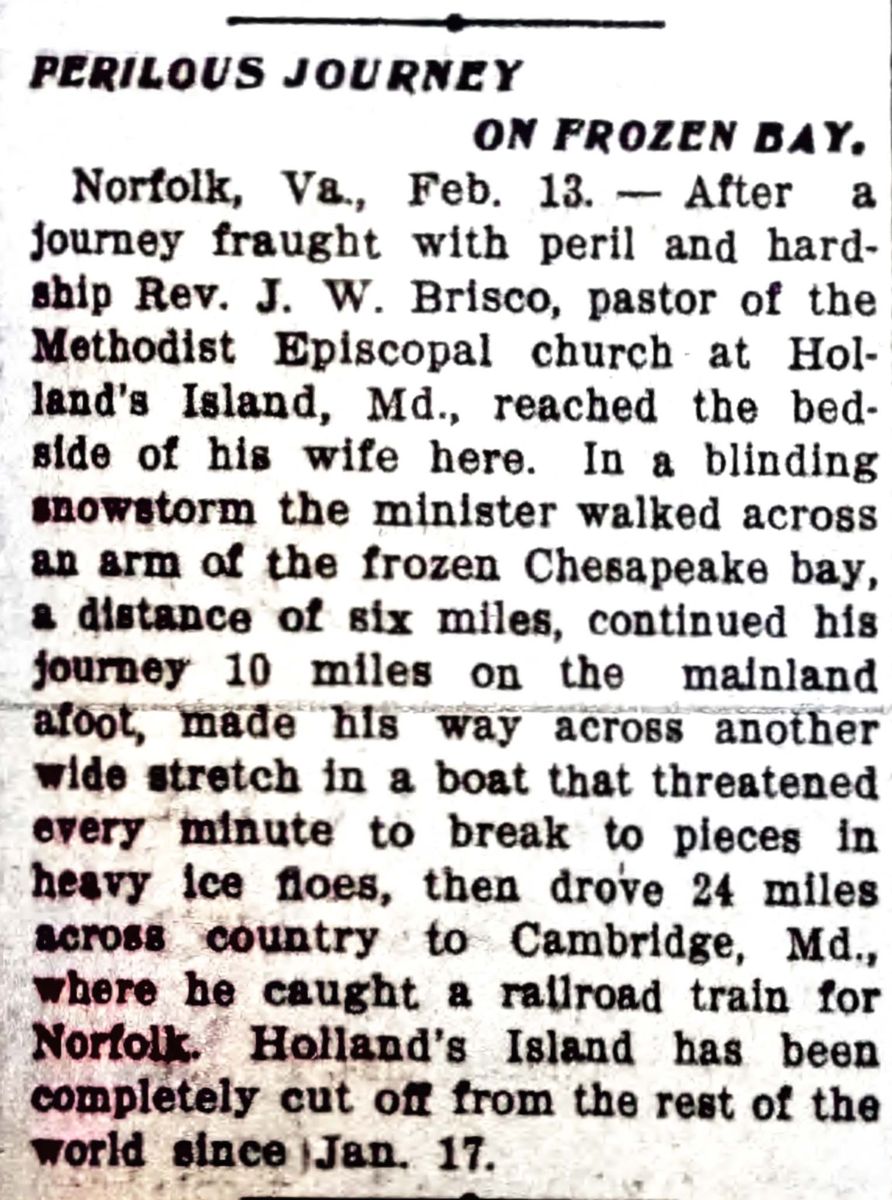 There have been easily over a dozen times where local residents have been iced in, sometimes like 1918 even having to dig holes in the ice and tong for oysters. In recent years 1977 and 2003 were some of the worst.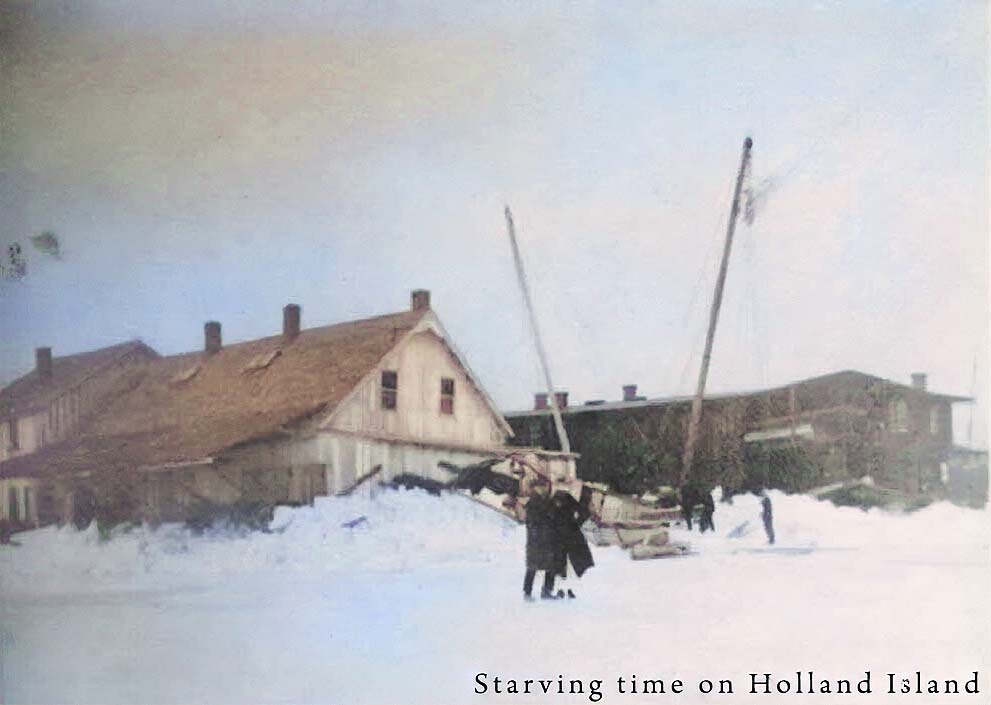
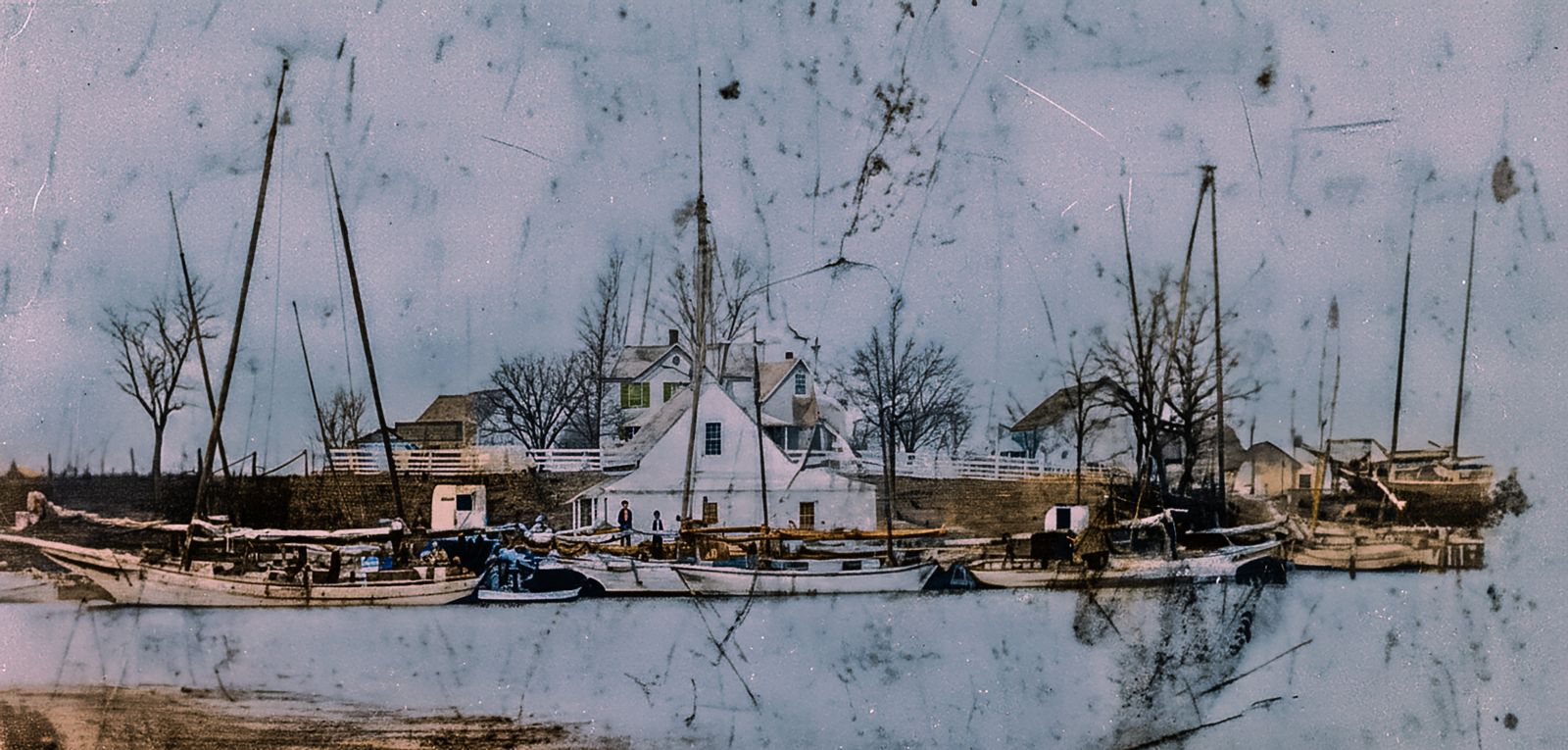
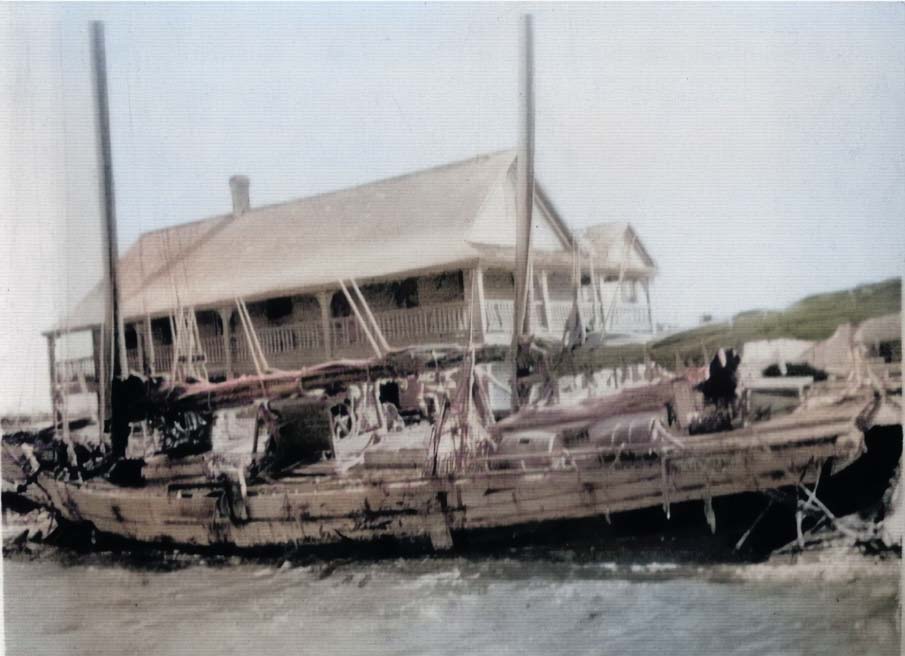 were wrecked, sunk,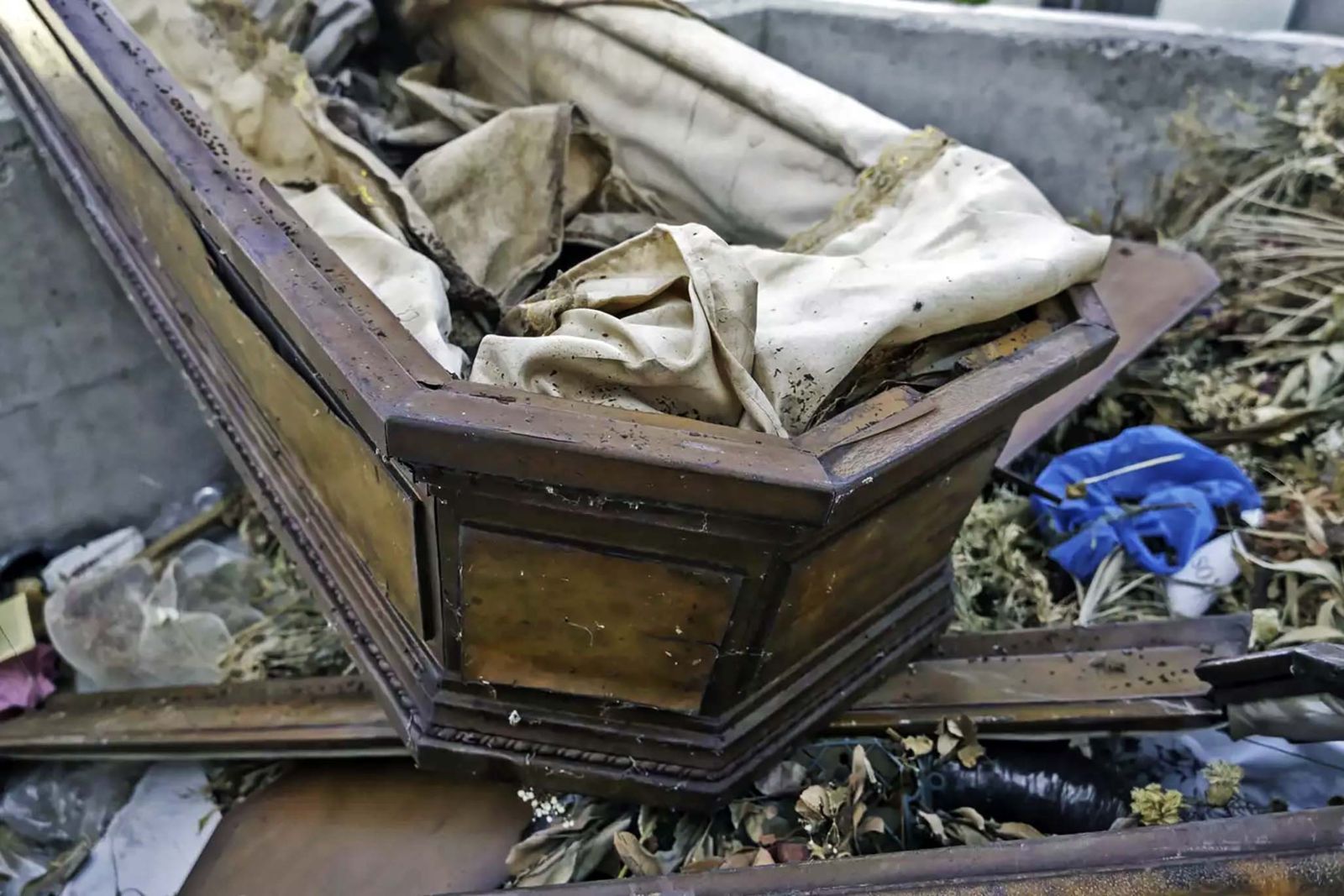
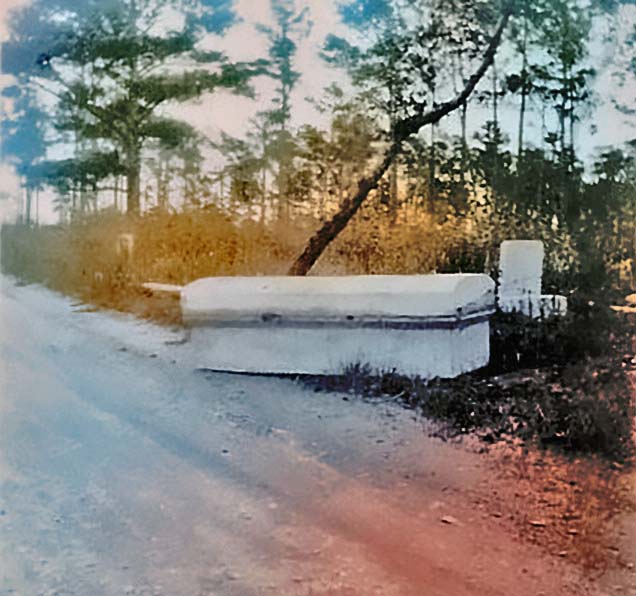
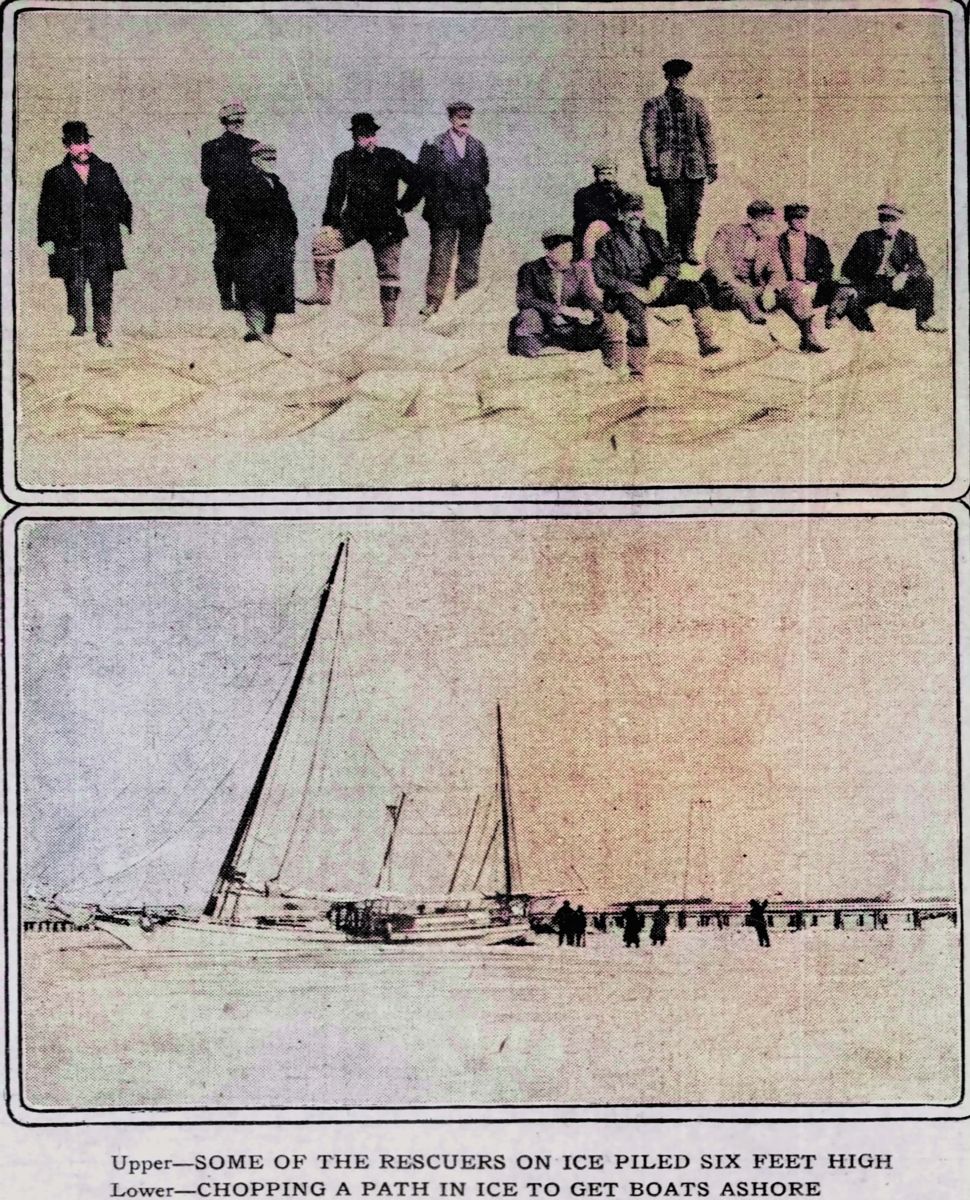

 there was no steamboat service, ice detroyed many of the drudge boats, shanties, docks, wharfs along the shoreline. Smith, Holland, etc. Island's were hit hard especially. Basically two months of dredging had been lost by the freeze for the waterman, oster shuckers and oyster houses were significantly effected as well.